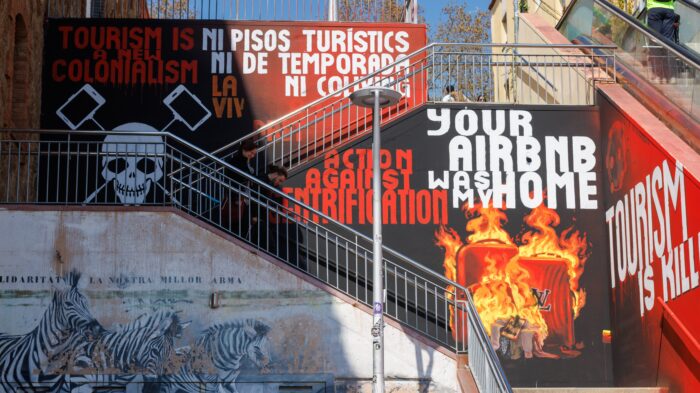
Few issues are as intimate as housing, and few have become as political so quickly. In Spain, it is at the heart of Prime Minister Pedro Sanchez’ bid to win re-election by the end of November. In Paris, Emmanuel Grégoire made housing his top priority when he ran for mayor earlier this year. In Berlin, recently, a radical left-wing party won local elections after a campaign explicitly focused on housing. Across the Atlantic, Zoran Mamdani became mayor of New York on a promise of affordability, starting with the rent. Different cities and different systems, but the same message from voters: a home they can afford is the first thing they expect from politics.
The reason is not hard to see. Across Europe, prices and rents have far outpaced incomes. More than a million people are homeless, including 400,000 children. But the squeeze no longer hits only the poorest: it reaches young people who cannot leave their parents’ home, workers who cannot live near their jobs and middle-class families priced out of the neighbourhoods where they intended to raise their children too. Housing has become the place where economic insecurity, inequality and a sense of abandonment meet. For many citizens, it is the one topic on which they judge whether institutions can still deliver.
It is also a question that tests Europe’s own promise. The freedom to move is one of the Union’s proudest achievements. But freedom to move means little if staying put becomes a privilege, and if cities, small towns and rural regions drift apart. Housing policy is mostly decided locally and nationally, yet the EU’s rules on investment, state aid, energy and the single market already shape what gets built and for whom.
Housing is never only about housing: it is about services, jobs, land, trust and the kind of society Europeans want to live in. This is where progressives can make the real difference by asserting that the right to a home comes before the right to be rich.
Photo credits: Shutterstock/FatimeBarut