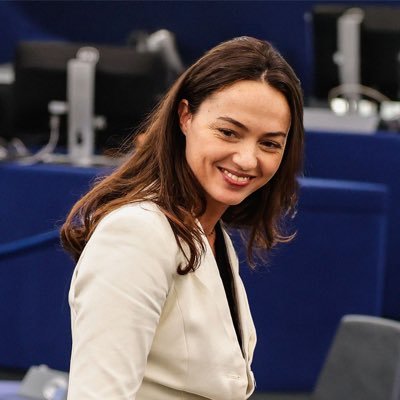
Member of the European Parliament, group of the Progressive Alliance of Socialists and Democrats
05/11/2026
I have always been struck by how little attention we pay to patriarchal culture when we think about geopolitics. We analyse military budgets, alliances and power structures, yet we rarely ask what our very idea of power is, in a world built on masculine codes.
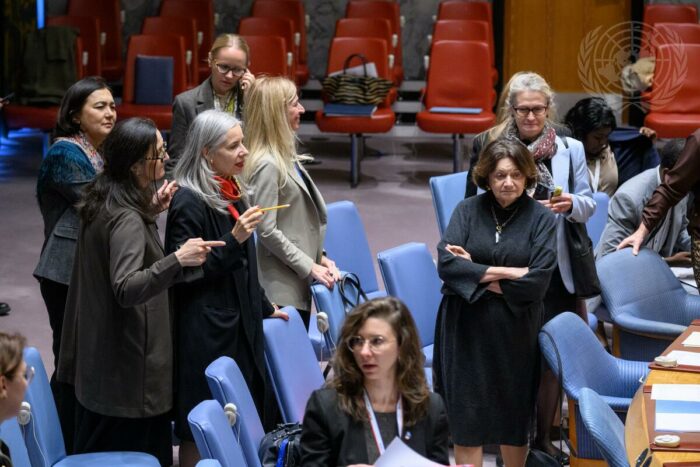
In July 2003, after 14 years of civil war had devastated Liberia, peace talks were stuck in deadlock. Fed up with the stalemate, Liberian women from the Women of Liberia Mass Action for Peace movement decided to gather outside the negotiating room and block the doors and windows: no one is leaving without a deal. On 18 August, the Accra Peace Agreement, named after the capital of Ghana, where the peace talks took place, was signed. Two years later, the movement helped bring Ellen Johnson Sirleaf to the presidency. She was the first democratically elected woman to lead an African country. Since then, war has never returned, and Liberia has been at peace for 23 years. Liberia is not an isolated example. After analysing 182 peace agreements, researcher Laurel Stone found that when women participate in peace processes, the likelihood of an agreement lasting at least two years increases by 20 per cent, while the likelihood of it lasting at least 15 years increases by 35 per cent. In short, when women have a real say in peace negotiations, an agreement is almost always reached, and, once it is on the table, it is more likely to be implemented. This finding became one of the central conclusions of the UN’s 2015 Global Study on the implementation of resolution 1325, the landmark resolution that established the Women, Peace and Security agenda.
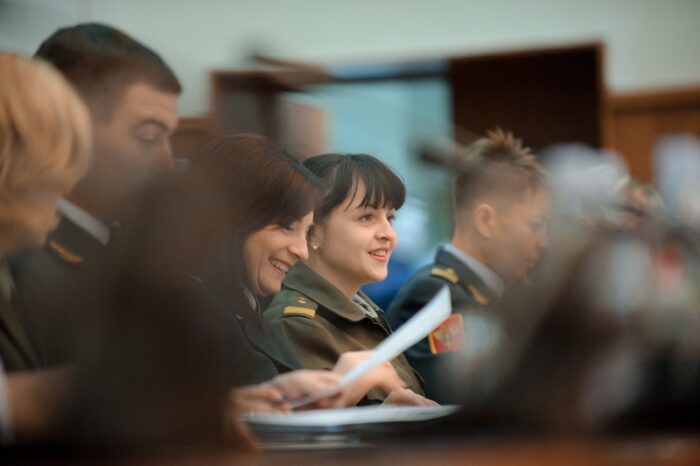
Yet women continue to be widely excluded from negotiating tables. Between 1992 and 2019, women accounted for an average of just 13 per cent of negotiators, 6 per cent of mediators and equally 6 per cent of signatories in major peace processes, according to the Council on Foreign Relations. Nearly seven out of ten peace processes had no women among their mediators or signatories. Meanwhile, the violence women face is comparable to that of war itself. According to American journalists Nicholas Kristof and Sheryl WuDunn, more girls have been killed over half a century simply because they were girls than men were killed in all the wars of the 20th century combined.
This is a staggering contradiction. We know that women’s participation makes peace more likely and more lasting. We know the devastating cost of violence against women. And yet women are excluded from reflections on security, from summits where decisions about war and peace are made, and from the corridors of power.
The starting point of ‘geofeminism’
For all these reasons, I publish Géoféminisme, ‘geofeminism’: to try and transform the ways we think about international relations and to propose new ones, grounded in equality. Just as the concept of ecofeminism revealed the connections between women’s oppression and nature exploitation, geofeminism seeks to demonstrate that the domination of women and violence between states are driven by similar mechanisms. There is a deeply ingrained culture of masculinity in the way we think about power and international relations, one that is rarely questioned. This is a major blind spot in geopolitics.
Our traditional understanding of power is not neutral. It celebrates qualities historically associated with masculinity: domination, conquest, competition, the ability to impose one’s will and the use of force. Negotiation, empathy, cooperation and compromise, on the other hand, are all too easily dismissed as signs of weakness.
‘If you want peace, prepare for war’, goes the old saying. But this worldview does more than describe international relations. It actively shapes them. By presenting war as inevitable, it traps states in a spiral in which countries arm themselves because others are doing the same, potentially increasing the very insecurity they claim to prevent. This attitude precludes other ways of protecting ourselves that are based on international law, cooperation, interdependence and conflict prevention. This is not about being naive in the face of threats. It is about breaking with the idea that credibility means brutality, that security means stockpiling weapons and that compromise means weakness.
The evidence shows that giving women a greater role in society and in positions of power is essential for building a more stable and prosperous world. Girls’ education, women’s economic independence, access to contraception, women’s rights and political participation are not merely matters of social policy. They are security policies in their own right, and arguably among the most reliable ways to prevent conflicts in the 21st century.
Peace is not simply the absence of war or a balance of terror. It rests on justice, equality and dignity. In short, if you want peace, prepare for equality!
Why niche power matters for the Women, Peace and Security agenda
XThis website uses cookies. Some cookies are necessary for the proper functioning of the website and cannot be refused if you wish to visit the website.
Other cookies are used for Advertisement and Analytics (Sharing on social networks, video playing, analysis and statistics, personalized advertising ...) You can refuse them if you want to. REJECTACCEPTCookie settings
Manage consent
Privacy Overview
This website uses cookies to improve your experience while you navigate through the website. Out of these cookies, the cookies that are categorized as necessary are stored on your browser as they are essential for the working of basic functionalities of the website. We also use third-party cookies that help us analyze and understand how you use this website. These cookies will be stored in your browser only with your consent. You also have the option to opt-out of these cookies. But opting out of some of these cookies may have an effect on your browsing experience.
Necessary cookies are absolutely essential for the website to function properly. These cookies ensure basic functionalities and security features of the website, anonymously.
Cookie
Duration
Description
cookielawinfo-checkbox-advertisement
1 year
Set by the GDPR Cookie Consent plugin, this cookie is used to record the user consent for the cookies in the "Advertisement" category .
cookielawinfo-checkbox-analytics
11 months
This cookie is set by GDPR Cookie Consent plugin. The cookie is used to store the user consent for the cookies in the category "Analytics".
cookielawinfo-checkbox-functional
11 months
The cookie is set by GDPR cookie consent to record the user consent for the cookies in the category "Functional".
cookielawinfo-checkbox-necessary
11 months
This cookie is set by GDPR Cookie Consent plugin. The cookies is used to store the user consent for the cookies in the category "Necessary".
cookielawinfo-checkbox-others
11 months
This cookie is set by GDPR Cookie Consent plugin. The cookie is used to store the user consent for the cookies in the category "Other.
cookielawinfo-checkbox-performance
11 months
This cookie is set by GDPR Cookie Consent plugin. The cookie is used to store the user consent for the cookies in the category "Performance".
csrftoken
past
This cookie is associated with Django web development platform for python. Used to help protect the website against Cross-Site Request Forgery attacks
JSESSIONID
session
The JSESSIONID cookie is used by New Relic to store a session identifier so that New Relic can monitor session counts for an application.
viewed_cookie_policy
11 months
The cookie is set by the GDPR Cookie Consent plugin and is used to store whether or not user has consented to the use of cookies. It does not store any personal data.
Functional cookies help to perform certain functionalities like sharing the content of the website on social media platforms, collect feedbacks, and other third-party features.
Cookie
Duration
Description
__cf_bm
30 minutes
This cookie, set by Cloudflare, is used to support Cloudflare Bot Management.
S
1 hour
Used by Yahoo to provide ads, content or analytics.
sp_landing
1 day
The sp_landing is set by Spotify to implement audio content from Spotify on the website and also registers information on user interaction related to the audio content.
sp_t
1 year
The sp_t cookie is set by Spotify to implement audio content from Spotify on the website and also registers information on user interaction related to the audio content.
Performance cookies are used to understand and analyze the key performance indexes of the website which helps in delivering a better user experience for the visitors.
Analytical cookies are used to understand how visitors interact with the website. These cookies help provide information on metrics the number of visitors, bounce rate, traffic source, etc.
Cookie
Duration
Description
CONSENT
2 years
YouTube sets this cookie via embedded youtube-videos and registers anonymous statistical data.
iutk
session
This cookie is used by Issuu analytic system to gather information regarding visitor activity on Issuu products.
s_vi
2 years
An Adobe Analytics cookie that uses a unique visitor ID time/date stamp to identify a unique vistor to the website.
Advertisement cookies are used to provide visitors with relevant ads and marketing campaigns. These cookies track visitors across websites and collect information to provide customized ads.
Cookie
Duration
Description
NID
6 months
NID cookie, set by Google, is used for advertising purposes; to limit the number of times the user sees an ad, to mute unwanted ads, and to measure the effectiveness of ads.
VISITOR_INFO1_LIVE
5 months 27 days
A cookie set by YouTube to measure bandwidth that determines whether the user gets the new or old player interface.
YSC
session
YSC cookie is set by Youtube and is used to track the views of embedded videos on Youtube pages.
yt-remote-connected-devices
never
YouTube sets this cookie to store the video preferences of the user using embedded YouTube video.
yt-remote-device-id
never
YouTube sets this cookie to store the video preferences of the user using embedded YouTube video.
yt.innertube::nextId
never
This cookie, set by YouTube, registers a unique ID to store data on what videos from YouTube the user has seen.
yt.innertube::requests
never
This cookie, set by YouTube, registers a unique ID to store data on what videos from YouTube the user has seen.