

Vice-President for the Green Deal for Industry, Energy and Climate and Financing the Just Transition for the S&D Group in the European Parliament. Vice-Chair of the European Parliament’s Delegation to COP30
27/11/2025
Set against the Amazon, guided by the idea of mutirão, and backed by a broad coalition seeking real progress, the climate conference in Brazil raised high expectations. Yet, despite incremental steps, the conference fell short of delivering the clarity and ambition on what is needed to combat the climate crisis: the global phase-out of fossil fuels.
The stage in Brazil was promising. Close to the rainforest, with a strong presence of indigenous communities, in a democratic country under the progressive leadership of President Luiz Inácio Lula da Silva, it seemed to have all the right ingredients. With the concept of mutirão (joint effort), the Brazilian presidency hoped to secure a breakthrough. Unfortunately, not everyone was in for the joint effort.
Could you imagine a global lung cancer prevention conference that never mentions tobacco? Most likely not. Yet, this year’s conference did the climate equivalent. It managed to avoid naming fossil fuels in any part of its conclusion, in spite of the fact that they are the primary culprit of the climate crisis. Not even a single time! The only indirect mention is to the ‘UAE consensus’, the agreement made on fossil fuels during COP28.
For the European Union, the outcome is particularly painful. The EU arrived in Belém determined to lead a coalition of high-ambition countries, building on its 2040 climate goal and a revived focus on international climate responsibility. Leaders such as President Lula had raised expectations. Civil society had mobilised across continents. A new coalition advocating a concrete plan to transition away from fossil fuels – supported by more than eighty countries – offered genuine momentum.
But when it mattered, the EU found itself rowing against the tide. Attempts to preserve ambition on fossil fuel phase-down and on more robust emissions reductions were almost watered down or blocked entirely. In exchange, countries agreed to increase contributions to climate adaptation finance – vital and justified, yes, but politically unbalanced if not paired with mitigation ambition.
The adaptation wins
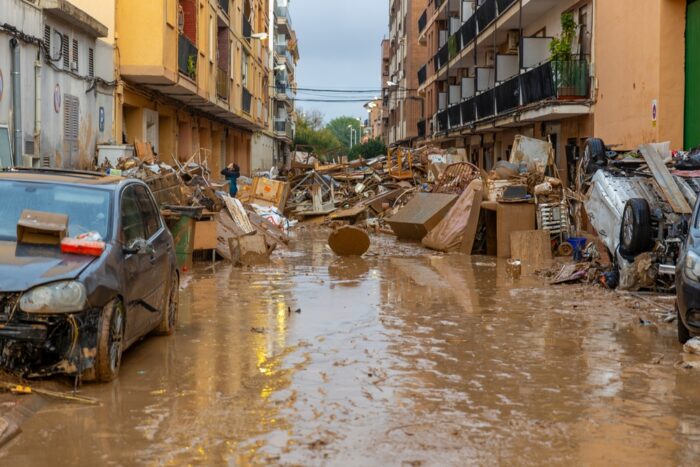
One of the few achievements of COP30 is the agreement to triple global adaptation finance. This matters. For frontline countries, from small island states to climate-vulnerable nations, African and Asian nations, adaptation is not a distant concern but a daily reality. The consequences of the climate crisis are already grim. Floods and heatwaves already cause food insecurity and displacement.
But even this achievement is bittersweet. Tripling funding sounds transformative, yet the gap between needs and actual resources remains enormous. Worse still, without strong commitments to cut emissions, the scale of future adaptation needs is only set to increase. By only addressing the symptoms, we risk overlooking the cure.
More ambition is necessary
Before the COP in Brazil, ten years after the climate conference in Paris, most countries submitted their Nationally Determined Contributions (NDCs). These contain the national pledges that countries make to fulfil the Paris promise of limiting global warming to a maximum of 2 degrees, with the ambition not to exceed 1.5 degrees.
However, when all national pledges are put together, global emissions are projected to fall by only 12 per cent by 2035, while meeting the 1.5 degree goal requires cuts of at least 55 per cent. The gap between ambition – or lack thereof – and reality is considerable.
Valuable lesson
The EU has not felt this isolated at a climate conference in years. It now faces a clear strategic imperative: to form new alliances and do so quickly. The EU cannot enter future COPs isolated and on the defensive. It must forge durable coalitions with climate-vulnerable countries, African partners, progressive Latin American states, Oceania and climate-ambitious Asian economies. These alliances must be based on finance, technology, and, above all, a credible political partnership.
Second, the EU must insist, relentlessly, on a global framework for phasing out fossil fuels. Ahead of future climate conferences, we therefore must engage and close deals with economies of the future, countries like China and India, that can massively reduce emissions. Waiting for a yearly two-week-long negotiation, where these countries can hide behind the voices of oil states, should not be the only platform for climate action. Those conversations should start the day after COP, because we cannot wait another year.
An example is the announced summit on phasing out fossil fuels, which will be co-hosted by Colombia and the Netherlands next April in the Latin American country. I hope this will deliver on its promise and prove to be a catalyst for other and new forms of international climate cooperation outside the yearly climate conferences. It is an example of how we can forge these new alliances and hopefully reap the fruits of cooperation before the next climate conference.
Finally, the EU must get its own house in order. Ambition at home strengthens credibility abroad. Ambiguity does the opposite. By stripping ourselves of ambition – whether it is on due diligence, deforestation, and others – we undermine our global efforts. It emboldens fossil fuel states and weakens EU diplomatic leverage.
Initiating a race to the bottom will ensure that we will never see the top. Countries at the conference rightly held a mirror to our face when we discussed about reforestation, human rights and climate efforts. We must walk the talk, as it is all about consistency.
Conclusion
The promise of COP30 has not been fulfilled. Reforestation has not gotten nearly as much attention as hoped, the concluding text remained too ambiguous, and the discrepancy between national pledges and necessary reductions remains too large.
Yet, this climate conference also showed that there is a strong undercurrent. One of the countries that are willing to move forward, to make a change and to take responsibility. These should not be slowed down or discouraged by notorious laggards. It is time to support the coalition of the willing and to expand it. That is one of the major wins that Europe must secure before COP31 in Turkey.
Photo credits: Shutterstock.com/Antonio Scorza
Find all related Progressive Post
Progressive Post