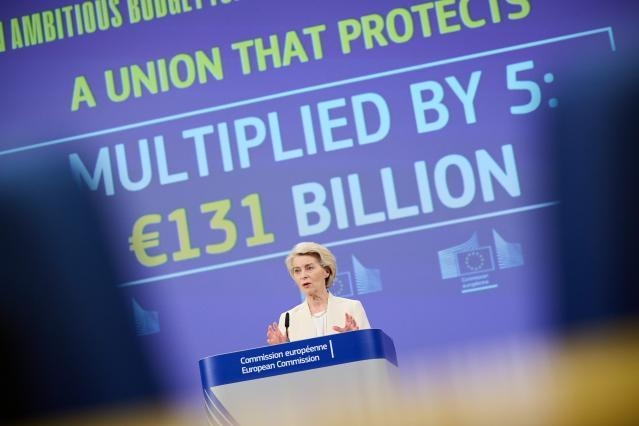
In July, the European Commission submitted a proposal for the EU’s Multiannual Financial Framework (MFF) from 2028 to 2034. This opens a negotiation process between the European Parliament and the member states in the Council, which will last many months before any agreement can be reached.
The MFF is important because it sets long-term budget priorities for a period of seven years. On paper, the draft presented by the Commission proposes the largest and most ambitious EU budget ever (still a fraction of national budgets, though). It promises a more competitive and flexible Europe, following Mario Draghi’s report. In practice, however, it falls back behind the total financial firepower the EU disposed of in the 2021-2027 period, which included, notably, the NextGenerationEU recovery package. Also, it kick-starts a centralisation process that would undermine the EU’s cohesion policy – the glue that holds Europe together – and the green transition.
Hence, it is not just a question of figures, however important they are, but one of methodology and criteria, and mainly one of the ultimate goal of the European Union – cohesion – that, if the European Commission gets its way, is at risk of dissolving.