

07/04/2023
Parliamentary elections in Finland tend to be nerve-wracking. Like last time, this time the top three parties also ended up within one percentage point of each other. Four years ago, the difference in seats between the first and the third party was two. This time, the very similar vote share was divided differently between the constituencies and produced a seat difference of five. Hence the election nights are exciting and full of tension for all the parties.
All three major parties increased their vote share and the seats, thus all three were among the winners of the elections. Two parties that have been part, under the leadership of Prime Minister Sanna Marin’s Social Democrat Party (SDP), of the previous coalition government – the Centre Party and Greens – were the biggest losers. In detail, the three main parties’ scores are, in order: the centre-right National Coalition Party 20.8 per cent and 48 seats, the far-right Finns Party 20.1 per cent and 46 seats, and the Social Democratic Party 19.9 per cent and 43 seats.
The recent election was the first one held since the war in Ukraine started, and also the first since Finland applied for NATO membership. It was not the first election since the pandemic (local elections in 2021 and regional in 2022), but rather the first one where the pandemic did not affect campaigning anymore. And it was also seen as a test of the popularity of the government’s handling of the economy during several crises of the past mandate.
Finland has a proportional election system, with open-list preference voting in 13 constituencies that elect different numbers of MPs according to the number of inhabitants, with different thresholds for seats in all. These intricacies of the electoral system explain the different outcomes from election to election, while vote shares, nationally, have been very similar. Most of the post-election analysis and research is yet to be made and written, but a few issues defined this election and certainly contributed to the outcome. There are also some consequences of the outcome that are already clear, yet demand more analysis in the coming months.
A NATO election?
Finland has long had a widely shared consensus on military non-alignment. The geopolitical position of the country had been turned into an advantage by carefully maintaining relations with the East and the West. The popular opinion and the elected leaders alike have, for decades, maintained that Finland has a so-called NATO option (the ability to apply), but chooses not to use it. Even the two parties that have had, in the past, pro-NATO positions in their programmes – NCP and the Swedish People’s Party – have done nothing to advance membership when they were in government or when they held the presidency of the country, which the NCP still does.
That all changed on 24 February 2022. Public opinion changed almost overnight from a majority that opposed NATO membership to 62 per cent in favour of it in March and 76 per cent in favour by May 2022. Political parties took little time to form their new positions, and the parliament decided almost unanimously to apply for membership on 17 May.
Although the NATO membership bid was no longer a real issue in the electoral campaign, the change in the political and security atmosphere echoed in the results. The National Coalition Party’s (NCP) support in opinion polls massively increased during the spring of 2022, as they were the only major party supporting membership before the invasion. This hike in support started to weaken in autumn but helped to set them as a clear frontrunner for the election.
The emphasis on the security policy can also be seen in the elected MPs. It is fairly unusual to have MPs with a professional military background, but this time there are three former generals and two more former military professionals, all elected as first-time MPs in the NCP group. It is fair to say that the change in the security policy landscape prompted many voters to voice their strong support for the NATO process through their vote.
Post-pandemic reaction on economy
Finland fared comparatively well during the pandemic. There were very few and fairly relaxed lockdowns, the healthcare system was under significant stress but managed all the way through, and the economy did not take as big a hit as many other countries. Also, most of the population has been satisfied with the way the pandemic was handled by the government. Even most opposition voters shared this view. Yet the pandemic economy was one of the biggest themes of the election. The opposition could not really criticise the health or care aspect of the pandemic handling, so they attacked the government on its ‘irresponsible and reckless’ economic policy that created ‘uncontrollable debt’ and pushed the country towards a ‘Greek’ or ‘Venezuelan’ way (depending on the speaker). In Finland, public debt is a constant and serious concern in the public debate. For example, different Eurobarometer surveys show Finland as one of the EU member states where concern for public debt is multiple times higher than the bloc’s average. Attacking the still-sitting government’s public debt worked even if the Finnish public debt is not above EU average, and certainly not spiralling out of control.
The NCP promised serious and responsible economic policy with strong austerity measures to direct the economy onto the ‘right path’. Their campaign pledge was a saving 6 billion euros with austerity measures, most of which were public spending cuts on health care, social security and services. The Finns party agreed with the size of the austerity plans, but they never published a clear position on where these cuts should be made.
SDP provided a clear alternative: investment in employment and growth. This polarised the political field into two camps: that of NCP and the Finns on one side, and that of SDP on the other. This polarisation pushed the debate towards more of a competition between the three parties’ candidates for prime minister selection. And that benefitted all three largest parties at the expense of the smaller ones: especially the Greens and the Left Alliance have been the losers of this polarisation.
A changing political field
For decades already, in Finland, there have been three large parties and several smaller ones. This election is important because one of the previous three major parties was replaced by a new one: while for decades the rural areas have been represented by the Centre Party, this time it was replaced by the Finns party in most of the country outside the big cities. This has been a shift that has been going on for several elections, but it now appears to be a more permanent outcome. This changes the political field significantly since the Centre Party has participated in all previous government coalitions, as they were able to find consensus with both the left and the right. The Finns Party, however, is unlikely to fit in a government coalition with the SDP, the Left Alliance or the Greens for any foreseeable future.
The Sanna Marin effect
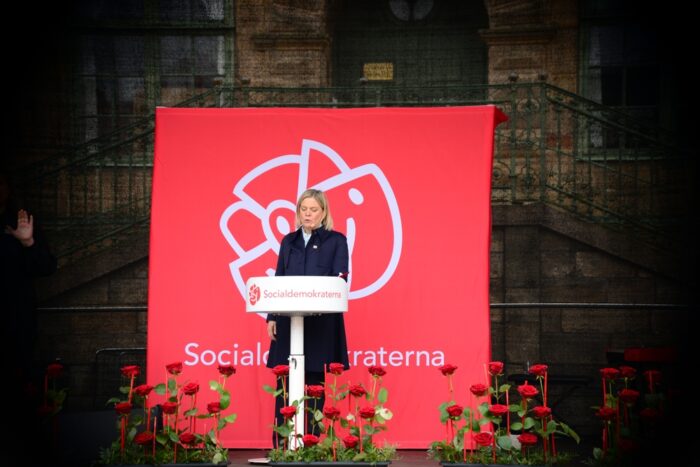
Sanna Marin is by far the most famous Finnish politician, both nationally and internationally. This also made her a clear target for smear campaigns, attacks and attempts to discredit her. Yet, it only seemed to strengthen her image and appeal. Most people have made up their minds about her character long ago and every new issue just worked to strengthen that settled image. Over the entire campaign, Marin stood out as the most popular person to become – or rather stay – the next prime minister. The leader of the NCP never came close to that level of support. But he was cleverly branded as the normal guy who lives next door, who is not glorious or fancy but would be great company on a summer afternoon barbecue.
The Finns Party leader Riikka Purra is a clean version of the populist party’s previous leader: the same politics but no legal convictions of incitement of hatred. Her mission was to make her party electable for a much larger electorate.
The government negotiations will start shortly. In all likelihood, the NCP will try to form a government with the Finns Party, together with some of the smaller parties. If that happens, the political shift from the previous government is enormous. But that is what democracy produces in systems with a fairly fragmented party system. And it remains to be seen how tenable a massive austerity programme would be for a populist party like the Finns Party.
SDP is likely to stay in opposition, regardless of the good result. Only twice before has the PM party managed to increase support in an election in the last century. All three times, it has been SDP lead governments. Now, a couple of days after the election, Sanna Marin has announced that she is stepping down from the party leadership in autumn. This leaves SDP with a sizeable task of convincing all the new voters she brought in that the party is worth the vote even without her, and that there is a progressive, modern Social Democracy flourishing in Finland beyond Marin’s personal leadership and appeal.
Photo credits: Shutterstock.com/Janus Vekara
Find all related Progressive Post
Progressive Post