
Political scientist, former state secretary for higher education and science of Slovenia
26/03/2026
If in 2016 Americans woke up the day after the election, asking themselves, “how could this just have happened?”, Slovenians woke up after the recent election on 22 March 2026 and asked themselves, “what just happened?”
The interesting thing about the election results is that nobody, with only a few exceptions, is really happy with what happened, but nobody is too disappointed either. The governing liberal Freedom Movement (GS) of Robert Golob secured a record-breaking 41 members of parliament in 2022 but fell to 29 this time. This is still a very big outcome for the Slovenian parliament with a total of 90 seats. GS, against most polls, was able to narrowly beat the largest right-wing opposition party, the Slovenian Democratic Party (SDS), by one seat. SDS improved its result compared to 2022 but was still not able to win. And neither were the centre-right Christian Democrat New Slovenia (NSi) party. For this election, they formed an electoral coalition with two other smaller parties gaining, however, only one seat more in total compared to the last election. The junior coalition partner in the outgoing government, the Social Democrats (SD), regained a similar number of votes as in 2022, but lost one seat due to more parties passing the electoral threshold this time. Although the smallest coalition party, The Left (Levica) formed an electoral coalition with an even smaller green party for this election, it could not gain more seats, keeping only its previous 5 ones. There are also two new parties in parliament: the centre-right Democrats of Anže Logar (Demokrati), a former SDS member of parliament, with six seats, and the anti-establishment populist Resni.ca (‘the truth‘) gaining five seats. Crucially, both parties have the possibility of playing the role of ‘kingmaker’ for forming a new government coalition”. However, both parties ruled out a possible coalition with Golob’s GS or Janez Janša’s SDS. Clearly, this will complicate politics in Slovenia in the future.
Three conclusions can be drawn from the result: first, voters elected a hung parliament, second, the governing coalition lost its majority, and, third, the Slovenian society is very polarised. Exit poll data also show an interesting gender and age divide. While women voted rather for GS than for SDS, while SDS had stronger support from men then GS. The (centre) right-wing parties (SDS and NSi) also had more support from young voters (18-24) than GS, while GS and SD got most of their support from voters above 65 years. Levica and Demokrati also polled better with younger then with older voters, as did Resni.ca.
Given this constellation, there is no clear path to form a new coalition government. Yet, there are some options for Janša and Golob, while, at the same time, both are also confronted with quite some complications, for them, as well as for their and possible coalition partners. Surely, there is a bumpy ride ahead for Slovenian politics. This applies not only to forming a new government, but also for policymaking afterwards as all possible coalition parties will be forced to accept many compromises.
The good news about the election is that voter turnout was high with close to 70 per cent. But the road was also very bumpy in the campaign leading up to the election. If most people thought the economy, taxes, healthcare and the cost of living would be at the centre of the campaign, it ended up plagued by scandals in the form of corruption allegations. There were several secretly recorded videos of influential Slovenians surfacing anonymously online and presumably proving cases of corruption within the Slovenian society. These videos made it to prime-time television news and caught fire online. The political magazine Mladina, together with NGOs then published a report alleging that the Janša’s SDS party representatives met with an Israeli spy company named Black Cube, that was allegedly behinds the recordings. Happening in the final week of the campaign, this event completely changed the narrative of the campaign. Many commentators agreed that the tapes swung the election in Golob’s favour. Moreover, possible attempts of external interference into the election were mentioned on both sides of the political aisle.
The last weekend of the campaign was marked by a run on petrol stations following contractionary information on petrol supply, with some stations running out of petrol and rising prices. While the government did everything in its power to prevent rising gas prices (cutting duties), this angered a lot of people and may have influenced their vote against the government.
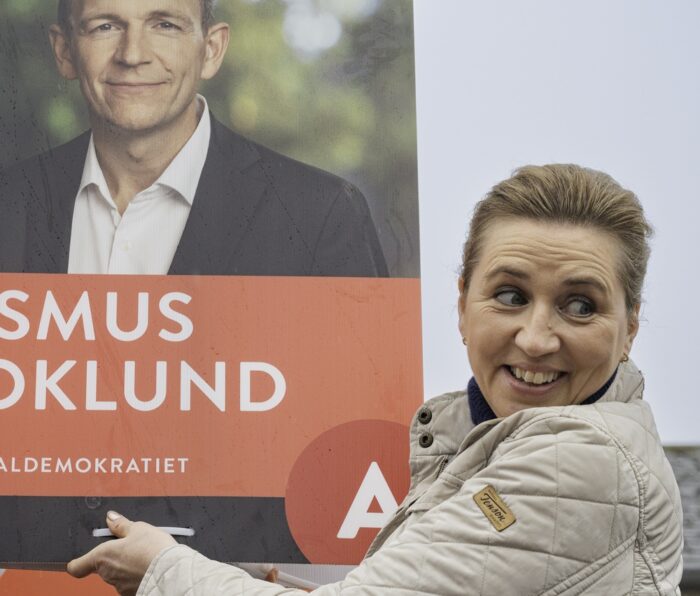
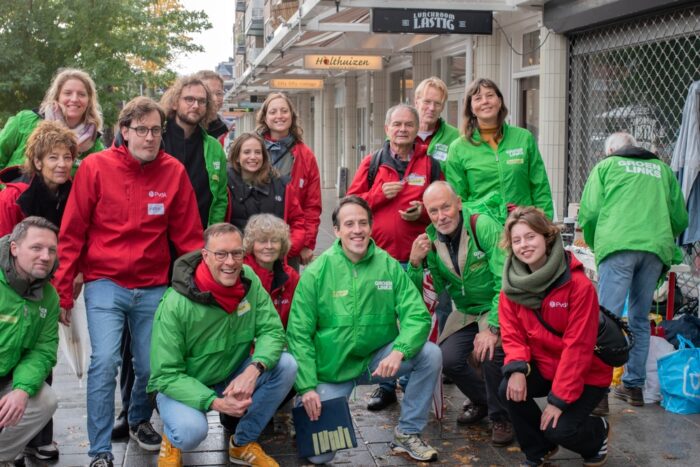
Before the final week of the campaign and the leaks of the video tapes, the campaign was fought by parties on social media, but billboards and the television debates still carried a lot of weight with the electorate, especially the older population. SDS, NSi, together with its electoral coalition partners, and SD focused on their ground game all around the country. Levica and GS, on the other side, had strong support in the capital Ljubljana and in some other traditional strongholds, mostly larger cities and urban areas.
The SD election manifesto was focused on a new social contract, ‘deal’, for peace, development and social welfare. During the election campaign, the party emphasised the need for multilateralism and a just peace in world affairs, the need to strengthen the economy through research and innovation, and fixing Slovenia’s tax system, improving accessibility to the public healthcare system, strengthening public education, providing fair pensions and quality public services to the elderly population. However, the party faced issues in communicating with its target audience, also given the campaign was hijacked with different daily politics and political surprises. Furthermore, the party was not able to capitalise on the work it did during its time in government the past four years. But it can still rely on its legacy voter base and strong organisation and work on the grass rote levels compared to other parties.
Like other European countries, the Slovenian election showed that the country has high political polarisation, great fragmentation and a clear urban-rural divide, as well as some discontent for mainstream political parties. Since this is nothing really new, this kind of division can be called ‘the new normal’. It is a European trend that is here to stay for quite some time. That is why the only thing that is certain after the Slovenian election is that nothing is certain anymore, and that instability is here to stay.
Photo credits: Shutterstock / Matej Kastelic
Find all related Progressive Post
Progressive Post