

30/01/2026
We are witnessing a surge of geopolitical rivalries increasingly fuelled by climate change and undermining global climate efforts at the same time. The EU must stay true to its climate ambitions and find ways to navigate through the new global (dis)order.
Europe is witnessing a tectonic rift in the international order, triggered by the Russian invasion, trade tensions with China and US policies under Trump 2.0. The Greenland crisis demonstrates a sharp shift from an already deficient international order to a ruthless global arena where might makes right. While debating the sorry state of world affairs, one should not overlook the interplay between the changing global order and climate action.
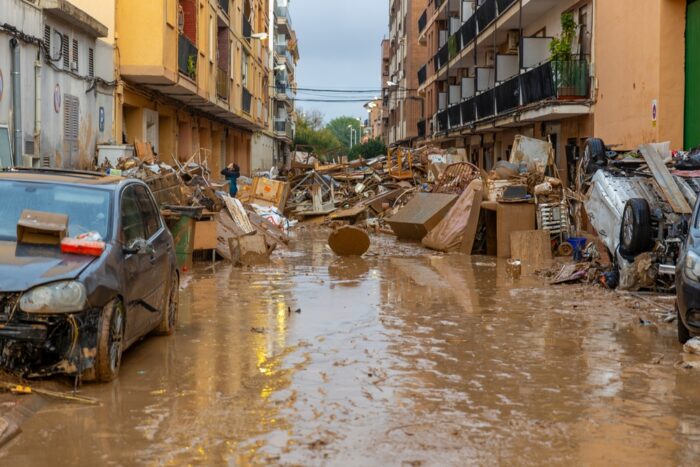
Man-made climate change continues to make severe impacts on our economy and society. The world is not on track to limit global warming to 1.5°C, the level needed to avoid severe future consequences of climate change. Over the past decade, weather-related disasters have displaced 250 million people, and 3.6 billion people continue to reside in areas of high climate vulnerability. Climate change can also act as a security threat multiplier. The strategic importance of Greenland, for example, increases as Arctic sea ice melts due to climate change. Consequently, the surrounding waters become more navigable for commerce and the navy while valuable minerals become more accessible, prompting Russia, the US and China to wrestle for influence in this ‘new frontier’. The immediate US-EU dispute over Greenland is certainly driven by Trump’s territorial aspirations and cannot be justified by the Arctic’s geopolitical sensitivity. However, climate change helps pave the way for such a crisis, including for dangerous narratives coming from the White House.
While climate change can exacerbate geopolitical tensions, geopolitics itself affects climate action. The result of the recently concluded COP30 is far from what is needed to both halt and adapt to climate change, and geopolitics is arguably one of the reasons for such an outcome.
Climate negotiations affected by geopolitics
The COP30 either underdelivered on required commitments or made commitments that are unclear and difficult to interpret. The parties paid only lip service to the phase-out of fossil fuels – the main source of greenhouse gas (GHG) emissions – and could not agree on how to end deforestation. Besides, new commitments to triple climate adaptation finance by 2035 fall well short of estimated adaptation needs and do not specify a clear reference year for the calculation.
As COP negotiations moved from target setting to implementation, their deficiencies became apparent. Consensus-based and opaque decision-making prevents bold progress on global climate action. More broadly, the lack of capacity to reach a consensus or the inability to influence ‘the unwilling’ to follow the trajectory set out in the Paris agreement reflects not just opposing national interests, but also the polycentric nature of the contemporary global order marked by stark geopolitical rivalries.
In a world marked by wars, the revival of protectionism and the rise of illiberalism, it is no surprise that the security dilemma and the pursuit of immediate relative gains severely undermine multilateralism and concern for the global commons. Many oil-producing countries continue to oppose the phase-out of fossil fuels, while the North-South divide over how to align climate action with developmentalist objectives continues to delay needed progress. The US withdrawal from climate debates and commitments under Trump 2.0 dealt a critical blow to COP. While China remains ambitious on climate, this is primarily linked to its exports of cleantech solutions backed by subsidies and other supportive measures to its industry. Driven by fear over the future of its own industry in an uncertain international setting, the EU showed a striking lack of ambition compared to the previous years, barely managing to submit its climate targets ahead of COP30.
What should the EU do?
Despite the geopolitical turbulences, climate action remains critical, given the costs of inaction, from the aggravation of existing and future geopolitical crises to the very survival of humankind. At the same time, expecting international fora such as climate COPs to close both the mitigation and adaptation gaps appears unrealistic in the new world we find ourselves in. Although they will remain crucial for ensuring accountability, there is a growing risk that they will evolve into largely performative, high-level gatherings delivering minimal tangible outcomes. Encouragingly, however, parallel talks at COP30 hinted at a potential shift toward stronger plurilateral cooperation among ‘coalitions of the willing’, including on fossil fuel phase-out and carbon pricing.
In order to effectively pursue the climate agenda, the first and most difficult step is to recognise the current situation, and factor it into future actions. For the EU, it starts at home. The union must show its citizens, industry and the rest of the world that it remains on track regarding its own climate commitments. It must remain committed to its 2030 and 2040 targets, create an enabling regulatory and financial framework for its clean tech industry to flourish, and advance fair transitional pathways for hard-to-abate industries, farmers and lower-income households.
On the international stage, the EU should actively participate in regional and bilateral climate partnerships, including through coalitions of the willing facilitated by COP30, as well as the G7 and G20. In doing so, the EU should rely on a combination of investments while safeguarding the legitimate interests of its own industry through instruments such as the Carbon Border Adjustment Mechanism. The EU should aim to reconcile its own climate objectives with the needs of other nations, namely, by addressing climate impacts fairly, and advancing clean energy and industrial transitions in developing countries. In the case of China, the EU needs to play a delicate game of safeguarding its own economic interests while exploring possibilities to enhance climate-related collaboration. Finally, given the US’s current political context, priority must be given to transatlantic partnerships with cities and states committed to ambitious climate action.
Given the US’s reluctance to pursue climate policies, the EU should take the lead on climate action rather than abandon such commitments – especially since competitiveness and decarbonisation can go hand in hand. By upholding its climate commitments, strengthening social measures to cushion the decarbonisation cost for its most vulnerable citizens, and pursuing fair and effective bilateral and regional arrangements abroad, the EU can help reinforce the rationale for global climate collaboration, which could help give new impetus to future COP negotiations.
Photo credits: Shutterstock.com/Antonio Scorza
Find all related Progressive Post
Progressive Post