

Associate Researcher at the National Scientific and Technical Research Council (CONICET), Argentina, and Associate Professor at the Department of International Relations of at the National University of Rosario
31/10/2025
Despite decades of partnership, the EU-Latin America ties remain largely transactional. Trade dominates, asymmetries persist and global crises continue to test the limits of existing frameworks. To thrive, the relationship must move beyond mercantilism, embracing shared strategies to address global challenges and fostering more balanced, rules-based cooperation.
As the international order is in turmoil, the EU-Latin America relationship is once again in the spotlight. The war in Ukraine, the US-China rivalry and the global race for critical raw materials have renewed Europe’s strategic interest in Latin America. Yet, despite the rhetoric of partnership, many long-standing issues remain. The asymmetry of the relationship and the lack of adequate instruments to address emerging challenges have become an inescapable problem, exposing the limits of a model that still rests mainly on a mercantilist vision of trade rather than on shared strategies for sustainable development.
Why does the relationship matter? The EU and Latin America are long-standing partners with unique, dense, and meaningful ties that span from cultural bonds to trade and investment. Latin America, as a whole, ranks as the EU’s fifth-largest trading partner, while Europe stands as the third-largest market for Latin American goods. The relationship is framed by a web of sub-regional free trade agreements and the forum of the EU and the Community of Latin America and Caribbean states (CELAC) , which serves as the leading platform for political dialogue.
If we were still in the first decade of the 21st century, this network of FTAs and political forums would indeed be considered a measure of success in itself. But the world has changed. Trade is increasingly intertwined with geopolitical considerations. Climate change and technological transformation have reshaped competitive sectors and altered the importance of entire industries. Above all, geopolitical rivalry has led to an unprecedented erosion of global governance mechanisms. In this context, what matters most is that both regions share a belief in cooperation, democracy and the rule of law – values that are becoming increasingly rare elsewhere.
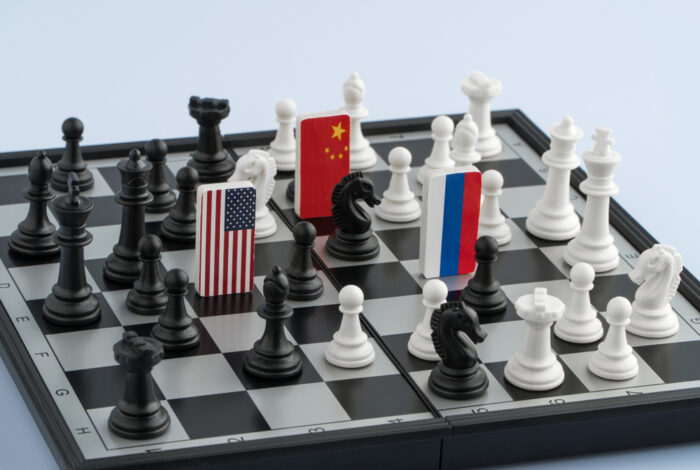
International cooperation and regional integration lie at the core of both regions’ identities, shaping the way they structure their internal relations and external partnerships. Like many other parts of the world, Latin America and the EU share common threats – climate change, the erosion of the rule of law, the negative externalities of the US-China competition – but, in contrast to other partners, they also share a common understanding of how these problems should be addressed: not through power-based solutions, as the US or China might propose, but through rules-based approaches grounded in cooperation and a long tradition of international law.
The puzzling question is why, given this supposed joint understanding and long-standing relationship, the bridges between both regions have so far yielded limited results in addressing pressing issues such as the energy transition or development. Nor have they managed to come up with joint proposals to deal with global challenges and their externalities – for instance the reform of the World Trade Organisation (WTO).
A closer examination of the EU-Mercosur negotiations and their current discussions in Brussels can offer some insights. This partnership agreement has taken more than 20 years to conclude, with two – not one, but two – ‘agreements in principle’: one in 2019 and a revised one in 2024. The agreement promises a modest but positive economic improvement for both the EU and the Mercosur states. Still, it raises serious concerns regarding its distributive effects, as some employment would be lost in import-competing sectors. While the agreement formally aims to serve as a platform for strengthening and safeguarding climate commitments, human rights and democratic values, in the end, it might fail to do so because the European side is unwilling to pay its share of the partnership’s costs.
Indeed, when leadership is needed the most, Brussels seems unable to move beyond a 21st-century mercantilist approach to governance, in which its trade and economic ambitions clash with its political role. The European Commission has introduced quotas limiting market access for many Latin American products. As the EU-Mercosur Interim Trade Agreement moves forward through the European process, there are announcements of new safeguard mechanisms that come on top of other unilateral European measures. Ultimately, these steps seem aimed at reducing the potential gains Mercosur could obtain from the agreement while further promoting EU exports to South American markets. While sustainability has become more visible in the text of the agreement, the core negotiations still revolve around tariffs, quotas and sensitive sectors. This could leave the resulting agreement in a position where many wonder whether compliance is even worth it.
In the meantime, global governance is increasingly eroded, and trust among regions is at risk as protectionist unilateral responses emerge. But by working together, Latin America and Europe can make a difference – standing apart from the US-China competition and the rising geopolitical tensions.
To make trade a driver of inclusive and sustainable growth, both regions need to update their instruments and broaden cooperation beyond market access. This requires not only creativity to develop a new template for agreements and renew interregional governance, but also the political will to embrace the costs of true partnership rather than perpetuate imbalances against Latin America. Genuine cooperation is needed. Europe would benefit from starting to consider Latin American countries as partners in jointly addressing global problems, rather than merely as reliable and inexpensive suppliers and convenient markets for its own goods.
In November, the CELAC-EU Summit will provide an opportunity to reaffirm the shared commitment to dialogue, sustainability and multilateralism. But none of this will be possible under the mercantilist logic that has prevailed in recent times.
Photo credits: European Union, 2023
Find all related Progressive Post
Progressive Post