

President of the Observatory on Political Parties and Representation of the University of Pisa
29/03/2021
The Covid pandemic has exacerbated political parties’ separation from society and their ensuing loss of representativeness. Depending on whether they are in government or opposition, they have been transformed into representatives of the government in society or behind-the-scenes fomenters of societal discontent. Differences across parties thus depend more on their position with respect to government than on their left/right or Europeanist/Eurosceptic orientations.
The Covid-19 pandemic has highlighted and compounded two pre-existing trends of party change: the gradual distancing of political parties from society and the personalisation of party leadership. In addition, the coronavirus crisis has now reduced the time for policy decisions that were previously considered ‘long-term’, including most of those taken at European level and many taken at national level. All this has placed political parties at both the European and national level under enormous strain.
Before the Covid crisis, these two trends had been highlighted by the difficulties of political parties and governments in coping with the increasingly technical nature of policymaking due to the globalisation of trade and finance. These difficulties had started to force political parties to delegate decision-making in crucial areas to non-political actors, such as central banks. The Covid crisis now marks a new development, in that parties are for the first time making explicit the delegation of decisions in areas that have been politicised by the crisis to technical bodies, such as medicines regulatory agencies.
In most democracies the articulation of interests now occurs outside the parties, which simply receive demands aggregated and articulated elsewhere. Parties have the main task of convincing citizens that the choices they have made are adequate. The primordial role of parties as representatives of the people is thus being reversed, as parties instead become representatives of the government in society. In other words, parties are prioritising their role as governing agencies rather than of those representing the people. This is made possible by citizens’ indifference or faithful acceptance of governments’ policy decisions. Faith can certainly be seen to prevail in the pandemic, as citizens want parties in government to do things right.
But the most evident change produced by the pandemic is in the parties’, and most of all their leaders’, modes of communication. Leaders now often communicate their decisions and the day-by-day unfolding of their effects through televised press conferences held alongside eminent virologists or other experts. The trend of resorting to social media like Twitter or Instagram as a major means of communication has also dramatically increased since the start of the Covid crisis.
Another change is the use of web meetings during lockdowns. Perhaps paradoxically, the impossibility of meeting in person has favoured the participation of grassroots representatives in party decisions at regional and even national level, a development that would have been unthinkable only two years ago. This creation of a more direct link between the leadership and the grassroots can be interpreted as an improvement in internal party democracy. At the same time, however, the bypassing of parties’ intermediate bodies can be seen as favouring plebiscitarian/populist forms of leadership personalisation and further distancing from civil society.
As the importance of parties’ intermediate structures fades away, party leaders emerge as the dominant expressions of partisanship. Emmanuel Macron, who even shared his initials (EM) with the party he founded (initially simply called ‘En Marche!’) is perhaps the most evident example of this trend. But other leaders, such as Boris Johnson, Mark Rutte and Viktor Orbán, have come to own their respective parties. Indeed, Germany’s CDU is still closely identified with Angela Merkel more than two years after her resignation as party leader. In Italy, Giuseppe Conte, who led two successive governments even though he had no official party affiliation, has used this experience as a springboard to possibly become the leader of the 5 Star Movement.
With few exceptions, governing party leaders, irrespective of their left/right or even pro-/anti-European orientations, have maintained and even increased their popularity by exploiting citizens’ faith in their ability to overcome the virus. In some cases, this has allowed them to take very assertive positions at European level on Covid-related questions and in other realms as well. A good example of the former is the Italian government’s uncharacteristically spearheading request for the European Commission to stop all exports of vaccines produced within the EU. Viktor Orbán’s decision to pre-emptively leave the EPP is certainly a good case in point for the latter. The relationship between Orbán’s party, Fidesz, and the EPP was always problematic. The perception of autonomy and independence that his government’s handling of the Covid crisis engendered among Hungarian citizens as well among international actors allowed Orbán to take the initiative of leaving the EPP, and thus to turn a possible political defeat, an almost certain expulsion from the EPP, into what appeared to be a political victory.
Parties in opposition have also exhibited a tendency towards personalisation. Some of them, like France’s quintessential opposition party, the Front National, have always been almost one and the same with their leaders, Jean-Marie and Marine Le Pen. But the trend is perhaps even more visible in more recently established parties, such as Geert Wilders’s PVV and Thierry Baudet’s FvD in the Netherlands, or Giorgia Meloni’s FdI in Italy. The need of opposition parties for a strong personalisation of their leadership is even greater than that of parties in government, as opposition parties receive much less attention from traditional media and have to rely much more on social media channels of communication, where leader visibility is of fundamental importance.
In terms of policy positions, opposition parties have exhibited a more nuanced pattern than governing parties. The rally around the flag spirit that is promoted by the latter in dealing with the pandemic makes it problematic for parties in opposition to openly undermine governments’ actions. While it is true that anti-lockdown protests have taken place in nearly every European country, in most cases opposition parties have done no more than look benevolently at the initiatives taken by movements (like the Gilets jaunes in France, or shopkeepers’ associations in Italy) and by less structured groups of protesters (in the UK and Germany).
In general, opposition parties have displayed a critical but partially constructive attitude towards national governments since the start of the pandemic, reserving more open criticism for the European Union’s handling of the crisis – especially after the mishaps that have affected the member states’ vaccination plans. In several member states, however, the promise of EU recovery funds has limited the intensity of anti-EU attacks. A very interesting example of the duplicity of positions of ostensibly anti-EU parties is that of Italy’s League, led by Matteo Salvini. When he was an opposition leader at the time of the second government led by Giuseppe Conte, Salvini was very critical of the government, and above all of the European Commission. Now that his party belongs to the majority that supports the current government led by Mario Draghi, however, Salvini has noticeably toned down his anti-EU criticism.
Overall, the Covid crisis has had more of an impact on certain manifestations of party change, which was already under way, than on its nature. But that does not mean that the pandemic will leave no trace after it ends. Web-based communication and decision-making will most likely be maintained at the levels brought about by the crisis, given their lower economic and opportunity costs than those of the traditional alternatives. And the exacerbated centrality of party leadership is unlikely to abate, as party leaders now have a well-established use of instruments to maintain direct channels of communication with citizens and thus to preserve leaders’ privileged positions.
Find all related Progressive Post
Progressive Post


Find all related events
Events
Paris, France (Hybrid)
FEPS HQ, Brussels
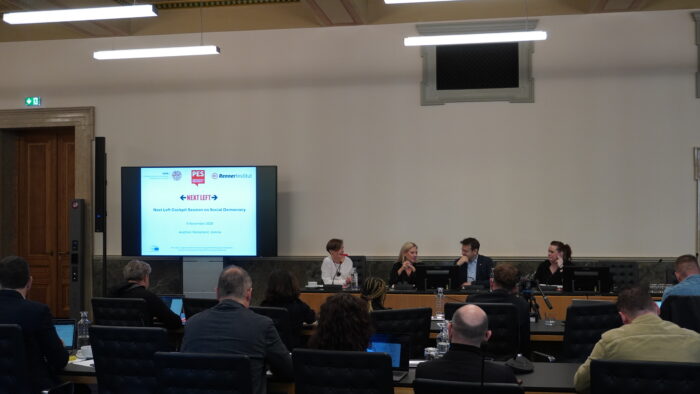
Vienna, Austria (Expert Meeting)
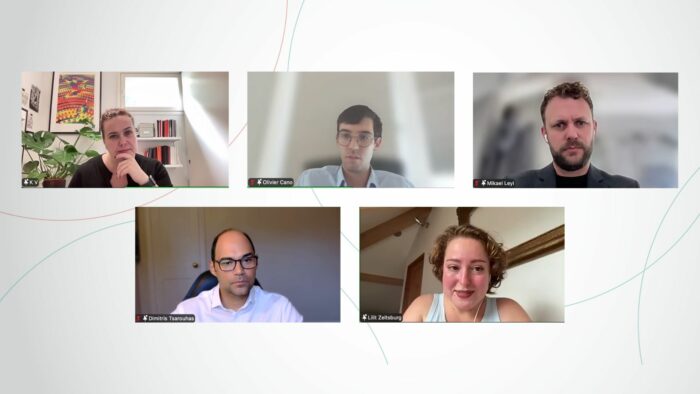
Online (Expert meeting)
Load more...
Find all related publications
Publications
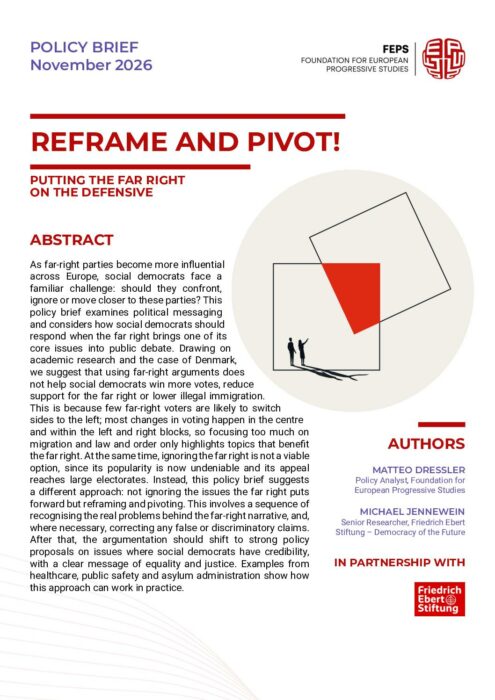
Find all related Audiovisual
Audiovisual

23/04/2026
26/02/2026
26/02/2026
27/10/2025
Find all related news
News

Find all related in the media
In the media
“A civic revolution, not yet a social revolution”
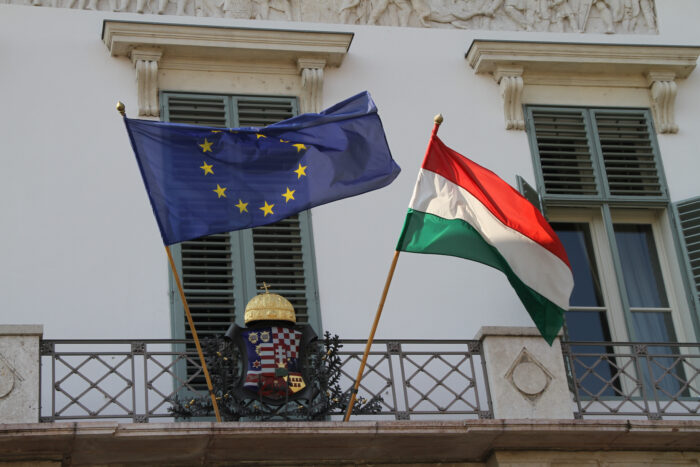
Interview with László Andor, FEPS Secretary General, published by Fondation Jean-Jaurès (FR), analysing the electoral defeat of Viktor Orbán, the emergence of a broad opposition movement in Hungary, and the prospects for democratic renewal, EU relations and social change following what he describes as a “civic revolution” that has yet to deliver a social transformation.
“Money is coming! Will Péter Magyar deliver on his promise?”
Video Interview published on KlikkTV (HU), featuring László Andor, FEPS Secretary General, discussing EU funds to Hungary, their political conditionality, and the importance of fair distribution, rule of law and social investment within the European Union.
“Back to the Future: The Great Reset”
Opinion article by FEPS Vice-President, Lina Gálvez reflecting on the current global crisis marked by rising authoritarianism, digital power and extreme inequality, and tracing its roots through a historical analysis of capitalism — from the post-1945 social and geopolitical settlement led by social democratic forces, through neoliberal financialisation, to what she describes as a new phase of fascist capitalism.