
24/03/2026
Matteo Lepore, a member of the Democratic Party (PD), has served as mayor of Bologna since October 2021. Under his helm, the city – along with more than a hundred European ones, like Madrid, Munich, Paris, Rome and Stockholm – has signed the Climate City Contract in 2024, which aims to achieve net-zero emissions by 2030, 20 years ahead of the general EU target.
Hedwig Giusto: What role does adaptation play in the Climate City Contract compared to mitigation?
Matteo Lepore: Adaptation is an indispensable complement to our climate action: without resilience, carbon neutrality would remain incomplete. The Climate City Contract looks ahead to 2030, but in the meantime, we must protect the city from the effects already underway. That is why we have chosen to embed adaptation within the regulations, rather than leaving it to ad hoc measures.
We talk about ‘regulatory innovation’ because we have incorporated binding climate standards into the General Urban Plan and the building regulations. In this way, every urban transformation contributes to collective safety. The aim is to transform Bologna into a ‘sponge city’, where green roofs and walls, unsealed ground and hybrid car parks with solar panels and trees become essential infrastructure. Adaptation requires vision, investment and continuity. Acting on the rules is the most effective way to ensure that every intervention makes the city safer, more liveable, and better prepared for climate challenges.
HG: You have defined cities as ‘living laboratories’ where innovations can be tested to address the digital, social and ecological transition. How have you translated this idea into concrete, innovative experiments? And how could these experiences be transferred to other cities in Europe?
ML: Bologna is an open-air laboratory where policies, projects and communities come together to generate concrete solutions. Here we experiment with initiatives that are not isolated, but are designed from the outset to be replicable, adaptable and useful to other cities facing similar challenges. An interesting example is the TALEA project, currently under development, which was created to provide an innovative response to the phenomenon of urban heat islands. The approach is integrated: technology, nature, and civic participation work together to transform public spaces into genuine climate refuges that are accessible and inclusive.
It is not just a matter of planting trees, but of rethinking how we live and how we design the city. Through TALEA, so-called ‘green cells’ will be created in certain areas of the city, including the historic centre, with the aim of regenerating urban ecosystems and creating greater continuity between green infrastructure, thereby improving the microclimate and the quality of these spaces. What makes this project particularly interesting is the method: the green cells are not simply designed from above, but built through a collaborative process involving the administration, local communities and various local stakeholders. This strengthens a sense of belonging and makes citizens active participants in the change, rather than mere recipients. On these issues, we must not forget the one fundamental factor: people.
From this perspective, the citizens’ climate assembly represents a new model of governance: through a random selection process, citizens of varying ages, incomes and backgrounds are involved, trained and empowered to deliberate on highly complex issues such as climate change. It is a process that fosters awareness and trust. Decisions are not perceived as being imposed, but as being built together.
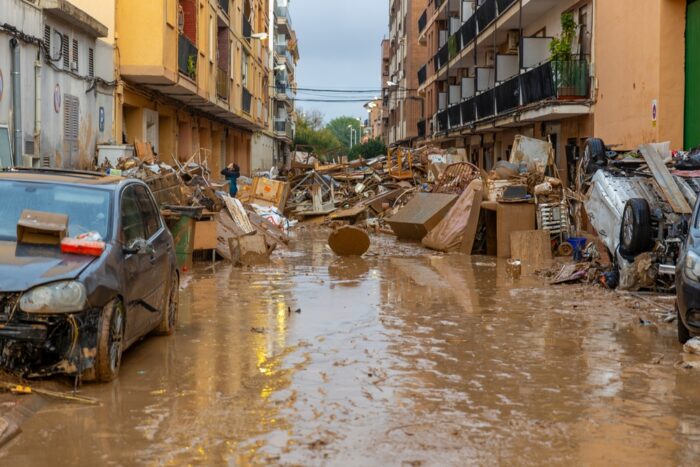
HG: The many tragic floods of recent years have exposed the vulnerability of Italy’s river basins, including the Reno river. Beyond the emergency response, what kind of structural changes is your administration making to improve water absorption?
ML: The floods have prompted us to move beyond the logic of emergency response. Today, we work in an integrated manner with our region, Emilia-Romagna, national institutions and the Reno Land Reclamation Consortium, sharing resources and strategies. This collaboration enables more effective interventions across the entire water management system. At the same time, we have incorporated this vision into urban planning. The General Urban Plan promotes reducing impervious surfaces, including in areas near canals or watercourses. Removing paving restores the ground’s ability to absorb and slow water. The aim is to transform water from a threat into a resource. It is a shift in perspective: not defending against water, but coexisting with it intelligently.
HG: You have promoted, including within the Committee of the Regions, nature-based solutions in the city’s adaptation strategies. Are some of these solutions already visible in Bologna?
ML: Yes, and increasingly so. Nature-based solutions are becoming an integral part of the urban landscape. They are not isolated interventions but a growing network. In new buildings, green roofs and vertical gardens are now mandatory features, designed to improve the microclimate, retain water and reduce temperatures. In public spaces, we are gradually replacing impermeable surfaces with permeable materials and introducing trees that provide shade and comfort.
This approach has been adopted, for example, in the transformation of school playgrounds; in the regeneration of urban thoroughfares crossed by the new tram lines currently under construction – where, in one instance, work also involved the reopening of a historic canal; and in the creation or regeneration of green spaces and play areas, as well as the construction of a large ground-level fountain in a highly frequented public space such as a square. Taken together, these interventions demonstrate how nature-based solutions can be integrated across different contexts, making a tangible contribution to climate adaptation and improving urban quality.
A particularly delicate challenge concerns the historic centre. Here, we work carefully to integrate greenery without compromising the heritage value. We use microclimate maps to identify the most critical areas. The aim is to implement targeted solutions: new plantings, reflective materials, and small-scale, widespread interventions. Taken together, these actions will produce a tangible effect. The city will change gradually, becoming increasingly cooler, more permeable and more liveable. It is an ongoing process that requires care and perseverance.
HG: Bologna aims to avoid taking any new land, the so-called ‘zero land take’. This is an ambitious goal, as infrastructure requires land, and development requires infrastructure. How is it possible to reconcile the need for development with the preservation of land (also to prevent further flooding)?
ML: Bologna has chosen to halt urban sprawl, preserving agricultural areas and reducing hydraulic and climate risks. This choice requires a paradigm shift: development no longer depends on expansion, but on regeneration. Brownfield sites thus become strategic opportunities. A prime example is the former Scalo Ravone, now at the heart of a major regeneration project that will create the Parco della Memoria, a new public space dedicated to culture, social interaction, sport and innovation. The project involves significant de-sealing: around 96,000 square metres are being redesigned to significantly increase permeable surfaces and reduce impermeable ones. This improves water absorption capacity and helps mitigate heat islands.
The new district will be car-free, accessible to pedestrians and soft mobility, with new cycle and pedestrian links integrating it into the urban fabric. The park will include woodland with over a thousand trees, clearings, paths evoking the railway heritage, spaces for sport, play and relaxation, as well as meeting places such as squares and event areas. Great attention is also paid to environmental aspects: rainwater management, energy efficiency and microclimate quality. The project forms part of the ‘city of knowledge’ vision, which aims to regenerate the entire north-western quadrant. This demonstrates that zero land take does not limit development but rather makes it more sustainable and quality-oriented.
HG: Adaptation is very costly for both the administration and citizens. It also requires a high level of public awareness of the risks posed by climate change and of the means to make cities resilient. What are you doing to inform citizens and ensure that lower-income residents – who are often the most exposed to climate risks – are not left behind?
ML: The transition is only effective if it is fair. That is why we focus on participation and inclusion. The Climate Assembly has engaged citizens who are often excluded, providing them with the tools to understand and make decisions. Alongside this, we promote initiatives such as the establishment of renewable energy communities, particularly in the most vulnerable neighbourhoods, helping to tackle energy poverty. On the information front, we are updating the Civil Protection Plan to ensure clear and accessible warning systems. The aim is simple: to leave no one behind, neither in access to resources nor in risk management.
HG: While you lead a city aiming for climate neutrality by 2030, you operate in a difficult broader political context, both in Italy and Europe, where the Green Deal is being undermined, and social policies are disregarded. How can progressive leaders like you defend the cost of transition before citizens who are legitimately worried about housing and inflation?
ML:We prefer to talk about the ‘freedom deal’, because the ecological transition is first and foremost about freedom from unstable energy sources, unpredictable costs and geopolitical dependencies, as we are seeing in recent weeks with the war in Iran.
Investing in renewable energy and resilience means building autonomy. In an uncertain international context, this is a strategic choice, not an ideological one. Defending the Green Deal also means protecting citizens. Energy efficiency in buildings reduces consumption, renewables stabilise costs and adaptation limits the damage caused by extreme events. All of this translates into economic security. The ecological transition is not a luxury, but a necessity. It is a concrete response that addresses the present, not just the future, and that puts people’s quality of life at the centre.
Photo credits: Comune di Bologna/Giorgio Bianchi
Find all related Progressive Post
Progressive Post