
co-Founder, member of the executive board, Diplomeds – The Council for Mediterranean Diplomacy
19/11/2026
The European Union is entering a moment of strategic reassessment. As the EU prepares to revise its global security strategy and develop a new strategy toward the Middle East, it should reckon that the convergence of crises over the past decade – including Russia’s invasion of Ukraine, escalating instability in the Middle East and the growing unpredictability of the transatlantic relationship – has fundamentally altered the assumptions underpinning European foreign and security policy.
The lesson of recent years is not only that Europe remains economically, militarily and politically dependent on external actors, but also that its capacity to act collectively remains constrained by internal fragmentation. This has become particularly visible in the Mediterranean and the Middle East, where the EU’s ambitions have often exceeded its actual leverage. Yet this moment of reckoning should not lead the EU toward strategic resignation. Rather, it should push Europe to redefine how it exercises influence. The answer does not lie in abandoning ambition altogether, but in aligning ambition with capability and in identifying domains where the EU can genuinely provide added value, while awaiting deeper structural reforms, including possible treaty reforms in the field of common foreign and security policy.
One such domain is multilateralism and regionalism, a priority the EU has already recognised, with multilateralism featuring prominently in its recent strategic documents and high-level political speeches. As global politics becomes increasingly transactional and confrontational, the international rules-based order comes under pressure and the UN’s role is itself challenged, the EU’s comparative advantage lies in its ability to convene actors, maintain institutional frameworks and sustain long-term mechanisms for cooperation, dialogue and interdependence.
Multilateralism and regionalism in the Mediterranean have a name: the Union for the Mediterranean
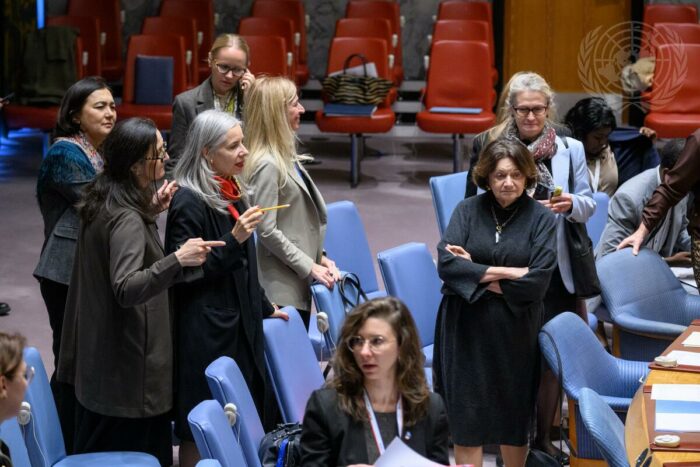
Support for multilateralism and the rules-based international order in the Mediterranean is already deeply embedded in EU discourse. European leaders regularly reaffirm these principles in speeches and strategic documents. This includes recent references by High Representative Kaja Kallas at the United Nations Security Council in April 2026, as well as the repeated emphasis on regional cooperation within the Pact for the Mediterranean.
In the Mediterranean, the Union for the Mediterranean (UfM) is one of the most significant institutional expressions of regionalism and multilateralism, and a platform through which the EU can translate its commitment to these principles into concrete regional cooperation. The UfM remains the only inclusive Mediterranean organisation bringing together 43 member states from both shores of the Mediterranean, including Syria that has reintegrated the organisation in June 2025. It includes countries that do not maintain bilateral relations, actors engaged in active conflicts and states with profoundly divergent geopolitical alignments. It is one of the very few regional platforms where such actors continue to sit within the same institutional framework despite deep political tensions. The UfM should be considered as potentially the most credible vehicle through which Europe can translate its rhetorical commitment to multilateralism into concrete action in that part of the world.
Of course, the UfM is imperfect. The organisation suffers from institutional fragility, political paralysis, funding limitations and chronic lack of high-level political engagement. The consensus-based model frequently produces lowest-common-denominator outcomes, while regional rivalries repeatedly block ambitious reforms and governance and conflicts between members increasingly test the organisation’s ability to maintain an inclusive framework for cooperation. The UfM’s recent reform process, the drafting of the new vision statement and the new team leading the organisation, clearly illustrate both the unique window of opportunity and the structural constraints limiting the organisation’s evolution.
The vision statement represented a genuine effort to adapt the UfM to a transformed geopolitical environment. It articulated a more coherent strategic direction structured around three pillars: connecting people, connecting countries and connecting economies. It also sought to strengthen the organisation’s operational tools, governance mechanisms and project-based capacities.
However, the reform process also exposed the political limitations of the current Euro-Mediterranean framework and a persistent paradox: Member states regularly criticise the UfM for lacking political impact, while simultaneously resisting efforts to provide the organisation with the political mandate, institutional flexibility and financial resources required to become more effective. Divisions among member states during the reform process diluted many of the more ambitious proposals. Attempts to strengthen the UfM’s role on peace and security issues were softened. Discussions around mandatory budget contributions by member states were ultimately dropped.
Making multilateralism work: investing in the UfM
If the EU is serious about translating its commitment to multilateralism into action in that part of the world, then strengthening the UfM should become a strategic priority. This does not require transforming the organisation into a grand geopolitical actor overnight.
The current geopolitical context simply does not support such ambitions. The regional environment is too polarised, and the divisions among both EU and Southern Mediterranean member states are too deep. But this is precisely why the EU should focus on what is realistic and achievable. Three steps could help the UfM become a more effective instrument of regional cooperation.
First, the UfM needs to be given a clearer mandate, purpose and direction.
One of the central lessons emerging from the UfM reform process is that the organisation suffers from a persistent identity problem. Over time, the UfM’s agenda has progressively expanded into a fragmented collection of thematic priorities, often reflecting competing member-state interests rather than a coherent strategic vision. As a result, the organisation has sometimes resembled a broad ‘shopping list’ of initiatives rather than a focused regional framework. This contributes directly to member-state disengagement. The EU and the UfM’s co-presidency therefore need to provide the organisation with a clearer and more understandable vision.
One possible medium to long term option would be to transform the UfM into a pillar-assessed entity serving as an operational arm of the regional dimension of the Euro-Mediterranean partnership. In practical terms, this would mean enabling the UfM to be entrusted with the implementation of EU budget funds under indirect management, as is already the case for a range of UN bodies. Such a step would require a thorough institutional reform within the UfM, but could ultimately provide the UfM with greater institutional clarity, operational credibility and a stronger sense of purpose. Most importantly, it would help break the current vicious circle whereby member states remain uninterested because the organisation lacks a strong mandate.
Second, improving the UfM’s visibility and restoring its credibility requires a simplification of the Euro-Mediterranean institutional architecture.
There is currently a confusing overlap between the regional dimension of the EU’s Southern Neighbourhood policy and the UfM. Granting the UfM pillar-assessed status could help clarify and rationalise this division of labour by allowing the UfM to take responsibility for the regional dimension of the Euro-Mediterranean partnership as a whole, while enabling the EU to focus more squarely on its bilateral relations with its MENA partners.
Simplification is not merely an administrative adjustment; it is a strategic necessity. Complexity has become a liability for both the EU and the UfM, at a time when other actors offer more direct and flexible forms of engagement. Many regional partners privately express frustration with the proliferation of overlapping formats, funding instruments, ministerial tracks, and parallel processes. The organisation of separate EU ministerial meetings with its ‘southern neighbours’ – excluding Turkey and the Western Balkans, which are candidate countries – sometimes held back-to-back with UfM ministerial meetings bringing together all 43 UfM members, illustrates the problem. While each mechanism may have its own rationale, their cumulative effect is institutional fatigue, mistrust and growing indifference among partner countries. The multiplication of meetings and overlapping frameworks create the perception of bureaucratic process rather than genuine political partnership.
A welcome side effect of such a clarification would be to remove the perception of the UfM as a potential competitor to the EU – a dynamic that has occasionally shaped EU policy in the past and constrained the UfM’s potential to develop. Without such a political decision, calls for strengthening regional multilateralism risk remaining largely rhetorical.
Third, shared ownership calls for shared responsibility.
A stronger UfM cannot emerge solely through European investment. The imbalance in the Euro-Mediterranean partnership is real. The EU remains the organisation’s principal financial backbone, which reinforces a donor-recipient dynamic and gives European priorities disproportionate influence over the organisation’s orientation. Southern partners routinely criticise this imbalance. But they have not consistently invested sufficient political or financial capital to counterbalance it either. The expectation that the UfM should become more politically influential cannot realistically materialise without greater shared ownership from both shores of the Mediterranean. This includes stronger ministerial participation, greater engagement in strategic direction, and increased financial contributions by Southern Mediterranean member states themselves. Without this, ambitions to strengthen the organisation will remain largely rhetorical.
Strengthening the UfM should be part of a broader European effort to develop a more coherent multilateral strategy – one that combines inclusive regional institutions with flexible, issue-specific and crisis-oriented forms of cooperation.
Photo credits: Shutterstock/Aerial Viewer
Find all related Progressive Post
Progressive Post