

Member of the European Parliament, group of the Progressive Alliance of Socialists and Democrats
05/11/2026
I have always been struck by how little attention we pay to patriarchal culture when we think about geopolitics. We analyse military budgets, alliances and power structures, yet we rarely ask what our very idea of power is, in a world built on masculine codes.
In July 2003, after 14 years of civil war had devastated Liberia, peace talks were stuck in deadlock. Fed up with the stalemate, Liberian women from the Women of Liberia Mass Action for Peace movement decided to gather outside the negotiating room and block the doors and windows: no one is leaving without a deal. On 18 August, the Accra Peace Agreement, named after the capital of Ghana, where the peace talks took place, was signed. Two years later, the movement helped bring Ellen Johnson Sirleaf to the presidency. She was the first democratically elected woman to lead an African country. Since then, war has never returned, and Liberia has been at peace for 23 years. Liberia is not an isolated example. After analysing 182 peace agreements, researcher Laurel Stone found that when women participate in peace processes, the likelihood of an agreement lasting at least two years increases by 20 per cent, while the likelihood of it lasting at least 15 years increases by 35 per cent. In short, when women have a real say in peace negotiations, an agreement is almost always reached, and, once it is on the table, it is more likely to be implemented. This finding became one of the central conclusions of the UN’s 2015 Global Study on the implementation of resolution 1325, the landmark resolution that established the Women, Peace and Security agenda.
Yet women continue to be widely excluded from negotiating tables. Between 1992 and 2019, women accounted for an average of just 13 per cent of negotiators, 6 per cent of mediators and equally 6 per cent of signatories in major peace processes, according to the Council on Foreign Relations. Nearly seven out of ten peace processes had no women among their mediators or signatories. Meanwhile, the violence women face is comparable to that of war itself. According to American journalists Nicholas Kristof and Sheryl WuDunn, more girls have been killed over half a century simply because they were girls than men were killed in all the wars of the 20th century combined.
This is a staggering contradiction. We know that women’s participation makes peace more likely and more lasting. We know the devastating cost of violence against women. And yet women are excluded from reflections on security, from summits where decisions about war and peace are made, and from the corridors of power.
The starting point of ‘geofeminism’
For all these reasons, I publish Géoféminisme, ‘geofeminism’: to try and transform the ways we think about international relations and to propose new ones, grounded in equality. Just as the concept of ecofeminism revealed the connections between women’s oppression and nature exploitation, geofeminism seeks to demonstrate that the domination of women and violence between states are driven by similar mechanisms. There is a deeply ingrained culture of masculinity in the way we think about power and international relations, one that is rarely questioned. This is a major blind spot in geopolitics.
Our traditional understanding of power is not neutral. It celebrates qualities historically associated with masculinity: domination, conquest, competition, the ability to impose one’s will and the use of force. Negotiation, empathy, cooperation and compromise, on the other hand, are all too easily dismissed as signs of weakness.
‘If you want peace, prepare for war’, goes the old saying. But this worldview does more than describe international relations. It actively shapes them. By presenting war as inevitable, it traps states in a spiral in which countries arm themselves because others are doing the same, potentially increasing the very insecurity they claim to prevent. This attitude precludes other ways of protecting ourselves that are based on international law, cooperation, interdependence and conflict prevention. This is not about being naive in the face of threats. It is about breaking with the idea that credibility means brutality, that security means stockpiling weapons and that compromise means weakness.
The evidence shows that giving women a greater role in society and in positions of power is essential for building a more stable and prosperous world. Girls’ education, women’s economic independence, access to contraception, women’s rights and political participation are not merely matters of social policy. They are security policies in their own right, and arguably among the most reliable ways to prevent conflicts in the 21st century.
Peace is not simply the absence of war or a balance of terror. It rests on justice, equality and dignity. In short, if you want peace, prepare for equality!
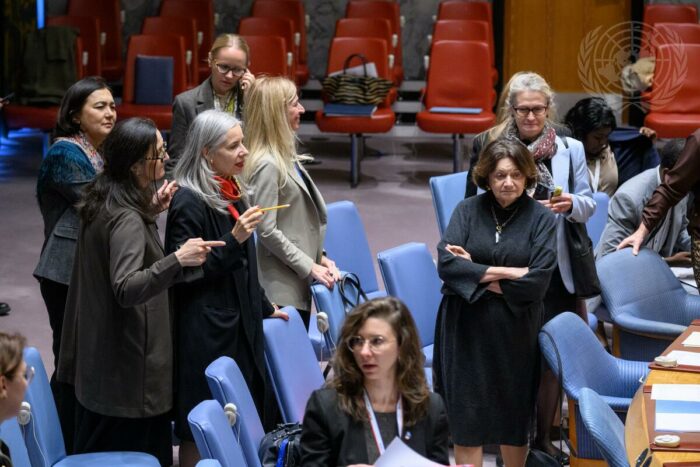
Photo credits: UN Photo/Staton Winter
Find all related Progressive Post
Progressive Post
Find all related events
Events
No upcoming events at the moment.
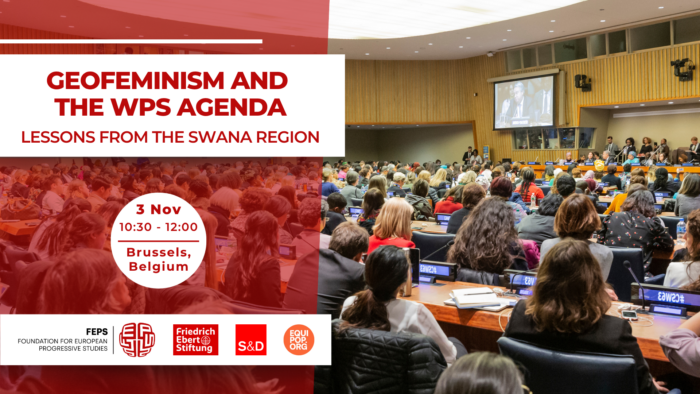
Brussels, Belgium (Expert meeting)
Online (expert meeting)
Online (Expert meeting)
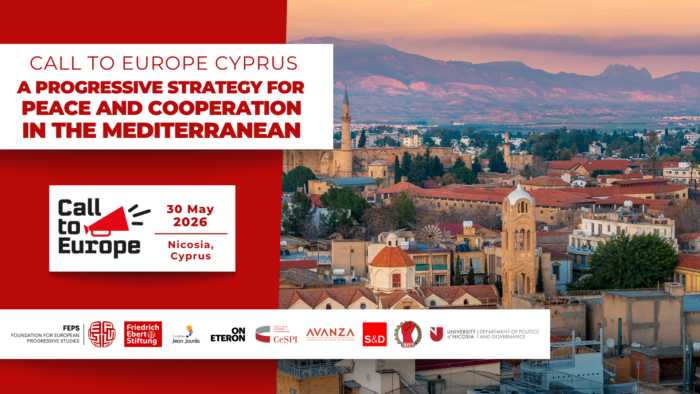
Nicosia, Cyprus
Load more...
Find all related publications
Publications
Find all related Audiovisual
Audiovisual

30/05/2026
24/04/2026
24/04/2026
09/03/2026
Find all related news
News
Find all related in the media
In the media
‘Bruselas, ¿te Quiero?’ Tras un verano cruel, Von der Leyen pide a Europa que “luche”
by Euronews 16/09/2025