


10/01/2022
Migrants are disproportionately impacted by Covid-19, both in terms of health and socioeconomic fallout. Yet, the pandemic also shines a light on the often-overlooked relation between migrant health and migrant integration. The Covid-19 pandemic offers an opportunity to reimagine how health and integration policies interact and can mutually reinforce one another.
The physical and mental health of all populations is key to inclusive immigration societies, as health is essential to participate in education, employment, and social life. Yet, European debates on immigrant integration have long overlooked migrant health and access to healthcare as requirements for successful integration. On the other hand, policymakers have not been sufficiently aware of how integration outcomes are root causes of many health inequalities. The Covid-19 pandemic has begun to change this and offers an opportunity to reimagine how health and integration policies can mutually reinforce each other.
The pandemic shines a spotlight on persistent health inequalities, as evidenced by the higher infection and mortality rates among migrant communities. In doing so, it draws attention to the often-overlooked structural inequalities that underlie these health gaps, not only for Covid-19 but also for other health conditions. Low socioeconomic status and low educational attainment, job characteristics such as working in frontline and close-proximity professions, and crowded and poor housing conditions have all been found to explain higher Covid-19 infection rates among migrant groups and to threaten physical and mental health more generally.
The pandemic aggravates these root causes and will likely deepen migrant health disparities. Approximately 50 per cent of migrants and refugees, especially the most vulnerable groups with temporary or no legal status, report that the pandemic has strongly deteriorated their daily living conditions, specifically their financial means, work, and housing. Moreover, Covid-19 has increased unemployment rates across the board but especially for migrants and has also triggered a spike in hate speech and violent crimes against migrants, which are known causes of health problems. If stakeholders do not take proper action, the disproportionate fallout of the pandemic will likely deepen existing health disparities.
Without timely action, these increased inequalities will undermine migrant integration. Health problems create obstacles to labour market integration, education, and active participation in society. Yet, policy debates often ignore the migrant integration–migrant health nexus. Most European countries take a so-called ‘downstream’ approach, focusing on treating existing health problems instead of also focusing on prevention and health promotion. The increased awareness fuelled by the Covid-19 pandemic provides an excellent opportunity to shift to a ‘Health in All Policies’ (HiAP) framework and actively use integration policies as an avenue to promote migrant health through tackling the root causes of health problems. Through this approach, health promotion and disease prevention could reduce migrant health problems and result in more long-term, cost-effective strategies reflecting the reasoning that prevention is better than cure. Promoting health will, in turn, enable migrants to successfully participate in the labour market and in society, potentially reducing their dependence on social welfare and increasing tax revenues.
Interviews I conducted for the Migration Policy Institute Europe with migrant integration policymakers across Europe and North America during the Fall of 2021 already show a promising increase in cross-sectoral collaboration between migrant integration and health policymakers sparked by the pandemic. It is key that policymakers capitalise on this momentum and invest in structural cross-sectoral collaboration. Integration policies can address the challenge of poor migrant health in manifold ways. On an immediate level, they can improve migrants and refugees’ access to the healthcare system – for example, by providing multilingual information and building intercultural capacity in institutions. Beyond this, the goal of boosting migrants’ participation in education and employment can itself promote mental and physical well-being. Health is both a necessary ingredient for, and an outcome of, sound integration policy.
Covid-19 has stretched European healthcare systems to their limits, and it will likely lead to a long-term rethinking of public health strategies and investments. As a silver lining, this moment could be an opportunity to better reflect the complex needs of diverse populations, and to connect health promotion with other dimensions of inclusion and participation. In doing so, governments may be able to draw lessons from the rapid and innovative responses they adopted during the pandemic – such as partnering with new stakeholders and testing different (often, digitally based) service-delivery and outreach methods.
Find out more in MPI Europe’s recent report Healing the Gap: Building Inclusive Public Health and Migrant Integration Systems in Europe.
Related articles:
Can the integration plan lead to greater coherence in EU migration policy? , by Andrea Stocchiero
Exploited and marginalised: obstacles to integration and inclusion for migrant workers in care and agriculture, by Gerry Mitchell and Liran Morav
Find all related Progressive Post
Progressive Post

Find all related events
Events
No upcoming events at the moment.

FEPS HQ

Brussels, Belgium (Hybrid)
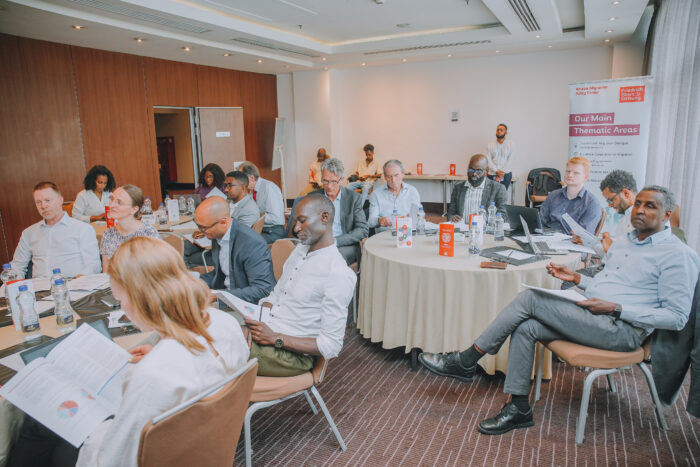
Addis Ababa, Ethiopia (Hybrid - Expert Meeting)
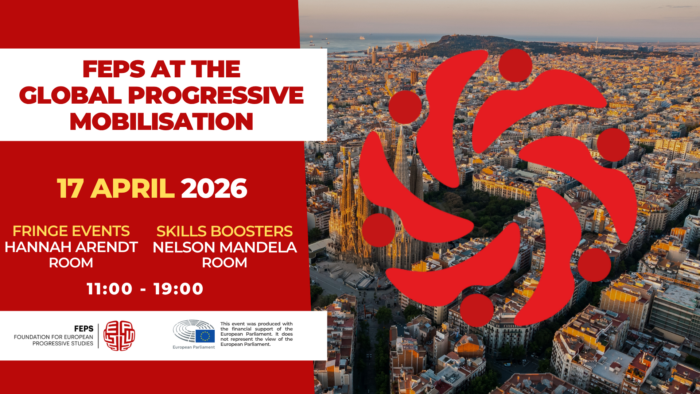
Barcelona, Spain
Load more...
Find all related publications
Publications
Find all related Audiovisual
Audiovisual

24/06/2026

23/06/2026

22/05/2026

17/04/2026
Find all related news
News



Find all related in the media
In the media
“Migrants: Amato to FEPS — ‘Socialists and populists fuel obsession’”
News article in Avanti! where Hedwig Giusto, FEPS Head of International Affairs, critiques how both populist and some socialist political forces are stoking fear around migration. Giusto calls for balanced migration policies that respect human rights, reinforce solidarity among member states, and reject securitarian obsessions.
Italy’s scheme to offshore asylum claims should not be a model for the rest of Europe
by The Guardian 16/10/2024