
08/01/2026
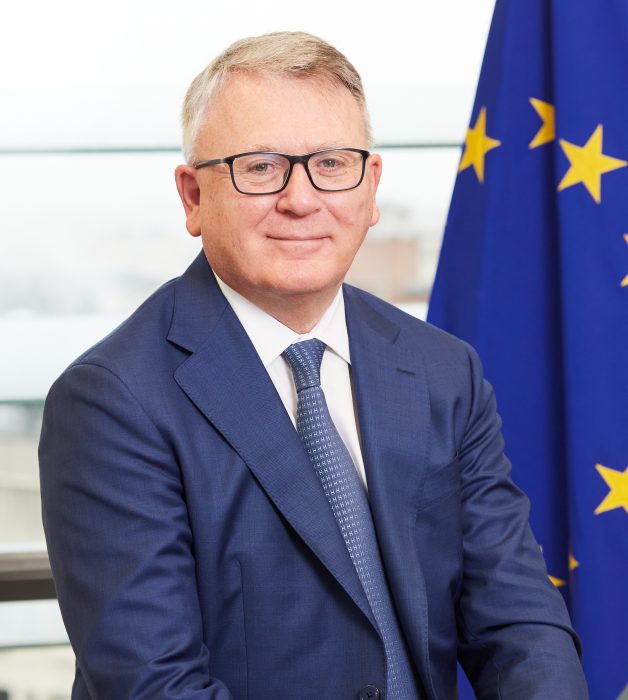
It is a special honour as well as an exceptional challenge for me to have been entrusted with the presidency of FEPS. I am happy to build on the solid work accomplished by Maria João Rodrigues and the FEPS team over the past few years.
As the first days of 2026 have already confirmed, we are facing a fractured world characterised by the loss of some established certainties of the post-World War 2 and post-1989 international order. This obliges a progressive thinktank like FEPS to adapt by innovating and strengthening its capabilities in close cooperation with its network of partners. Its mission to provide solid analytical work, leading to informed political guidance for progressive decision-makers, becomes even more indispensable.
Social Democracy has decisively shaped what we used to call the Western world with its core values: democracy, rule of law, human rights and, for Social Democrats, eminently important, social justice and solidarity. Inspired by these values, they have courageously opposed fascism and Stalinism.
Today, what we used to consider to be the ‘west’ may not exist anymore as its fundamental values are brutally put into question by the Trump administration. One of the major goals shared by the European far-right allies is to destroy the European Union, a rule-based union founded on the attachment of precisely the values, principles and rights that are now thrown overboard. In the 2025 US National Security Strategy, the European Union is considered to be in a ‘civilisational crisis’. It is no longer viewed as the natural ally of the US, but rather as an antagonistic entity created with the aim of harming American interests. This was already outlined in US Vice-President JD Vance’s ominous speech at the Munich Security Conference last year.
For Europeans, this should be a shocking wake-up call, particularly because words are followed by deeds. The US operation in Venezuela, which has put oil as a main objective rather than democracy shows that international law is not respected anymore. The threat to annexe Greenland has to be taken seriously by Europeans. Another example is the pressure through sanctions on the EU to abandon its legislation on platforms and artificial intelligence. This dramatically illustrates the widening gap between the US and the EU. The EU should by no means give in on such a fundamental issue for our democracy. It can show its strength as US online platforms make 50 per cent of their profits in Europe. At the same time, Europe needs to invest more to be more competitive and less dependent. In a world dominated by power relations, the European Union, still committed to international law, should strategically use its strength in the service of its interests. We should not be afraid of Power Europe!
What is even more worrying is that the new US Security Strategy does not contain a single hint of criticism of Russia and its criminal war of aggression against Ukraine. Europe’s security is at stake, and therefore, support for Ukraine, as well as the development of a European defence policy with a strong industrial dimension, are urgent necessities.
At the same time, Europe’s political and social model is under attack. Social Democrats are constantly warning about the danger coming from far-right populists that rely on the Trump administration and its globally organised followers. There is now a clear interference in Europe’s political life through the support for so-called ‘patriotic parties’: conservatives who rally on the national and European levels.
Warning is not enough anymore. We need a comprehensive strategy that starts with a clear understanding of why far-right populism is electorally so successful in many member states. We have to better understand why the Social Democratic narrative has lost its attractiveness. Is it because policies have been perceived just as the more moderate version of neoliberalism and because the losers of globalisation have been insufficiently taken care of?
The EU is now confronted with a totally new geopolitical and geoeconomic context with a technological race at its core. At the same time, Europe’s internal political and social cohesion is under threat. This goes beyond a simple competitiveness problem resulting from overregulation. Inequality at all levels remains Europe’s most persistent challenge in a rapidly changing socio-economic context. This divide also characterises the world of work with the development of a host of precarious jobs. The impact of digitisation and AI on jobs is a major issue that progressives must put at the forefront. There is a risk of deep political disillusionment.
Climate policy, even though it is a defining challenge of our time, is often used by conservatives in alliance with the climate sceptic far right to draw social fault lines and argue that the EU’s Green Deal is too bureaucratic. Progressives need to better link climate policy, economic progress and social justice. The idea of a just transition needs to be made more persuasive in its implementation to counter the far-right’s fear-based discourse.
Finally, migration has become the most polarising issue in our societies. Progressives must develop credible answers that take into account social realities without compromising fundamental human rights.
For FEPS, all these tectonic changes and huge challenges represent a lot of work. It is about continuing the work on a renewed, compelling narrative with concrete proposals that can counter the populist discourse. Social Democracy can become the movement of change for the better in a fractured world. We must work further on turning our vision into action for a strong Europe that remains committed to its values, becoming more capable of acting to prevent its vassalisation. That is what a majority of European citizens wish.
This also means connecting with young people and focusing on their aspirations to invent the future. To achieve all that, we have to build trust and give hope a new chance. That is my biggest wish for 2026!
Photo credits: Shutterstock.com/ro9drigo
Find all related Progressive Post
Progressive Post