
Research fellow at the Center for International Political Studies (CeSPI), specialising in Middle East and Mediterranean Politics
21/11/2025
The twenty-point plan, initially proposed by the Trump administration in September and subsequently endorsed at Sharm el-Sheikh, achieved its formal legitimacy through a resolution by the United Nations Security Council. Despite securing substantial international support and benefiting from the perceived absence of political alternatives, the plan is critically assessed by international law experts and scholars as insufficient to deliver genuinely just and durable peace. Specifically, it fails to incorporate core Palestinian demands and lacks the fundamental feature of an inclusive political process.
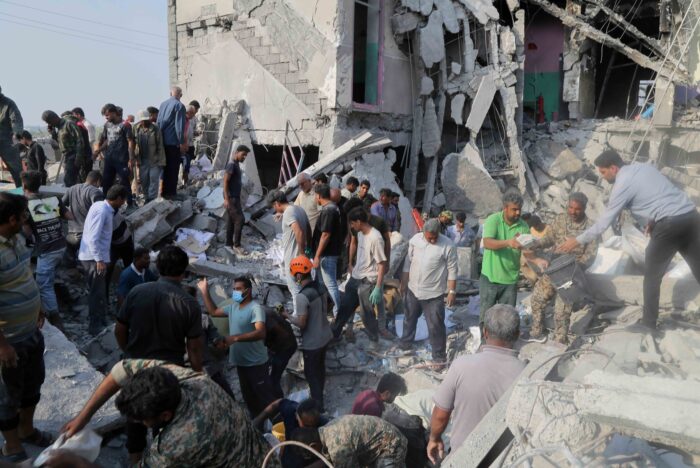
The presentation of the twenty-point plan for Gaza, proposed by the US president and endorsed by key Arab states, has been widely regarded by the international community as a significant political breakthrough. This initiative emerged amidst a catastrophic humanitarian crisis, exacerbated by the scale of hostilities: over 70,000 Palestinian casualties inflicted by the Israeli army (of which 83 per cent were civilians) and the near-total destruction of critical civilian infrastructure, including schools, hospitals, universities and water supply systems. In this context, the truce mandated by the so-called ‘Trump plan’ provided a crucial, albeit temporary, relief for Palestinians residing in the Gaza Strip.
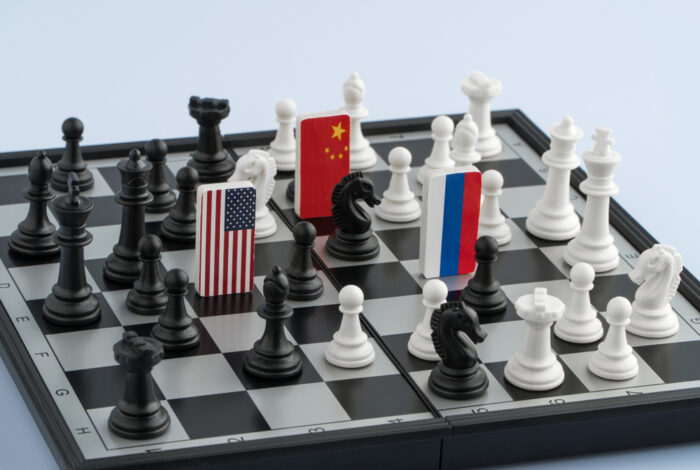
While numerous observers, particularly within the progressive political sphere, acknowledged the inherent limitations of the plan and questioned its efficacy as a long-term tool for sustainable peace, the international community appears to have legitimised its implementation trajectory. This legitimacy was underscored by the passage of UN Security Council Resolution 2803 (2025) on 17th November. The vote demonstrated, on one hand, a broad consensus among global powers (despite the opportunistic abstentions of Russia and China) and, on the other, the apparent absence of viable alternatives to the proposed Plan. This perceived lack of alternatives is partly attributable to the substantial political support provided by Arab and Islamic nations to the US administration.
The UNSC resolution formally marked the initiation of second phase of the Trump plan. This phase is designed to establish a Board of Peace (BoP) to serve as a transitional administrative body in Gaza. The BoP’s mandate includes coordinating extensive reconstruction efforts and authorising the deployment of a temporary International Stabilisation Force (ISF) within the territory. While the first phase secured Hamas’s acceptance of ceasefire terms, the second phase – which notably includes provisions for the disarmament of the movement – has elicited strong opposition from the Islamist organisation. Despite this internal opposition, the plan itself presents several structural and methodological critiques that ought to be rigorously examined.
Foremost among these is the way the plan was formulated and imposed. Given the profound complexity inherent in achieving Palestinian self-determination, the plan was notably developed without the meaningful inclusion of Palestinian representatives and failed to integrate their political goals into its foundational framework. This top-down approach has been a consistent characteristic of the Trump administration’s policy in the region since the proposal of the Abraham Accords in 2020. Such a methodology risks not only contributing to further instability within the Palestinian national and political landscape but also fundamentally failing to account for the political realities on the ground.
The second critical dimension of the proposed plan concerns the inherent disconnect between its mandated implementation and the evolving reality on the ground. Since the commencement of the truce, the security environment has demonstrably failed to stabilise: Palestinian casualties in Gaza due to continued actions by the Israeli military persist. Simultaneously, the situation in the West Bank has reached unprecedented levels of volatility, driven by escalating attacks from Israeli settlers against Palestinian civilians, villages, and property.
This volatile security context is further complicated by legislative developments within Israel, specifically the draft of a Knesset bill concerning the annexation of the West Bank. This move lends official sanction to the presence of over 700,000 settlers currently residing in the territory, a presence considered illegal under international law.
Given this comprehensive deterioration of the political and security landscape – marked by ongoing violence and de facto annexation attempts – the prospect of formulating a possible and sustainable solution becomes profoundly challenging. Without the application of clear and decisive international pressure on the Israeli government to immediately halt all settlement projects, the peace initiative imposed by the US risks being interpreted not as a genuine instrument for conflict resolution but rather as a tool to institutionalise and entrench permanent colonial relations.
The final critical aspect is fundamentally political and directly pertains to the legitimacy and representativeness of the Palestinian Authority (PA) and its current leadership. A pronounced vertical chasm exists between the PA and the Palestinian population, a divergence that has not only undermined the Authority’s legitimacy but also necessitates a deeper scholarly engagement with the agency of Palestinian civil society. For years – predating the events of 7th October – Palestinian civil society organisations (CSOs), including social movements, peace groups, individual activists, and the diaspora, have repeatedly advocated for a profound reform of the PA. They have emphasised the urgent need for comprehensive change within the Palestinian political landscape. Critically, these domestic actors – the very custodians of popular demands for justice and self-determination – are currently excluded from the formal peace process. Finally, within the broader political process, Hamas remains the ‘elephant in the room.’ Despite its marginalisation and its diminished legitimacy compared to the past, the Islamist movement continues to constitute a relevant actor in the Palestinian political landscape, beyond its military dimension. This represents one of the most significant challenges that the construction of a Palestinian state must confront at the strictly political level.
The political and social exclusion raises a profound question regarding the viability of the current initiative: How can a just and sustainable peace be credibly envisioned without the central participation and protagonism of the affected individuals and the civil society organisations that represent their concerns?
A comprehensive political approach in this context must prioritise the inclusion and demands of the marginalised party. While focusing solely on grassroots movements may be deemed idealistic or ‘romantic’ in terms of realpolitik, one cannot dismiss the historical precedent that a genuine push for a lasting peace, grounded in justice, can rarely be imposed by a reactionary or armed order. Looking to the demands and agency of the population, or ‘looking below’, may be the most efficacious strategy to counter attempts by external powers to impose a mere armed peace that lacks the foundational element of real justice.
Photo credits: Shutterstock.com/Mirko Kuzmanovic
Find all related Progressive Post
Progressive Post