

Professor of Politics and International Relations, and Director, Qatar-South Africa Centre for Peace and Intercultural Understanding, Faculty of Humanities, University of Johannesburg, Non-resident Fellow at the Centre for Conflict and Humanitarian Studies in Doha, and Senior Advisor of the Centre for Mediation in Africa, the University of Pretoria
02/10/2025
As rules of war are ignored and leaders seek elite deals around minerals and land, peace itself is increasingly threatened. Transactional mediation – where elite bargains and resource concessions replace inclusive processes and efforts to target root causes of conflict – is on the rise. The costs are high: for civilians, for justice and for the sustainability of peace.
As global military spending has hit record levels (up 37 per cent over the last decade and expected to further increase, notably across Europe), and international norms and institutions corrode, peace is paying the price. Decades of consensus on what sustains peace – inclusivity, justice and addressing root causes – are being eroded, as securitised and marketised conceptions of peace take hold. Transactional mediation thrives in this environment, resting on short-sighted elite bargains, zero-sum calculations and material concessions that placate armed actors and reassure allies. Such bargains rarely include broader constituencies or address justice claims, tend to disregard multilateral norms and are often tied to securitised protections.
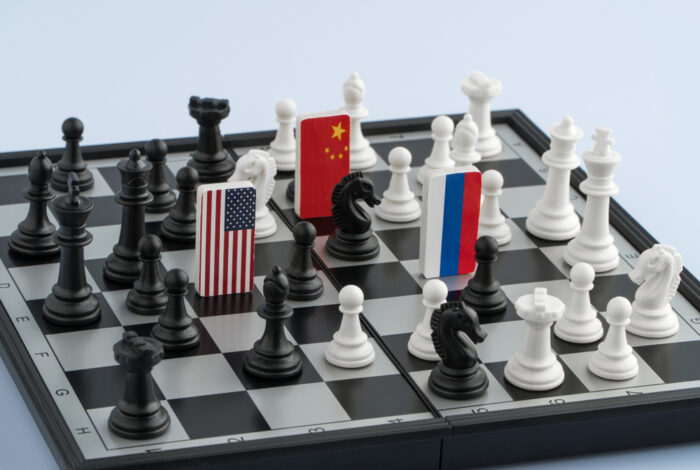
Meanwhile, conflict continues to rise (56 wars in 2024, the highest number since the Second World War) and internationalise (with almost half of the world’s states, 92, involved in wars beyond their borders). The paralysis of the UN Security Council (UNSC) reflects and compounds this, as veto-wielding members are often parties or patrons to the very wars the UN is asked to mediate. This means deadlocked mandates, biased resolutions and little room for UN mediators to manoeuvre. Internationalised conflicts reduce incentives for compromise, drain legitimacy from UN-mediated talks and prolong war. Two particularly pernicious dynamics are driving this corrosive shift: elite economic pacts that trade access, revenues, or land for short-term stability (in theory) while excluding societies, and the trampling of international law – including humanitarian norms, human rights, territorial integrit, and accountability.
Transactional deals as economic pacts
Transactional bargains often surface when countries are most vulnerable, with external sponsors tying aid or security guarantees to resource concessions that distort national recovery priorities and erode legitimacy.
US President Donald Trump’s approach to Ukraine epitomised this logic. In early 2025, he demanded the US be “paid back” for its military aid since Russia’s invasion through access to Ukraine’s cobalt, lithium and rare earths – including proposals of 50 per cent US ownership of revenues and troops to guard mines. The final US-Ukraine Minerals Agreement created a Reconstruction Investment Fund granting Washington priority project access in exchange for investment – explicitly tying aid and security to resource concessions and instrumentalising Ukraine’s natural wealth at a moment of existential crisis.
Legal experts cautioned that threats to withhold aid or connectivity could amount to coercion, raising questions under the Vienna Convention on the Law of Treaties. Beyond legality, reducing critical resources to bargaining chips skews reconstruction towards external gains rather than inclusive recovery, justice or environmental safeguards – entirely at odds with building post-war social contracts that serve citizens rather than outside powers.
The Democratic Republic of Congo (DRC) also illustrates this ‘new scramble’ for resources in the name of peace. With the M23 rebels backed by Rwanda seizing swathes of the east, Kinshasa sought US support by offering access to 4 trillion-US dollar worth of cobalt, coltan and other minerals in return for security guarantees. A US-brokered Declaration of Principles was signed with Rwanda in Washington on 25 April 2025, aimed to secure Kinshasa’s short-term survival, as Washington secured strategic mineral supply chains and Kigali strengthened its leverage through its rebel proxy. Congolese citizens were excluded. Civic leaders demand sovereignty and accountability over such deals with international actors, notably the US.
Transactional deals trampling international law
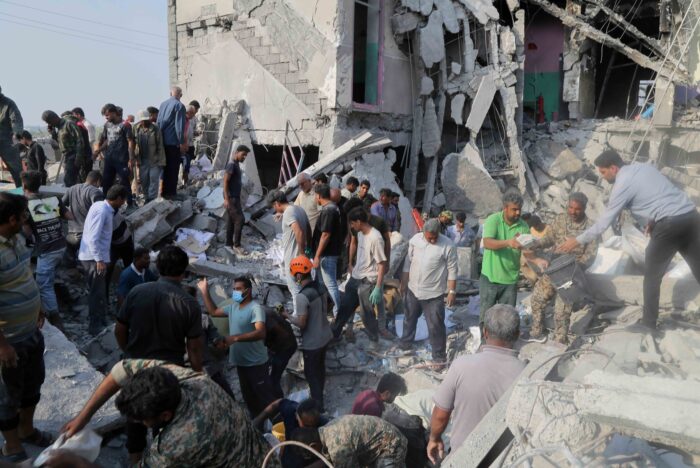
Transactional deal-making sidelines the very rules meant to protect civilians and constrain force. When the law is ignored, coercion becomes the organising principle of talks, impunity spreads and agreements lose legitimacy. The human costs are devastating. Civilian deaths in conflict surged by 40 per cent in 2024, killing some 48,384 people – evidence of a broad collapse in protection. Since late 2023, at least 247 journalists have been murdered in Gaza alone. Attacks on humanitarian personnel hit a record too: 383 aid workers were killed in 2024, nearly half in Gaza. Violations of international law in conflict reveal rising child soldier recruitment, widespread sexual violence against women and girls and collective punishment as conflicts internationalise.
Beyond targeting individuals, Trump’s proposal to redevelop the Gaza Strip’s coastline into a luxury ‘riviera’ rests on mass violations of international law and Palestinians’ human rights, involving displacement, dispossession and expanding illegal settlements.
The 9 September Israeli strikes in Doha, aiming to kill Hamas negotiators during deliberations on a US ceasefire proposal, reflect, as Qatar argues, the actions of a rogue state – a violation of sovereignty and international law, with impunity. This should be alarming for the peace community: if a negotiating table is fair game, mediation itself becomes a battlefield.
International law is the architecture that protects people, anchors settlements and enables accountability. As UN Secretary General António Guterres stressed in opening the UNGA80, peace must be rooted in law, not raw power; impunity is the mother of chaos.
Rescuing peace-making from deal-making
Rescuing peace-making requires rejecting elite bargains and returning to mediation rooted in law, accountability, pluralism and inclusive development. Transactional deals – whether minerals for security or land for recognition – may silence the guns briefly, but they corrode legitimacy, entrench violence, and deny societies the chance to rebuild social contracts that serve citizens.
Economic concessions must not drive agreements. Financing should strengthen social contracts between states and societies, foster equitable services, livelihoods, promote transparent revenue management and ensure environmental safeguards. Minerals should fund inclusive recovery, not be traded for external leverage.
Mediation must be re-anchored in law from the outset. Civilian protection, humanitarian access, accountability and respect for sovereignty cannot be disregarded or used as bargaining chips. The UN must play a stronger role in curbing the internationalisation of conflict – providing platforms for external powers to address the rivalries that fuel wars. Where the UNSC is paralysed, other UN bodies can act under the ‘Uniting for Peace’ mechanism, upholding principles and enabling regional actors to lead. When states defy International Court of Justice (ICJ) orders – as Israel and its arms suppliers are doing – the UN should impose sanctions.
A broader coalition of principled mediators must be strengthened and protected. The African Union, if adequately resourced, offers continental legitimacy and regional ownership. Non-Western and small states play important principled mediation and wider intervention roles. Qatar brings a sustained record of mediation marked by agility, access and principled engagement – even under direct attack. South Africa grounds its diplomacy in its liberation legacy and inclusive transition, and in justice and accountability. Its legal action at the ICJ accusing Israel of genocide is catalysing international action and drawing attention to root causes.
These actors exemplify why smaller, non-Western powers may well hold greater legitimacy than great powers in the future: they are contextually attuned, culturally closer, and more acceptable to parties sceptical of Western-led processes.
Europe’s support for this shift is needed. Transactional mediation corrodes the very rules the EU claims to defend and alienates Global South partners vital to a fairer order. The choice is not idealism versus realism; it is between unstable bargains that mortgage the future and law-anchored settlements that can hold. Peace is not a commodity. Reduce it to deals, and we lease instability. Anchor it in law and justice, and peace can endure.
Thank you to Patrick Bond, Nontando Ndlovu and Abdulla Moaswes for comments.
Photo credits: Shutterstock.com/Joshua Sukoff
Find all related Progressive Post
Progressive Post