
02/10/2025
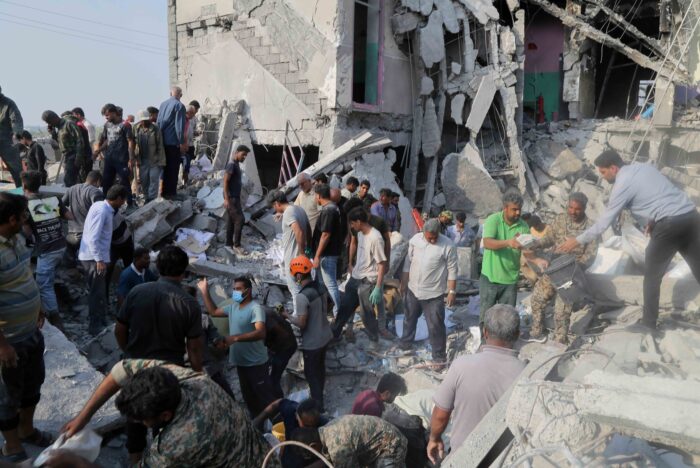
It seems paradoxical that at a time when conflicts and tensions are increasing, policy attention and resources devoted to peace and peacekeeping are in decline. A young military officer in Europe today is far more likely to be training or advising Ukrainian forces or engaging in NATO exercises than to be deployed as a United Nations peacekeeper. And yet, when the wars in Ukraine and Gaza end, we will need peacekeepers to monitor the cease-fires and implement the peace agreements. Will we be ready?
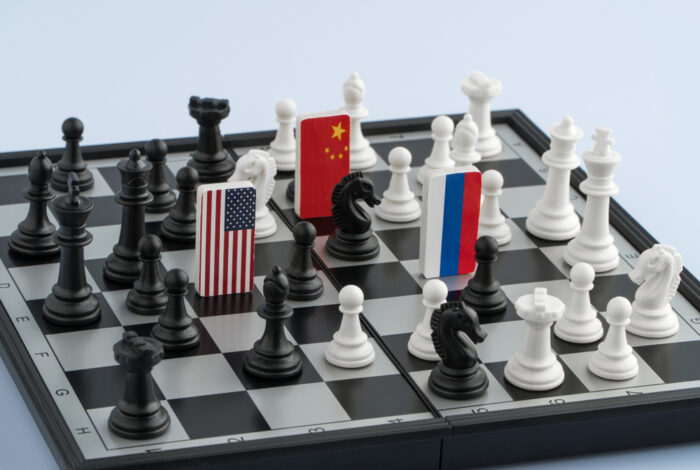
We are living in an era characterised by uncertainty and fear. After nearly 80 years of relative peace since the end of World War II, the Russian war in Ukraine and the Israeli war on Palestine have reintroduced the spectre of war to a new generation. These conflicts are symptomatic of a larger trend. A shift to increased multipolarity where power is widely dispersed across several countries, regions and blocs, but also across the private sector, civil society and formal and informal systems that modulate the flow of money, goods, commodities, technology, travel, communications and other vital elements of our interconnected world.
The global order is in transition, and in the vacuum created by this transition, the actions of countries like Russia and Israel, and in the last few months also by the president of the United States, Donald Trump, have disrupted the legal foundations underpinning the rule-based order, including, especially, the norms around the inviolability of sovereignty, the use of force to pursue national interests, the norms of what is permissible in the conduct of war and the responsibilities of occupying powers. As a result, for the foreseeable future, we will have to cope with a global system where at least two major powers and permanent members of the UN Security Council, as well as several other regional powers and states, are choosing to operate outside the parameters of a rule-based international system. They are the minority. Most states and organisations around the world are trying to preserve the multilateral system.
A few, especially in Europe, are shifting significant resources and attention to strengthening their national defence and security capabilities in the hope of increasing the opportunity costs for any would-be aggressor. The relationship between military capabilities and deterrence is complex and shaped by numerous political, economic, and strategic factors. In some scenarios, military spending can increase the risk of war. Understanding the conditions under which deterrence is more likely to be effective and investing in shaping the conditions that sustain peace require a comprehensive, whole-of-society approach to peace and security.
A recent report by the UN Secretary-General The Security We Need warns of the risks associated with reorienting our societies and economies towards military-centred policies that change the long-term outlook for public finance; affect long-term social investment in health and education and lock our political and economic debate for decades into discourses that self-justify prioritising defence spending. We live in a world of shared systemic challenges, ranging from climate change to global public health to trade, peace and security. These global systemic challenges require more, not less, global governance. We cannot afford to give up on multilateral institutions like the United Nations, even if they do need significant reform.
I have singled out Ukraine and Palestine, but in the context of a changing global order, the number of conflicts is increasing and has now reached the highest level since the end of World War II. In contrast, policy interest and budget allocations for peace-making, peacekeeping, and peacebuilding institutions, programming, and research funding have been in sharp decline. Trump’s United States is not only withholding its obligatory assessed contributions to the UN and UN peacekeeping but has also cancelled the payment of its debt to the UN. In response, the UN Secretary-General has introduced austerity measures to manage the UN’s immediate liquidity crisis, which will inevitably impact the capability of UN peacekeeping operations to protect civilians and support humanitarian assistance.
The UN’s financial crisis is a symptom of a deeper pattern. Trump’s US is opting out of multilateralism, and other powers, including the permanent members of the UN Security Council, are not filling the vacuum. UN peace operations not only have to adapt to significant financial cuts, but they also have to manage conflicts in places like the Central African Republic, Cyprus, the Democratic Republic of the Congo, Lebanon, Libya, and South Sudan, amid increased geopolitical tensions. Most permanent members of the UN Security Council and other regional powers have a vested interest in these conflicts, which means that peacekeepers must navigate fragile host state consent in complex political environments.
Investments in cooperation across diplomatic, security, economic, technology and science, as well as in fields such as art and culture, reduce the risk of war. It is thus alarming that despite this obvious fact, we are currently witnessing a significant weakening of global cooperation and multilateralism. At the same time, the vast majority of states share an interest in a strong multilateral system, with the UN at its centre. The challenge is to mobilise these states in a cohesive effort to sustain the multilateral system during this period of uncertainty. Despite all these challenges, peacekeeping remains a critically important global tool. In discussions about a cease-fire in Ukraine or the future of Gaza, the options mentioned usually include some form of peacekeeping. It is thus essential that bodies like the African Union, the European Union and the United Nations maintain the knowledge and capacity to deploy peacekeepers when needed. In the current geopolitical, defence-focussed and UN reform context, talking about peace and peacekeeping might seem to be unpopular – until a tipping point is reached, and the discussion turns to monitoring cease-fires and implementing peace agreements. The lesson from 80 years of UN peacekeeping is to keep the tool sharp and ready, because somewhere a war is coming to an end, and peacekeepers will be urgently needed.
Photo credits: Shutterstock.com/Erich Karnberger
Find all related Progressive Post
Progressive Post