
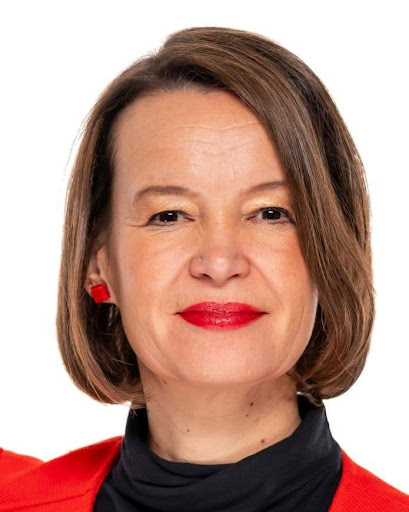
MEP, first Vice-Pesident of the Eurolat Parliamentary Assembly and the EuroLat S&D Group coordinator
25/06/2026
Any discussion about the situation in Cuba, or elsewhere, must be frank and put its focus on the people first. In the face of abuses, we must all consistently uphold agreed-upon international law because it exists to protect everyone.
When we do not condemn violations of the United Nations Charter, human rights or humanitarian law, regardless of who violates them, Cuba or the United States, we fail to protect the Cuban as well as the American people, and we put all of us, including Europeans, in danger. Because only an international community united against impunity is strong enough to ensure that no state abuses its military and coercive power against another one, and no government abuses it against ordinary citizens.
For decades, the European Union and all its member states have consistently joined the United Nations General Assembly in condemning the US for its abusive embargo on Cuba. The EU has also consistently condemned abuses of civil and political human rights in Cuba.
The new element today comes from the US. Since January 2026, President Trump has threatened the island with military intervention, and the US has imposed an unprecedented energy blockade against Cuba, as well as other illegal unilateral extraterritorial sanctions. UN human rights experts and bodies have strongly condemned these US sanctions, pointing to their unlawfulness, unjustifiability, serious humanitarian and human rights impact on Cuba’s population and for challenging the economic rights of third countries, including those of EU countries. This new US escalation requires a strong reaction by the EU, which needs to call on the US to respect international law, as strongly as we call on Cuba to end repression and carry out reforms. That is the balanced and responsible position we Social Democrats defended once again through the motion for a resolution I put forward, on behalf of the S&D Group, at the European Parliament plenary session in June.
Since January, Cubans have been suffering a humanitarian crisis without precedent, aggravated by the US energy blockade. Hospitals struggle to operate, access to healthcare has deteriorated dramatically and the whole country faces food and medicine shortages. Delivery of humanitarian aid across the country is delayed.
The UN keeps noting that Cuba is part of a group called Small Island Developing States, with structural vulnerabilities, including limited natural resources, limited connectivity, high import costs, exposure to climate shocks and limited fiscal leeway, amid ongoing climate and debt crises. Any embargo or blockade generates devastating humanitarian effects.
On the other side of the coin are decades of a Cuban single-party political regime that has resisted US coercion and maintained an extremely fragile social and economic steadiness, despite delayed reforms, excessive external dependencies and an intolerable internal repression. This is not only unjust but also prevents Cubans from investing their full potential in their country, forcing many to leave. Violations of civil and political rights continue, with thousands of political prisoners and peaceful protesters detained. Together with torture and other inhuman and degrading treatment, these are abuses consistently condemned by the UN and the EU. They must end immediately.
The latest UN Development Programme report on Democracy and Development in Latin America and the Caribbean makes this clear: in any country seeking to ensure its prosperity, inclusive participation and the rule of law matter. Human development, democracy and state resilience reinforce each other.
The recent liberation of prisoners and urgent economic reforms announced by the Cuban authorities are some steps, yet insufficient. There is no clarity on who, when or how the remaining prisoners will be freed. Reforms allowing Cubans living abroad to invest in their country, partly decentralising the administration and reducing bureaucracy, could truly help the country economically, alongside a debt restructuring, if there were enough legal certainty for investors. But this requires profound internal reforms, the end of US coercion and external support.
In this scenario, what can the EU do?
History shows that you cannot defend rights by violating rights, nor uphold the rule of law by breaking it. The law of the strongest has never delivered lasting peace, democracy or human rights. Only respect for international law, genuine reform and international solidarity can break the vicious circle of abuses and suffering. When, ten years ago, the EU and Cuba signed the Political Dialogue and Cooperation Agreement, Cuba was already under an illegal US embargo, governed by a single-party political system and in need of democratic and economic reforms. The agreement was not signed as a reward. It is a unique foreign policy tool to ensure critical and constructive engagement and support the Cuban people, in full respect for international law. It foresees dialogues on human rights, joint responses to common challenges – including on health and climate resilience –, cooperation to support governance reforms and sustainable development. It promotes investments in renewable energy, the digital transition and vaccine production, while allowing the EU to engage with Cuban civil society and help reinforce civic space.
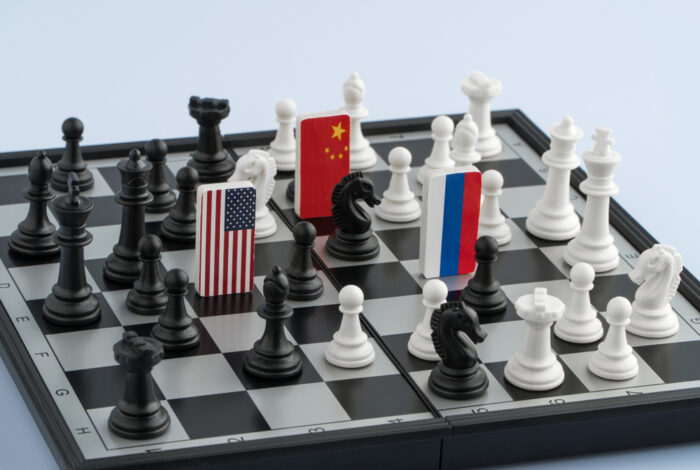
In short, walking away from Cuba, as right-wing forces in the European Parliament defend, would not improve human rights or the living conditions of its people. It would simply reduce European influence and leave this space to other global actors, like Trump’s US, China or Russia, whose commitment to international law, human rights and democracy is, at best, not their main goal.
Today, more than ever, the EU needs to remain engaged in Cuba.
We must continue to deliver humanitarian aid and coordinate international efforts to ensure it reaches all Cubans in need. We must uphold international law, by condemning the latest US escalation as strongly as we condemn abuses by the Cuban regime.
And we must use all necessary diplomatic, financial and legal tools -from raising our voice in international fora, to implementing our bilateral Agreement and the EU’s Blocking Statute fully and more effectively –, to ensure that all Cuban citizens and their international partners, including in the EU, regain their rights and their confidence in the country’s institutions and economy. This requires a genuine dialogue among the Cuban government, the political opposition and independent civil society; improved governance – rule of law, transparency, judicial guarantees and accountability –, and economic resilience, with openness, sustainable international financing, investments and cooperation.
This is what the Cuban people claim and deserve. This is what the Social Democrats in the EU actively support. And this is what the Cuban authorities, the EU and the international community must deliver.
Photo credits: Pedro Szekely CC BY-SA 2.0
Find all related Progressive Post
Progressive Post