

02/07/2026
The entry into force of the EU’s Pact on Migration and Asylum on 12 June could have been seen as a major turning point in the development of a common policy in these areas and hailed as such. Yet the reactions were rather low-key. Admittedly, the president of the Commission emphasised that the pact provided an effective, fair and firm solution to a European challenge. But a statement issued by the Cypriot presidency following the informal ministerial meeting convened for the occasion was cautious, emphasising above all the work that still lay ahead.
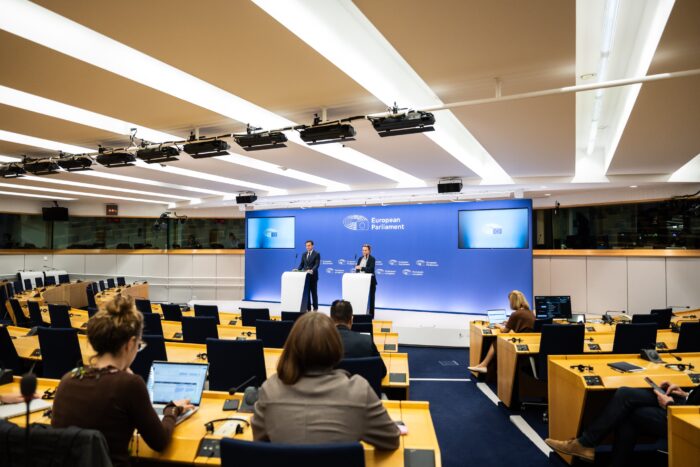
There is no reference to the pact in the conclusions of the European Council meeting of 18 and 19 June, although a strategic discussion on migration was announced for its October meeting. And the press conference organised by the eight European Parliament rapporteurs involved in the negotiations on the pact’s texts mainly confirmed the divergent views within the assembly. This is hardly surprising, given the uncertainties that continue to hang over this reform. And yet the pact is a remarkable political achievement, as well as the outcome of an unprecedented effort to coordinate the various parties involved in its implementation.
Based on proposals informed by in-depth consultations with member states, the negotiation of the pact was a long and difficult process that required considerable political energy. It was concluded under time pressure, justified by the need to complete the work before the institutional renewal in mid-2024. This success, which many had doubted, nevertheless came at a price: the complexity of the framework put in place.
The principles were simple at the outset: the concentration of procedures at the point of first entry into the EU (while the criteria for determining which state is responsible for examining an application for protection – the Dublin criteria – remain unchanged) and the search for a balance in the implementation of the principles of responsibility and solidarity. However, compounded by the technical nature of the solutions initially proposed by the Commission, the compromises reached at every stage of the drafting process did nothing to simplify the so-called ‘new approach’ that was devised.
A two-year transition period has therefore been set aside to prepare for the implementation of a reform of this scale. This transition period was organised through a combination of common and national implementation plans, providing the backbone of a rather exceptional form of governance based on close and ongoing interaction between the Commission, supported mainly by the European Asylum Agency, and the member states. Furthermore, the reform has been backed by the allocation of around €3 billion in financial resources.
One might therefore think that a point of no return was reached on 12 June and that, in any case, given the enormous challenges of all kinds facing the Union today, failure was not an option. And yet the nagging voice of doubt continues to be heard. The Commissioner in charge, Magnus Brunner, acknowledged in early June that “several challenges remain” and that 12 June was “not the finishing line, but the starting line for national reforms“. In the same vein, Nicholas Ioannides, Cyprus’s Deputy Minister for Migration and International Protection, emphasised that success would depend on “our coordination, our political commitment, and our willingness to continue working together”.
The hurdles are primarily technical – insofar as it is possible to draw a line between technical and political concerns on such a sensitive issue. They can be identified by a careful reading of the latest state-of-play report published by the Commission in early May. The report highlights significant variations in member states’ preparedness levels across the ten ‘building blocks’ identified in the common implementation plan. There is real uncertainty regarding the roll-out of the new Eurodac system, which is essential for the pact to become operational, as it should provide an indisputable basis for determining responsibility for managing border procedures by using biometric identifiers. Considerable effort is still needed to implement border procedures. The transposition of the Reception Conditions Directive remains incomplete. And the list of shortcomings among member states is long.
However, other political tests lie ahead and are described in far less veiled terms by the Commission than the rest of the report. On the one hand, the complex mechanism of solidarity – described as ‘compulsory’ yet ‘flexible’, combining the relocation of people with material support – will have to be implemented in practice, which presupposes that all member states fulfil the obligations to which they have committed. On the other hand, the Commission will assess twice, in July and October, whether current practices regarding (non-) transfers under the Dublin mechanism – the principles of which remain in force – constitute systemic failures that could call into question the very foundations of the pact. On each occasion, the strength of the political commitment to the principles of solidarity and responsibility will be assessed.
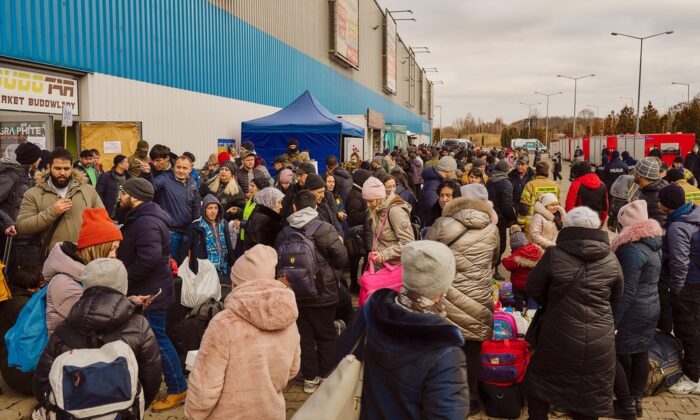
But the obstacles do not end there. Many observers point out that the implementation of the pact is being facilitated by the steady decline in pressure on the external borders in recent years – a decline which is therefore in no way attributable to the pact itself, as it has not yet been implemented. But what would happen if the European Union were to face a new humanitarian crisis like the one in 2015? Is it prepared? Little attention has been paid to the crisis and force majeure mechanism that would need to be applied in such a situation.
Promoted by the first European Asylum and Migration Management Strategy, an assertive approach to migration diplomacy aims to expand partnerships with countries of origin and transit and to address the disastrous record of member states in removing third-country nationals residing illegally. An effective return policy is indeed an essential component of the pact, but the frantic search for ‘innovative solutions’ may also contribute to creating new dependencies at a time when the European Union is seeking strategic autonomy, which consists primarily of managing existing dependencies.
The complexity of the texts casts numerous legal uncertainties over their implementation. The protection of migrants’ rights lies at the heart of these areas of uncertainty, as has been repeatedly highlighted by civil society organisations concerned about the lack of clarity regarding the changes currently underway. Whilst indispensable safeguards and monitoring mechanisms are foreseen, experience shows that they remain a dead letter if violations are not sanctioned.
In their joint statement, the UNHCR and the International Organization for Migration emphasise that the pact offers an opportunity “to move beyond crisis-driven responses and implement a more predictable, fair and effective approach”. This aspiration can only be shared if the shortcomings of this new framework are also accepted. But the jury is still out, and failures will undoubtedly be exploited by those calling for states to regain control over ‘their’ migration. The message is not that ‘there is no alternative’, and adjustments will certainly need to be made. But the pact has taken on symbolic significance as an attempt to restore trust between member states, which was undermined by the 2015-2016 crisis. And the collapse of the pact would undoubtedly spell the end of the Schengen area in its current form, as evidenced by the reintroduction and maintenance of multiple internal border controls. Abandoning the pact would also be a worrying sign for the cohesion of the European Union at a time when it is more essential than ever to tackle challenges on a completely different scale.
Photo credits: Shutterstock/Canary4Stock
Find all related Progressive Post
Progressive Post