
06/09/2024
Following the election of European Parliament leadership and the nominations of commissioners, Brussels’ attention slowly shifts from personnel to policies. However, what the people have decided in June must and will have a bearing on the policy agenda. The question, however, is how leaders read the messages of the citizens.
The June elections for the European Parliament (EP) unleashed a fascination with the radical right, hard-right and far-right tendencies across the continent but also worldwide. Probably too much attention was paid to the parties that increased their share of mandates as opposed to those which suffered the setback. But, the two sides are equally important. A simple, helpful, observation is that if a country had elections recently, the EP election tends to confirm its results, while if it has a ‘mid-term’ nature, the swing goes against the incumbents. For example, the EP election in Portugal or Spain largely confirmed the outcome of the national ones held just a few months before, while in France and Germany, the opposite was the case.
Since larger countries like France and Germany drive the number of MEPs much more than Ireland or Hungary, this factor explains much about the shrinking of the liberal and green groups, and the surge of the far right. The German Social Democratic Party’s (SPD) setback was somewhat compensated by the surge of the French Parti Socialiste, while in Germany, the Christian Democratic Union of Germany and the Christian Social Union (CDU-CSU) perhaps benefitted from the protest mood even more than the far-right Alternative for Germany (AfD) (given that there had been massive demonstrations against the latter, but not against the first).
One should pay attention to the normalisation factor here. Years before, the memory of World War II kept far-right parties toxic, and it was shameful to vote for them. Today, many do not consider them as vicious anymore, as they did in the past, not least because, in many cases, the centre-right abolished the firewalls and teamed-up with the far-right to govern countries or regions together. This started in Austria, but now the list includes Czechia, Italy, Finland, Netherlands, Sweden, and soon Belgium. What has happened since June explains a lot about the EP results. The positions of the incumbent French and German leaderships remain precarious. In France, the pop-up Popular Front turned out to be a resounding success and potentially a game changer in view of the 2027 presidential elections.
In the UK, the game has changed already, with the shambolic Conservatives moving to opposition. The new government, led by Keir Starmer, quickly trashed the Tories’ barmy ‘Rwanda scheme’ to tackle the question of immigration in more constructive ways, and they are also preparing to solve the fiscal conundrum as well.
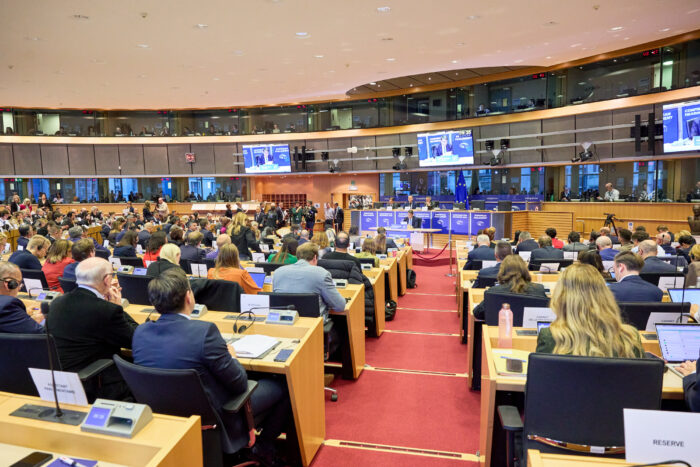
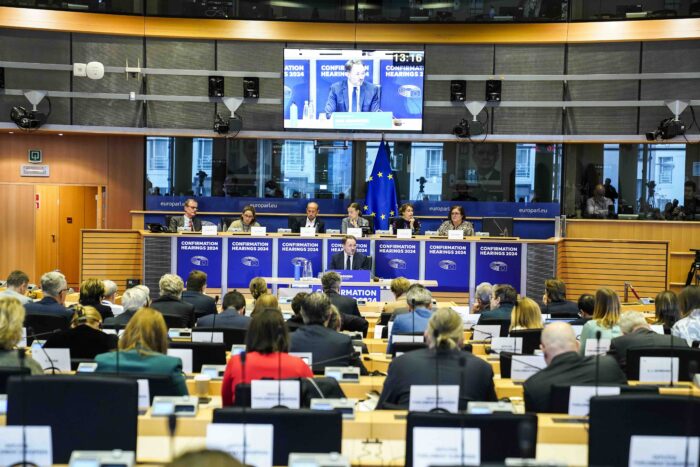
The composition of the new European Commission will only be finalised in late October, after the hearings in EP. It might still be a subject of interest, including in the tabloid media, how many men or women will have seats in the College of Commissioners. However, from now on, the real question is what those people will do in Brussels, irrespective of their gender. If that one theme stands out from the dense re-election speech of the prolonged Commission President, Ursula von der Leyen, it is competitiveness. Europe is facing an economic challenge, and it is not of similar nature as in previous crises. Italy’s former prime minister Mario Draghi has written a report on the topic, but, so far, only the trailer has been seen. When the actual piece comes, it will be a major debate.
The questions can already be prepared. Why is competitiveness discussed instead of growth? Why do we refrain from discussing actual performance and instead focus on something that was already found to be a bogus concept at the time of the eurozone crisis? What would industrial policy’s role be to enhance productivity and ensure that growth is reconciled with sustainability and cohesion?
Progressives should not only be ready to respond but also to promote their own goals and policies. Because the revised set of fiscal rules would not deliver us from the evil of austerity, it is important to continue the campaign for an EU-level fiscal capacity that could support common investment objectives, as well as counter-cyclical stabilisation. There is a lot of attention revolving around the future, or the lack of that, of the Green Deal – and several candidates are ready to make a quixotic effort to prolong it. It is not apparent what EU-level measures should be at the heart of a new social agenda, but such an agenda must also emerge, with confirmation of the Porto social targets. The social question is particularly important today, because a most crucial element in the recent swing to the far right in Europe took place among young men. This is bound to be a topic of further research because without addressing the causes, any fight against the far right might remain futile. Reasons might be diverse, starting from the fact that in the last 15 years, finding the first stable job for young people has become much harder than before. This also applies to young women to some extent, but they are more likely to support centrist or leftist views due to their views, among others, on reproductive rights.
Since Covid-19, for many, the first job is in the platform economy, meaning low wages and inferior working conditions. And what is attractive for younger women in progressive politics, like the promotion of gender equality, might be seen as an outright threat by the less educated men, who, therefore, look for the protectors of their status. In addition, since the beginning of the war in Ukraine, some younger men surely fear the return of conscription. The perspective of wholesale militarisation is not attractive, and voting for the populist right might be a way to voice dissent.
Such hypotheses have been corroborated by the recent election outcomes in the German states of Thuringia and Saxony, and will most likely be observed in Brandenburg as well. Europeans should worry about Germany. While the focus today is on the East, we can say more broadly that the EU country most shaken by the developments of the last 30 months is Germany. The upheaval of international trade and investment relations, the unprecedented scale of refugee arrivals all tested the country’s resilience. For sure, there have been some unforced errors as well, like upholding the totemic Schuldenbremse (debt brake), the harsh obligations on households in the name of climate policy, or the accelerated closure of nuclear power plants can be considered among them. Germans must find a way out of this situation – in their own interest, as well as in the interest of Europe, which should be ready to help. This time, we should not ask what Germany can do for us, but what we can do for Germany.
Photo credits: Shutterstock / Velkophotography
Find all related Progressive Post
Progressive Post