Head of the Italian S&D delegation in the European Parliament and President of Fondazione DEMO, Foundation of the Italian Democratic Party
08/11/2024
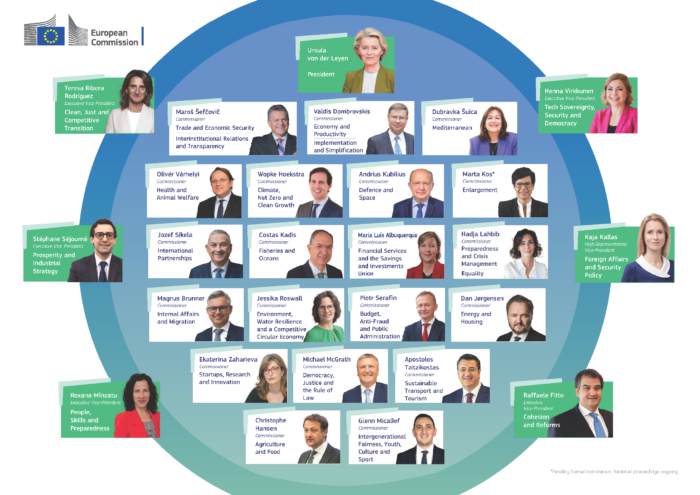
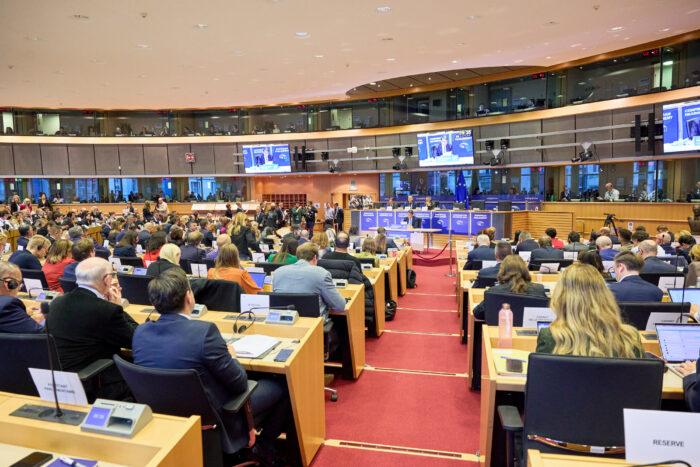
The new European Commission is stepping through the hearings at the European Parliament to finally be confirmed by MEPs, take the mandate and start its work. The treaties provide that the European Parliament validates the nominees indicated by national governments. This is not a pure formality. Overseeing and monitoring what the new executive body is going to propose and implement is even more politically relevant today, as the majority of the commissioners are from right-wing parties. However, it is crucial to recall that the majority in the parliament can be resolute in applying an ambitious programme for the legislature to build hope for the future.
We progressives have defined our attitude towards the new commissioners-designate along this programmatic compass. The starting point of our assessment of the future commissioners focuses on the resources required to address our future challenges and respond to voters’ concerns.
First of all, we insist on a clear commitment for a stronger budget and creating more investment capacity, to tackle the €800 billion a year that are needed for the energy transition, the digital transformation and the Defence Union, following the Draghi Report. These are essential resources enabling the achievement of our key goals as European progressives, that we have managed to include in the strategic orientations and in the mission letters of the designated commissioners through the negotiation process on the new Commission’s priorities. We can mention, among others, the designation of a commissioner responsible for housing, as well as the commitment to invest in housing, quality internships, minimum living incomes, the right to disconnect and an anti-poverty strategy.
In this year’s European elections, the S&D group was able to keep its position as the second-largest political group in the European Parliament with 136 MEPs. This increases our determination to weigh on the EU’s political priorities. Until now, we have managed to set up a pro-European democratic alliance, keeping ECR and the other far-right groups – the ‘Patriots for Europe’ and the ‘Europe of Sovereign Nations’ – out of the parliamentary majority. To boost our political priorities, we will keep working on strengthening the pro-European alliance in the EP in the future.
We will have to work hard to ensure that the Progressives’ priorities are included in the future Commission’s agenda, to reach the best compromise within the Commission and, ultimately, to ensure that the votes of the European people are respected. These will not be easy tasks, since the anti-European and xenophobic right has never been so strong.
We are extremely worried about the positions of some national governments trying to endanger the rule of law, notably the rights of women and minorities and freedom of information, instrumentalise the complex issue of migration with increasingly aggressive policy choices outside the EU legal framework, and refuse to recognise solidarity as a central feature of the EU’s identity.
Against this background, we will have to be firm in blocking the attempt of conservative forces to shape political dynamics whereby two different majorities exist: one that supported the programmatic commitments announced by President Ursula von der Leyen in July, and in parallel an alternative majority that corresponds to some extent to the composition of the Commission’s college and to the result of some recent votes in the EP plenary, where the EPP showed openings towards right-wing groups.
We will, therefore, have to be able to expose the internal contradictions of this attempted alternative right-wing majority and do so by highlighting the profound difference in the responses needed for the future of Europe. The ‘hard’ right does not care about the political stability of the EU, as we saw for instance on the occasion of the recent vote on the annual EU budget, where right-wing groups and the EPP agreed on very extreme amendments, but then the EPP found itself isolated by paralysing the final decision of the Parliament. Hence, it is up to us to underline that only through an agenda of reforms Europe can emerge from a crisis that seems increasingly existential, especially after the outcome of the US elections.
Further steps in the integration process are strongly needed, otherwise it will be impossible to ensure that welfare and security progress together. Precisely on this ground, we must pave the way to define what European public goods are, how they can be financed, and how they can be capable of strengthening the competitiveness of the Union as a whole and not just of a single country or group of member states. The development of everyone within our societies and among the various regions of Europe, without leaving anyone behind, is, in fact, a central element to building collective security, just to mention key areas such as energy, digital infrastructures, skills, tools to cope with systemic shocks as happened during the pandemic.
Without a step forward in the integration process, European citizens will have neither well-being nor security. No state can do it alone. Productivity growth and social inclusion must both be strengthened in the EU, a task no member state can do alone. Crucial challenges, specifically the ones identified in the Draghi Report, such as productivity and technological innovation, social inclusion, decarbonisation and the digital industry, require strong public policies and investments. This can only be achieved if these objectives are shared by all member states through increasingly common policies of large public investments. This is the greatest contradiction in the centre-right parties, which only aim at relaunching competitiveness through old recipes – spending cuts, productivity as a burden on workers – and do not understand the need for an epochal shift on sovereignty to fulfil the goal of the double transition, green and digital.
The common foreign and defence policy too must be a pillar of this strategy. To be clear: the goal cannot be the rearmament of Europe in itself, through the increase of military spending by individual countries, but rather the establishment of a new model of common defence, with more efficient spending, in support of the federalist goal of moving forward towards a stronger political and united Europe.
We must end austerity and understand that national democracies cannot solve international challenges. We must invest to let the economy work and make common debt to solve common challenges. Right-wing forces want to destroy Europe, notwithstanding international common crises. This is why we will have to be very careful and make sure that commissioners from the right are trustworthy and reliable, as every member of the Commission must be ready to fight for a Europe that plays its role as a global actor, capable of solving international crisis. To fulfil this role, each commissioner’s mandate must address the need for crucial reforms, that the Commission can prepare by suggesting concrete solutions. The only way to revive the EU is to make it useful to the people. We cannot accept the idea – which is common to many right-wing parties in Europe – of deregulation, as it is directly opposed to the goal of building strong and impact-oriented public policies.
If we reject unity in facing Europe’s future, we will go against the premises that gave birth to the EU: to guarantee prosperity, equality, freedom, peace and democracy. We must do our best to enact this project, avoiding the risk of making it ineffective and unusable to the people who gave it their trust.
Photo credits: European Union 2024 – Source : EP
Find all related Progressive Post
Progressive Post

Find all related events
Events
No upcoming events at the moment.
Siena, Italy
FEPS HQ
Siena, Italy
Austrian Permanent Representation, Brussels
Load more...
Find all related publications
Publications
Find all related Audiovisual
Audiovisual
06/11/2026
06/11/2026

17/10/2024

10/10/2024