

16/07/2026
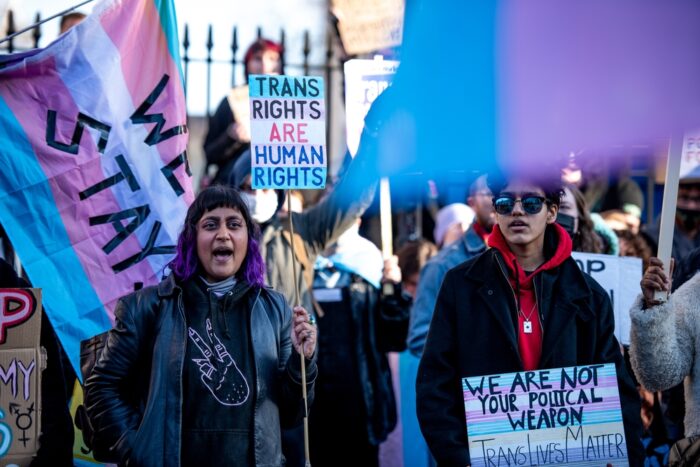
Remembering the historic turnout of 300,000 Europeans at Budapest Pride 2025, European Social Democrats, led by Rainbow Rose – the lesbian, gay, bisexual, trans, intersex and queer organisation associated with the Party of European Socialists (PES) – participated again, on 27 June, in an easy-going and relaxed Pride march. In 2025, Pride was still an illegal event and the heroic mayor of Budapest, Gergely Karácsony, was charged with organising and leading a banned public assembly. This year, the charges were finally dropped during the first week of June, Pride Month. Budapest Pride 2026 then proceeded peacefully, left unhindered by the recently elected prime minister, Péter Magyar.
Understanding the assignment
Magyar’s campaign was mainly built around an overriding objective: tackling corruption. Covering the original scandal about the abuse in childcare institutions and Orbán’s pro-Putin foreign policy, the final straw proved to be the loss of EU funds, tapping especially into young people’s fear that the country was losing its European orientation. Orbán’s defeat and departure represent an important political moment, but they are not the most significant ideological transition. Hungary’s future political direction may prove to be far more consequential.
Given how deeply parts of Hungary have been shaped by Orbán’s propaganda, overcoming his legacy in the course of a few months of election campaigning was simply too great a challenge. Strategically, Magyar made a smart choice by placing corruption at the centre of the campaign and positioning himself as the leader best placed to address it. Socio-economic problems are widespread and tangible for most Hungarians, so portraying Orbán as the corrupt cause of those problems while presenting himself as the solution was an effective strategy. However, what will happen once corruption is no longer the only issue?
Identifying corruption and pointing to ‘the bad guy’ is much easier than explaining what alternative economic policies should look like. Complexity rarely fits into campaign slogans. Focusing solely on corruption, by contrast, creates the impression that the problem consists simply of a handful of criminal politicians who need to be prosecuted.
If improvements fail to materialise quickly enough, there is a risk that public scandal begins to supplement, or even replace, the normal course of justice. Judicial process could take years before prosecutors are able to bring sound cases without risking dismissal because of procedural errors. In the long run, that would further damage the rule of law.
Stay or sashay away
The coming years will test whether Hungary can reclaim the European values of democracy and the rule of law. LGBTQI+ rights have long served as a bellwether for the broader health of open societies. Equally, they can be viewed as a litmus test for democratic recovery.
Within the progressive movement, the treatment of minorities is rightly understood as a reflection of society’s health and fairness. Yet even within our own PES family, LGBTQI+ rights are too often treated as a niche or single-issue concern. During the 2024 European elections, some parties deliberately downplayed the rainbow for fear of losing votes. Ironically, many of them lost seats anyway.
Equality, dignity and inclusion are not optional extras. They are central principles of the European social democratic vision. With Hungary standing on the threshold of democratic renewal, members of the European Parliament should use every opportunity to hold the new government accountable. If Hungary wishes to become a European partner that progressives can trust, its conservative leadership must move beyond the so-called ‘culture war’ and recognise that fundamental rights are inseparable from a rules-based democratic society. Otherwise, Magyar’s commitment to tackling corruption will lack credibility.
Why are you so obsessed?
Autocrats often present themselves as the answer to economic decline. Orbán, however, ultimately proved to be one of its principal causes, prompting large numbers of Hungarians to travel to Budapest in 2025. Pride became not only a demonstration for equality but also a protest against economic decline.
As a conservative, Magyar may not wish to make LGBTQI+ rights a priority during the early years of his government. His approach to parliament is based on ‘don’t bother me and I won’t bother you’, which is often politically convenient. Nevertheless, there are encouraging signs. On 9 June, Magyar urged the Fidesz leader to “get out of the Hungarian people’s bedrooms!”, criticising the party’s obsession with terms such as ‘gender’ and ‘Pride’ instead of addressing genuine challenges such as “human trafficking and organised crime”.
Importantly, Magyar continues to use broad, accessible language that resonates with ordinary voters. He focuses on everyday realities rather than engaging in ideological debates that would allow Fidesz to caricature him using accusations of ‘woke politics’. He can continue to frame human rights issues through a broader and more enduring principle: constitutional rights and the rule of law. To conservative audiences, this language sounds measured, stable and reassuring.
Always have your wig glued down
Political change creates opportunity, but Hungary’s ideological landscape remains largely unchanged. The structures of illiberalism will not disappear overnight. Progressives understandably want to reverse Orbán’s constitutional changes, repeal the discriminatory definition of marriage and dismantle legislation inspired by Russian-style propaganda laws.
Magyar, however, has little political incentive to confront deeply rooted conservative narratives immediately or to step outside the image of stability and moderation that has helped secure his parliamentary supermajority. Yet, he acknowledges that tackling corruption involves more than removing a few rotten apples. It requires pruning the institutions themselves. That process may expose failings among some of his own members of parliament. Before taking such risks, he will need sufficient political capital to withstand the consequences.
Monitoring Hungary’s democratic progress will not be difficult, but the European Union has an opportunity to be far more proactive. While democratic backsliding must continue to be challenged, criticism alone is not enough. Europe should also offer constructive alternatives and practical support to the Hungarian people. Rebuilding democracy requires more than rhetoric; it demands visible solidarity and meaningful implementation.
Populist forces like Fidesz and their accomplices in Brussels must not be allowed to exploit gaps or weaknesses to mobilise resentment and division. Progressives should avoid complacency and invest strategically in Hungary’s civil society. While there is wide support for Magyar and confidence in him to restore democracy in broad terms, a consistent policy on human rights and social reform can only come from a genuine left force, which would need to emerge sooner than later. Hungary, after all, stands at a political crossroads rather than an ideological one. There remains an opportunity to reconnect with social conservatives who have previously worked alongside social democrats and progressives. Rebuilding those relationships may even help draw some politicians away from the orbit of the radical right. But optimism should remain grounded in political realism, for it is realism, as much as ambition, that defines democratic politics.
Find all related Progressive Post
Progressive Post