


26/11/2026
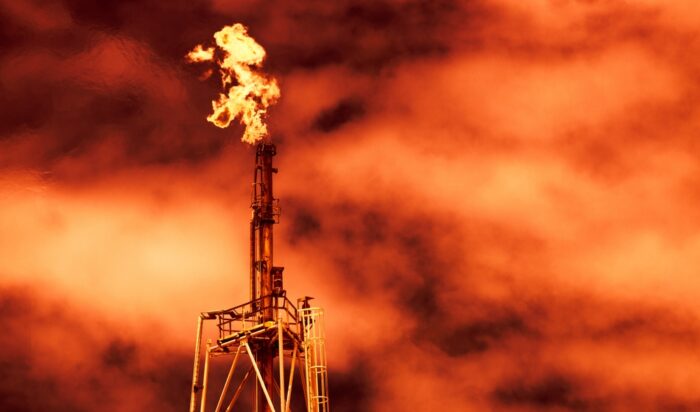
Despite the urgent need to reduce greenhouse gas emissions fast, COP31 has just ended in failure. It is therefore an opportune moment to check key facts on where we stand and what we need to do in the coming years.
Under the co-presidency of Turkey and Australia, COP31 ended in Antalya on 21 November with no overarching political agreement and little to no progress on technical negotiations. The meeting brought together the countries that committed to fighting climate change under the United Nations Framework Convention on Climate Change (UNFCCC), with the notable absence of the US which withdrew from the convention under President Donald Trump.
This year’s meeting was the first ‘overshoot COP’ – the first COP since a scientific report from the UN Environment Programme (UNEP) concluded that the 1.5°C global warming limit set by the Paris Agreement in 2015 would be exceeded. However, all is not (yet) lost because the report estimates that, with fast and extensive reductions in greenhouse gas emissions, it would still be possible to go beyond the 1.5°C target and then bring the global temperature back to ‘only’ +1.5°C by the end of the century. This renewed call for action should be a wake-up call for governments, industries and citizens. But where exactly do we stand on this journey towards decarbonisation and how will it be influenced by the COP31 outcome? Let us summarise some key elements.
What is our current global warming trajectory?
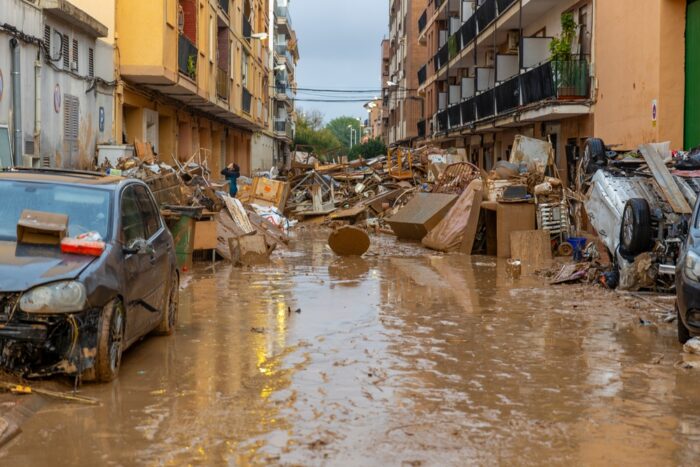
Our current emission pathway is projected to lead to a global warming of 2.8–3°C by 2100. In Europe, temperatures will be higher because the continent is warming twice as fast as the global average due to a combination of factors (including shifts in atmospheric circulation, reduced air pollution since the 1980s, and ‘arctic amplification’ in the northern parts of the continent). This level of warming is not considered safe for human beings or the ecosystems on which we depend.
Does that mean that we have achieved nothing in 30 years?
Hold your horses. Without any previous action, the world would have been on a path to a global warming of 4-5°C. Thanks to policies, renewable energies and technological improvements, we have been able to prevent at least 1°C of warming. This shows that climate action works, even if it has so far been insufficient.
Are emissions now finally decreasing?
Maybe, maybe not. Between 2016 and 2025, greenhouse gas emissions continued to increase annually by 0.3 per cent. This constitutes an improvement compared to the rate in the previous decade (1.7 per cent for 2006-2015). The Global Carbon Project estimates that, in 2026, emissions could decrease by 0.4 per cent due to the deployment of clean energies and the Hormuz crisis. China, which represents 32 per cent of global emissions, is under particular scrutiny and is expected to show a decrease in emissions of 0.9 per cent. Emissions in the European Union (6 per cent of global emissions) are projected to decrease by 1.5 per cent.
So what do we need to do?
From now on, we need to reduce global emissions by 6 per cent per year or 18 per cent by 2030. This gives us a chance to limit peak warming to 1.8°C and return to a global temperature of +1.5°C, which is the safest for which we can hope. To achieve this, the recipe is clear. It includes tripling renewable energy capacity by 2035, doubling energy efficiency by 2035 and globally phasing out coal by 2040. Given that developed countries have contributed more to climate change and possess more means, it is only right that they should act faster.
Can we not just suck the carbon out of the atmosphere?
Trees do just that. Carbon Dioxide Removal (CDR) through reforestation or planting forests where there were none before will need to be part of the solution. However, this comes with limits, risks and trade-offs, and it cannot be a substitute for cutting emissions. On the other hand, Carbon Capture and Storage (CCS) technologies are, so far, underperforming and costly, with great uncertainty around their future performance. The only real way out is to prevent emissions at their source.
Did COP31 at least result in a call to intensify emission reductions?
Well, no. As usual, the countries could not even agree to include the ‘f words’ (fossil fuels) in a common decision. They also disagreed on the role of science in guiding action, and the negotiations on the Mitigation Work Programme ended without the adoption of a text. Fossil fuel-producing countries systematically block progress at COPs and push for fake solutions like CCS. This year was no exception. The EU also blocked various discussions this year, especially on providing adaptation finance to developing countries. Although these countries are the most impacted by climate change, they have contributed to it the least.
Is there a light ‘beyond the doom and gloom’?
Yes. The situation is dire but not hopeless. Firstly, renewable energy capacity increased three times faster than expected between 2013 and 2025. This is a good sign that there is a real business case for renewables. Secondly, countries putting their foot down to a bad COP agreement is not necessarily a bad thing. It may indicate that some countries are ready for real ambition and action. Indeed, this is corroborated by the creation of the Santa Marta process in parallel to the COP last year – a process that seeks to advance a just, orderly and equitable transition away from fossil fuels (TAFF). Since then, countries have started to publish their TAFF roadmaps. Thirdly, evidence now shows that it is possible to have a flourishing economy and decrease emissions at the same time. Over the last decade, 40 countries have decreased their fossil CO2 emissions significantly while growing their economies. Finally, scientific guidance on climate solutions and on how to implement them has never been more advanced. Plenty of resources exist to design the right policies and select the most efficient technologies.
The journey will be arduous, but the solutions exist. In many cases, the missing link is the political willingness to act. As rockstar climate scientist Johan Rockström puts it, “the window is still open to maintain the corridor of life [on Earth], but it is closing fast”. Humanity has a ten-year window to get back on track.
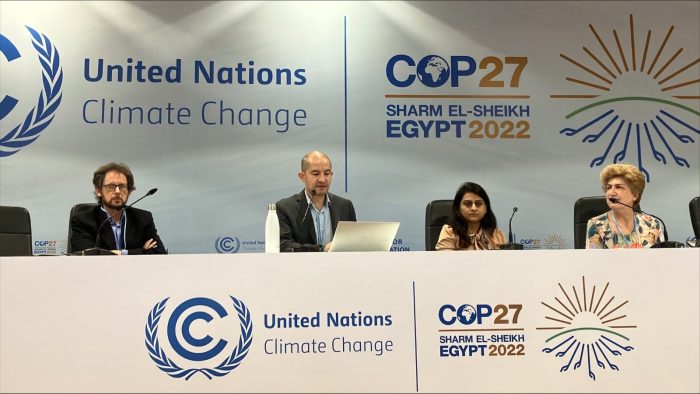
Photo credits: UN Climate Change – Kiara Worth (CC BY-NC-SA 4.0)
Find all related Progressive Post
Progressive Post

Find all related events
Events
No upcoming events at the moment.
FEPS HQ
FEPS HQ (Hybrid)
FEPS HQ (Expert meeting)
Santa Marta, Colombia
Load more...
Find all related publications
Publications
Find all related Audiovisual
Audiovisual

25/03/2026

04/02/2026

13/11/2025

11/04/2025
Find all related news
News

Find all related in the media
In the media