


26/11/2026
The ongoing reform of the EU’s emissions trading system is an opportunity to reposition this cornerstone climate policy instrument into a driver of investments into decarbonised processes and value chains. This requires rethinking the ETS and embedding it firmly into Europe’s industrial policy – by earmarking auction revenue to support decarbonisation investment, restricting free allowances to those willing to invest, and ensuring the carbon price is sufficient so that clean investment pays off.
In its first 20 years, the EU Emissions Trading System (ETS) brought the sectors it covers – energy, heavy industry and aviation – halfway to climate neutrality. As the centrepiece of EU climate policy, it serves to reduce greenhouse gas emissions in a market-based and cost-effective way. So far, most of these reductions have come from the energy sector, mainly by phasing out coal, helped by the growing share of renewable power generation.
In 2026, the ETS is up for a periodic review. Formally, the aim is to align the instrument with the EU’s new climate target for 2040. But more fundamentally, the challenge is to make the EU ETS fit to deliver climate neutrality. For this, its focus must shift from the power sector towards the decarbonisation of industry, and its mode of operation needs to change. Incremental improvements – increasing efficiency or switching to less carbon-intensive fuels – can cut emissions but will not reduce them close enough to (net) zero. Bringing industry onto a pathway compatible with climate neutrality requires investment in new, decarbonised production processes and the infrastructure that enables them. This means electrifying heat generation, switching to hydrogen-based or circular fuels and feedstocks, and capturing and storing emissions that cannot be avoided.
The EU ETS can play a central role in driving these investments. As part of its review, the European Commission has proposed several changes intended to strengthen this function.
First, where emitters receive emission allowances for free, this allocation becomes conditional on decarbonisation investment. Industrial emitters exposed to international competition have so far received allowances for free, largely without strings attached. Going forward, companies will only receive free allocation if they have a clear plan for transitioning to climate-neutral production and can show that they have invested accordingly. While the logic is compelling, the devil is in the detail: decarbonisation plans must be sufficiently ambitious and translate into binding commitments – and all this without creating excessive administrative effort.
Second, where allowances are auctioned, the revenues need to be channelled more strategically to support and de-risk decarbonisation investment. Proposed new funding mechanisms could mobilise several hundred billion euros of auctioning revenue over the 2030s to support investment in cleaner production processes and the supporting infrastructure – electricity grids, carbon or hydrogen pipelines. These could change the game, but only if the funds are targeted at transformative investments, rather than handed out as undifferentiated, blanket compensation. Importantly, revenues can also help create demand for clean products through green lead markets, covering the cost difference between conventional and climate-friendly production. This would close a gap in the EU’s current policy mix for industrial transformation.
These are steps in the right direction, but the EU needs to go further. Ultimately, companies will invest in decarbonisation only if they see a market for low-carbon products – and if they expect the carbon price to make those investments economically viable. The carbon price, in turn, is determined by how fast the ETS cap declines, and how many years remain until it reaches zero. But the political discussions in 2026 have clearly shown that EU industry is divided over the carbon price: installations with fossil-based business models, often exposed to tight international competition and lacking a credible transformation perspective, argue that they need a low carbon price to survive. By contrast, companies that have invested in clean, circular and electrified technologies – or are preparing to do so – need a sufficiently high carbon price, or else their investments become stranded assets.
This is the circle the ETS review needs to square. In balancing these competing demands, the EU risks prioritising the protection of established, fossil-based players over future ambition. The result could be a carbon price that is too low to drive clean investments – and, ironically, this means that even more public subsidies and guarantees will be needed to make clean investments viable.
A better way forward is to embed the EU ETS firmly within a European industrial policy. Across sectors, clean solutions are technologically mature and increasingly competitive – and for many clean tech options, EU producers still have a lead. But these solutions cannot be rolled out in isolation; they require supporting infrastructure and an enabling regulatory framework. Orchestrating such systemic change is challenging. It requires striking the balance between providing technological clarity to investors and remaining open to unforeseen developments. There is no blueprint for this, but with an effective investment conditionality, smart use of auction revenues and a sufficiently high carbon price, the EU ETS can develop into a powerful framework for driving and guiding the transformation of European industry to climate neutrality.
The benefits would extend beyond climate. A strong transformation agenda can help to modernise Europe’s ageing industrial base, and make it better equipped to withstand global fossil energy shocks. Against the backdrop of challenging geopolitics, it would also make the EU less vulnerable, as Europe’s adversaries weaponise our dependence on imported fuels and feedstocks. It helps position the EU as a leader in clean technologies and – through the Carbon Border Adjustment Mechanism, the EU’s border tariff – incentivises its trading partners to also ramp up climate action.
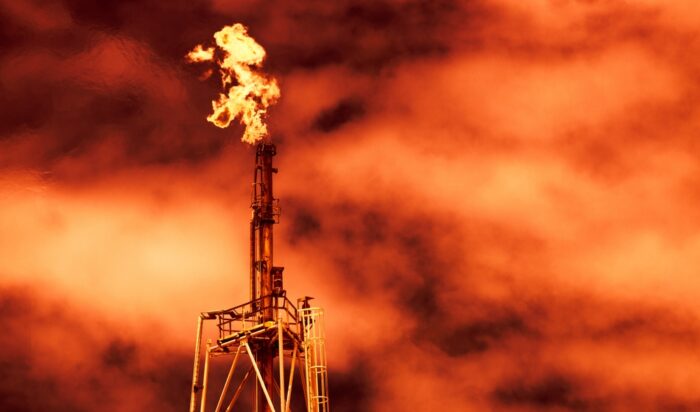
Photo credits: Andrzej Rostek/Shutterstock
Find all related Progressive Post
Progressive Post


Find all related events
Events
No upcoming events at the moment.
FEPS HQ

FEPS HQ (Hybrid)
FEPS HQ (Expert meeting)

Santa Marta, Colombia
Load more...
Find all related publications
Publications
Find all related Audiovisual
Audiovisual

25/03/2026

04/02/2026

13/11/2025

11/04/2025
Find all related news
News


Find all related in the media
In the media