
07/04/2022
Western economic sanctions on Russia have worked as a substitute for war. But they also might provoke a xenophobic backlash. Given the destruction that has taken place, and what is at stake in the war, we need to shift our focus, speculate about the different ways in which this war can end, and the strategies appropriate to the diverse outcomes.
Difficult options face Ukraine and NATO as they resist Russia’s imperial ambitions. Distinct strategies are required to deal with the three very different possible outcomes to the conflict. Thinking about the future is thus no luxury. The costs to both Ukraine and Russia are rising. Western sanctions are disrupting Russia’s economy. Its privileged trade status has been revoked, oligarchs’ assets have been seized, investments have been frozen, and Vladimir Putin has become a global pariah. As a result of the sanctions, the rouble has lost half of its value. Soldiers, small businesses owners, government employees, and workers with set wages are watching their savings melt away. Western leaders assume that ruining the economy will drive the Russian population to overthrow Putin. However, such weaponised economic policies, can produce the opposite effect. They might strengthen Russian nationalism, provide confirmation for Putin’s propaganda, and heighten resistance to the ‘imperialist’ ambitions of the United States and NATO.
Authoritarian repression tends to flourish in war conditions. Demonstrations have taken place all over Russia, it is true, but the only sizeable protests have occurred in Moscow and St. Petersburg. Quiet rules in the rest of this huge nation. China might strengthen Russia further by offering military aid and new trade agreements. Especially should Iranian nuclear talks with the five permanent members of the US Security Council and the EU collapse, Tehran could also enter the fray. Russia, China, and Iran would prove a formidable heir to the old ‘axis’ alliance of fascist powers of the 1930s. That Putin has become a global pariah is only partially true. As for the oligarchs, indeed, Stalin was never overly concerned about the economic well-being of his subordinates – and neither is Putin.
Sanctions have served as a valuable and non-violent alternative to direct military intervention, but the West must prove more precise and strategic in their employment. NATO must also recognise that there is a method to Putin’s madness. His aims for the nation are what they always were, namely, secure warm-water ports, create a buffer against invasion and protect the nation’s sphere of influence. These goals reach back not just to Stalin and Lenin, but to Peter the Great. Western commentators are not taking history into account and, as a result, ruthless yet finite policies are transformed into megalomaniacal aspirations. This becomes evident in those who question whether NATO is doing enough? They ask, should its members not impose stronger economic sanctions? Send more military hardware? Implement a ‘no-fly zone’ over Ukraine? Launch a cyber-attack?
Sitting at their desks, media pundits facilely warn of ‘appeasement’ and the ‘Munich Crisis’ of 1938. The only alternative back then was for the allies to declare another world war, and that was stated openly. The UK and France soon began to rearm. But our ‘hawks’ dance around the question of sending their nation’s troops to fight in Ukraine –and for good reason. The Western public would not stand for it. In fact, their willingness to sacrifice might weaken under far less dire circumstances, such as when inflation starts taking off or the price of gasoline keeps rising. In the United States, this could produce a Republican triumph in the November elections of 2022, and an unpredictable transformation in the Russo-Ukrainian conflict.
Everyone hopes that such predictions are mistaken. However, politics rests on hoping for the best while seeking to prevent the worst. Three likely outcomes exist: Russia might conquer Ukraine, set up a puppet regime in parts of the country, and the rest of the world would need to deal with it. But the opposite might also occur. Ukraine could repel the invader, rebuild its infrastructure with Western aid, and plan for a completely transformed continent. Or, finally, the present war might draw in nations like Poland It also might spark Russian ambitions for Estonia, Latvia, and Lithuania. That such an international escalation of the war might spiral out of control is an obvious possibility that would have with devastating consequences.
Negotiations will need to continue without preconditions, in any case. And the European community must plan for a new wave of refugees. If Russia is poised for victory, Ukrainian leaders should consider creating a provisional government-in-exile to coordinate future resistance against any puppet regime and develop plans to reconstruct their nation even while stripped of its sovereignty. Temptations to employ chemical or nuclear weapons will grow should the conflict take a more transnational turn. Ukraine will then need to act responsibly and boldly. Its leaders would need to publicly reject any pre-emptive use of chemical or nuclear weapons, call for airdrops of humanitarian aid by the West, and seek the formation of a war-crimes tribunal. All wars come to an end, and that will be true of this war as well: better to begin speculating about what will happen later than be caught by surprise.
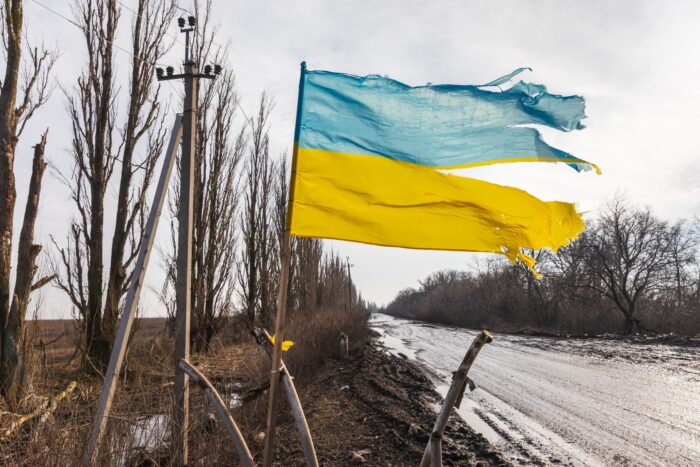
Photo credits: Drop of light/shutterstock.com
Find all related Progressive Post
Progressive Post