


Jean Monnet Chair, Associate Professor, Department of International Relations, Blikent University, and Visiting Fellow, Georgetown University, Washington D.C.
21/09/2022
In her address to the European Parliament on the State of the European Union, Commission President Ursula von der Leyen talked about the need to “rediscover the spirit of Maastricht”. This is misguided, given that the old rules damaged both political integration and economic performance. New, bold proposals are needed to allow for genuine economic convergence and to politicise what is at stake at EU level.
The European Commission is working on a new set of proposals for economic governance in the European Union, and Commission President von der Leyen announced in her recent speech that these will be announced in October. The need for reform has arguably been as long as the various instruments used since the Stability and Growth Pact (SGP) was adopted in 1997.
25 years on, the task has become more urgent as ever before. Fiscal rules that were arbitrarily set and forced states to wear straitjackets they did not choose exacerbated inequities within the bloc failed to promote genuine economic convergence, and reinforced nationalist stereotypes. After a narrow disaster escape during the Eurozone crisis, the onset of the pandemic inevitably exacerbated fiscal imbalances and reignited the debate that the Commission had opened just before Covid-19 struck. The clock is now ticking.
Any reform of the existing settlement needs to start with answering the core question: what do the rules seek to achieve? Fundamentally this is a political question, as it directly impacts the relationship between member states and the EU, in turn shaping citizens’ expectations from their governments and increasing, or decreasing, the space available for nationally elected representatives to meaningfully impact the economic lives of their constituents. A set of fiscal rules restricted to a self-referential Brussels bubble obsessed with solid bookkeeping depoliticises this vital democratic debate. It encourages obstructionism and go-it-alone nationalism, as manifested in multiple EU states over the last few decades. That is true even when the bookkeepers turn a blind eye to rules’ violation, as Vivien Schmidt has demonstrated.
The public debt and deficit targets of 60 and 3 per cent respectively have already been controversial when they were adopted in the wake of the signature of the Maastricht treaty. In today’s higher interest rate regime, and given the lessons learned during the pandemic concerning the debt-carrying capacity of member states, these rules no longer serve any meaningful purpose. The debt level ceiling provision was never really enforced, both because Maastricht allowed for some flexibility and because it made little sense to do so. Following the pandemic, average debt levels have risen to 95 per cent. When the head of the European Stability Mechanism (ESM) Klaus Regling calls for abandoning ‘debt 60’ it is high time to move on.
Arbitrariness in numbers goes deeper than debt levels. The Macroeconomic Imbalances procedure (MIP), set up in 2011 as the Eurozone crisis was underway and envisaged as an SGP successor, remains loyal to the earlier SGP mentality. Although serving several valuable purposes on the need to closely monitor member states’ macroeconomic development and allow for early flagging of challenging cases, the MIP sets a 4 per cent floor for states with a current account deficit but a whopping 6 per cent for surplus states. This then translates into coercive policy measures centred on ‘sinner’ deficit countries that let surplus nations, basking in the glory of low real interest rates resulting from higher wage and price inflation, off the hook, as no mechanisms of correction have been imposed on surplus countries. It is worth repeating: the new rules cannot be self-referential, correcting imbalances within the Union at the expense of (certain) member states. The cost of living and the energy crises alone suggest that the luxury of imposing rules drawn from arbitrary targets is a thing of the past.
If these are some of the actions to be avoided, what is a proactive list of measures that the Commission could come up with and member states endorse? First, learn the lessons of the recent past, and the EU reaction to the pandemic in particular. Employing a host of policy instruments and mobilising resources and capacity from its various institutions, the EU faced a historic dilemma. As I have argued elsewhere, the Union gave itself a new role in the form of the Recovery and Resilience Facility (RRF): that of a borrower to finance common EU debt, accepting the interconnectedness of the Eurozone economies and facilitating national economies’ path towards a sustainable (green and digital) recovery. Handing out grants premised on its priorities for a resilient Europe, the Commission acted boldly and appropriately. So, where is the lesson here? Keep on doing the right thing! In recent years, a series of proposals on common EU investment have emerged, with some gaining traction through the RRF and the implementation of programmes like SURE. Now (even) the IMF calls for strengthening the Union’s fiscal capacity (FCEU) to maintain macroeconomic stability in the face of external shocks and to finance EU public goods. In other words, this is about institutionalising what the NextGenerationEU (NGEU) initiated, yet is still seen sceptically by many in Northern Europe. A new EU fund would uphold the spirit of the Union’s response to the pandemic and enhance the EU’s role in assisting the recovery instead of blocking healthy expenditure.
Ideally, the Commission proposals will not be limited to a new fund but will be complemented by a new approach to fiscal sustainability. This would replace fiscal rules with fiscal standards, assessed over a long-term horizon and with institutions other than the Council (the Court of Justice or a Fiscal Board spring to mind) deciding whether member states have acted as they should. Longer time horizons, more institutions involved, greater transparency in decision-making: on that basis, politics in the EU can be fun again. Meanwhile, and should the deficit rule be maintained in the new architecture, foreseeing explicit exemptions from its application would ensure that states can invest in their future through adequate expenditure in education and training, that is productive investments that will combine their competitiveness drive with high standards.
Extending the application of the general escape clause to 2023 bought the Commission valuable time, but the parallel crises affecting it have not gone away. Fresh thinking is urgently required, and the Union has sown during the pandemic that it can take decisive action when it comes to the survival of its most precious assets, such as the Single Market. It is time to demonstrate the same boldness in redesigning its economic governance architecture.
Photo credits: Shutterstock/orinocoArt
Find all related Progressive Post
Progressive Post


Find all related events
Events

Ljubljana, Slovenia
Brussels, Belgium (Expert meeting)
Académie Royale, Brussels
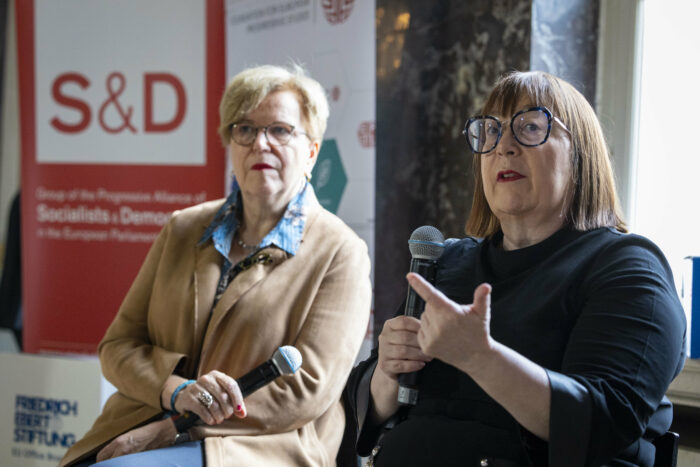
Académie Royale, Brussels
Load more...
Find all related publications
Publications
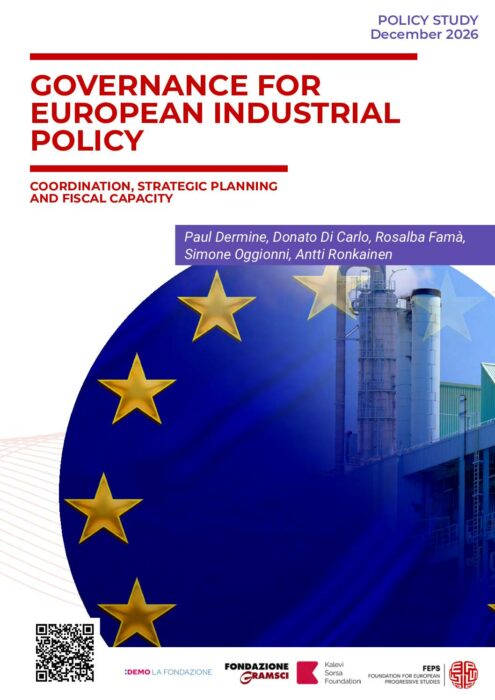

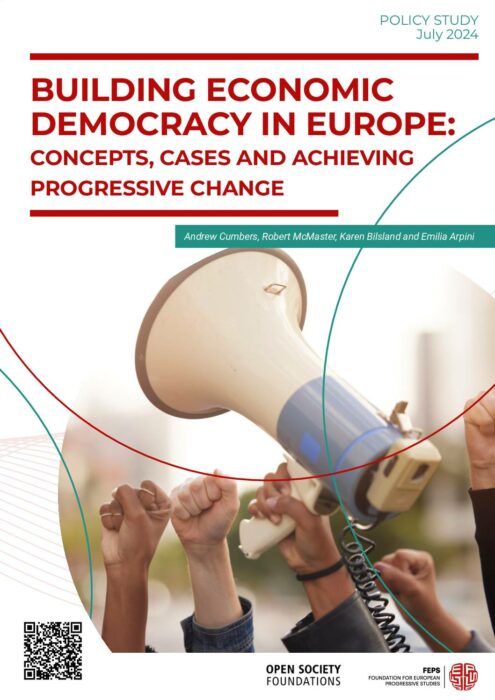
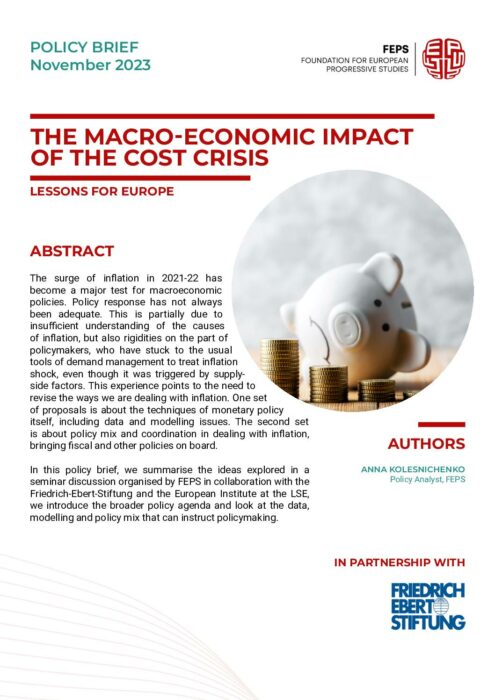
Find all related Audiovisual
Audiovisual
16/07/2024
11/03/2024

31/01/2024

21/09/2023
Find all related news
News

Find all related in the media
In the media
In an article in Delo, László Andor criticises Viktor Orbán government's economic policies, such as not allowing Hungary to join the euro area, which he believes would have helped curb inflation. He also criticises the government for blaming external enemies such as the President of the European Commission, to cover up its own failures.
“Trade doesn’t work in isolation from good domestic policies” Interview to Arancha González
by Borderlex 19/09/2023