


15/11/2021
Disappointment is almost inevitable at these meetings. Let’s face it: we will need more than COP meetings to get things done. We need more ambition, credible and concrete transition plans that integrate the multifaceted social dimensions from day one and novel approaches that connect with ordinary citizens and show how climate action will reshape their daily lives – for the better.
Perhaps, it is inherent to this type of international gatherings: one needs to be prepared for disillusion. Only a very flexible mind can be happy that something so evident in light of a gloomy climate crisis as the phasing out of “inefficient fossil fuels subsidies”, is mentioned for the first time in an official COP text, even though without a clear deadline. Optimists point to another world premiere, the ambition to “phase down” unabated coal (used in coal power plants without Carbon Capture, Utilisation and Storage technology equipment), language that has the potential to be strengthened in the course of the next few COPs and ultimately lead to abandoning coal at some point in future.
The excruciatingly slow progress in international negotiations contrasts sharply with the ever-grimier prospects scientists paint in many recently published reports. There is no doubt that we are getting closer to a situation that is “irreversible and that will fundamentally reshape life in the coming decades even if greenhouse gas emissions are brought under some control”, as the Intergovernmental Panel on Climate Change pointed out earlier this year. Looking at COP26 from that perspective, one cannot deny the conference has failed to deliver on hard numbers: we are on track to global warming of 2.4°C by the end of this century, but, allegedly, committed to keeping the 1.5°C Paris ambition alive, nevertheless.
Sometimes, the whirlwind of statements and commitments of all sorts made COP26 look like a cheerleading exercise. There was the launch of an alliance to stop deforestation by 2030 and another one to reduce methane emissions by 30 per cent by 2030, or the commitment by several states to stop supporting financing fossil fuels or the use of coal. In addition, some additional governments have announced their intentions to bring emissions to net-zero by the middle of the century. Fatih Birol, the Executive Director of the International Energy Agency, optimistically declared that these developments would keep the possibility of limiting global heating to 1.8°C by the end of the century within reach. As if by magic, such announcements would solve the issues once and for all. Even though all these efforts are welcome, we are nowhere near doing enough to avoid a climate disaster.
The parties will reconvene next year and have already agreed to reconsider the official 2030 climate targets in 2022 instead of 2025, an opportunity to translate the side-deals into more binding goals. But a huge credibility gap remains, as much of this appears like loose sand. One thing is to promise something, another to make it happen on the ground. Most of these pledges are rather vague and ambiguous or based on assumptions that are unlikely to happen. Most often, long-term commitments are not underpinned by ambitious short-term plans to help kick-start the necessary transition.
The ease with which promises are made about a distant future neither reflects the urgency of the current situation, nor increases the trust of citizens worldwide that this process really leads to a climate-neutral world. And it does not meet the scale of the transformation needed to make our economy and societies futureproof. So, we need to find ways to hold governments to their promises and strengthen universal emissions reporting and verification systems.
Moreover, the promises miss a critical point: the climate crisis is not only about greenhouse gas emissions, but it is also a multifaceted social crisis. Groups of countries are pitted against each other: developing countries are the least responsible for emissions, but they are hit the hardest by the increasingly devastating impact of global warming. On the other side, the developed countries failed to deliver on the promise to meet the promise they made earlier to help the former cope with the situation with $100 bn (€87 bn) annually. In addition, increasingly, poor countries not only seek help to cope with the consequences of climate change, but request compensation from the rich countries for the costs their emissions have caused them – or “loss and damage” in the UN jargon. Tensions between both groups are likely to grow further soon.
Likewise, even in the richer parts of the world, the most vulnerable people will struggle most to deal with the effects of global warming, and also with effects of the necessary restructuring of the industrial fabric and the regressive impact of ill-designed climate policies. The need for a “just transition for workers and areas affected” has been acknowledged by COP26, but lacks any concrete measure. The social dimension needs to be embedded structurally in formulating all climate policymaking from day one to avoid trade-offs and contribute to a fairer society overall.
In addition, the COP-meetings give the wrong impression that a top-down approach can solve global warming whilst it also requires the mobilisation of all actors in society, in a bottom-up approach. Urgently, the focus needs to shift from what should be done in the longer term, to how it will be done in the short term. Therefore, the COPs will have to reinvent themselves and be complemented with novel approaches that can build bridges with cities, local communities, grassroots movements and ordinary citizens.
Pledges and all sorts of targets need to be translated into how they affect people’s daily life. A policy mix that leads us to our destination and creates a blueprint for a new type of society and economy, fair and sustainable, is required now. People need to understand how smart climate action can improve their housing, mobility options, health situation and create new job opportunities. The opportunities need to be made tangible. This is the best way to create hope and perspective and mobilise the necessary support for the sometimes-daring policies that will have to be implemented.
Clearly, climate diplomacy and the COP meetings will remain crucial to provide political momentum, create a shared understanding of the challenges at stake and offer a platform for discussion for policymakers worldwide to build consensus and avoid freeriding. But let’s transform this into something that is increasingly meaningful and has the capacity to mobilise people and have an impact in the short term.
Photo credits: Shutterstock
Find all related Progressive Post
Progressive Post

Find all related events
Events
No upcoming events at the moment.
Brussels, Belgium (Expert meeting)
Dublin, Ireland

Dublin (expert meeting)
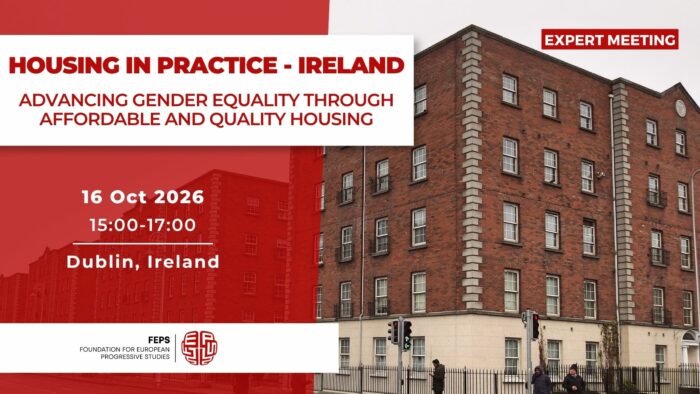
Dublin, Ireland (Expert meeting)
Load more...
Find all related publications
Publications
Find all related Audiovisual
Audiovisual

23/04/2026

25/03/2026
09/03/2026
09/03/2026
Find all related news
News


Find all related in the media
In the media