

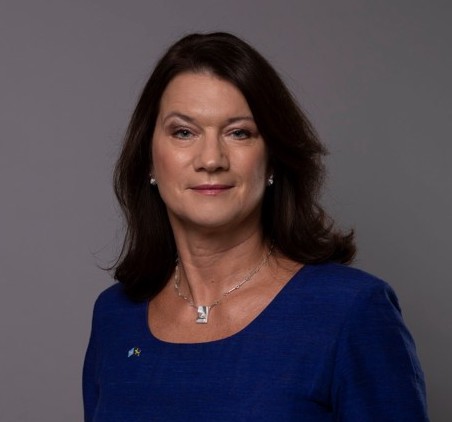
FEPS Special Advisor on Foreign Affairs and Co-Chair of the Feminist Foreign Policy Progressive Voices Collective
02/03/2023
Under a Social Democratic-led government Sweden was the first country to pursue a feminist foreign policy. Between 2014-2022 we systematically analysed what decisions would mean for women and girls, using the three Rs – rights, representation and resources. Although the Swedish right-wing government decided to abolish this policy, several countries with different political colours have now followed the Swedish example. The many positive results should make the call for a feminist foreign policy a priority for progressives.
We are living in times of crisis. The one-year anniversary of Russia’s illegal invasion of Ukraine is of course on all our minds, and a year and a half has now passed since the Taliban took control in Afghanistan, where the situation for women and girls is absolutely horrific. The brave women in Iran are still protesting against a misogynist regime, many of them paying a heavy price with prison torture and even death. And then, the climate and environmental crisis threatens our planet and its inhabitants, disproportionally affecting women and girls.
Common to all these conflicts and crises are that women, girls and marginalised individuals – due to historical and structural inequalities – are hit the hardest. When half of the population still does not enjoy the same rights, representation and resources as the other half, there is a need to adopt a gender lens for foreign policy.
One of the most important elements in pursuing a feminist foreign policy is that it must be done systematically. It is not just a ‘gender ad hoc thing you need to remember’. And a feminist approach is not only about a perspective. It is a way of analysing and developing policy and operational responses to the challenges we face today. It contributes to a sustainable and peaceful development and future. And it helps us become a counterbalance to the actors pushing back against gender equality in different contexts and arenas.
An effective tool to use in pursuing a feminist foreign policy is that of the three Rs – rights, representation and resources.
Rights: the simple fact is that human rights are also women’s rights. Here, two fundamental tracks must be followed when pursuing a feminist foreign policy. Firstly, there are areas where we must aim for prohibition, such as gender-based discrimination, forced marriages and female genital mutilation. Secondly, there are areas where the aim is progress – for example, equal rights to inheritance and access to education and health, including sexual and reproductive health and rights. These areas are key to women’s empowerment.
Representation: all individuals must have the same right to participation, education and influence in decision-making processes. Women are chronically underrepresented at key forums where decisions are made. This goes for all areas, be it in peace negotiations, on company boards or in political parties.
Resources: resources need to be allocated to promote equal opportunities. This means that we should identify and promote targeted measures – for example, measures strengthening gender mainstreaming in the management of grants, and measures pursuing diversity-responsive budgeting.
In my experience after nearly seven years as Sweden’s minister for trade, minister for EU affairs, and most recently minister for foreign affairs in Social Democratic-led governments, a feminist lens transforms our view of the world. I have witnessed first-hand the importance of this agenda on the ground in many conflict areas, including in Ukraine and the Caucasus. The horrific reports of sexual assault and rape currently being perpetrated by the Russian armed forces are a tragic reminder of why a feminist perspective is always needed.
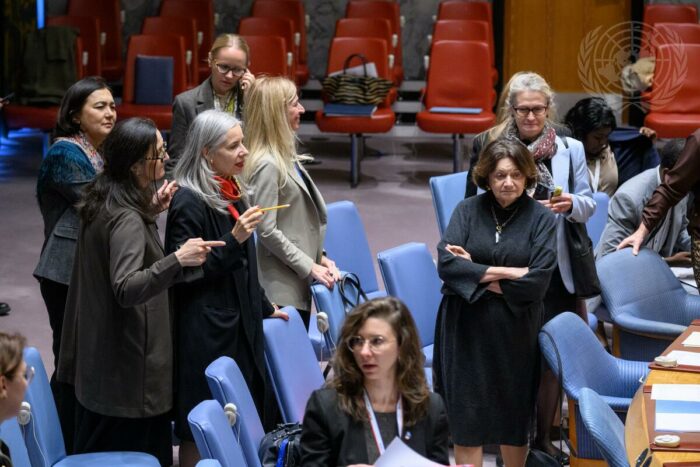
Sweden systematically applied a feminist foreign policy during our time in the UN Security Council (UNSC) in 2017-2018, and also when I was Chairperson in Office in the Organization for Security and Cooperation in Europe (OSCE) in 2021 – to name just two examples. In the UNSC we consistently sought to ensure that the Council included a focus on women, peace and security (WPS) in all discussions and decisions. We therefore pushed for the UNSC to be briefed by civil society representatives, and for WPS to be discussed in each and every country file. We also showed that it was indeed possible to achieve gender balance among those briefing the Council during Sweden’s Presidency in July 2018, and I am now happy to see how several members have taken this approach on board today. Furthermore, we also insisted that briefings to the UNSC include a gender perspective, including information on the role of women in the peace processes being discussed. That consistent request had an impact on what the Secretariat prepared. And that is the point – not having to ask.
In a similar way, I also sought to integrate WPS into all dimensions of our meetings when I was Chairperson in Office in the OSCE. I therefore brought the situation for women and girls to all my meetings, and I consulted with women’s organisations during every visit to the region, including to Central Asia, Russia and Ukraine. The OSCE special envoys to conflicts were asked to look especially at how to increase women’s participation in peace processes. I appointed a special representative for gender, and an advisory group on gender to support the OSCE.
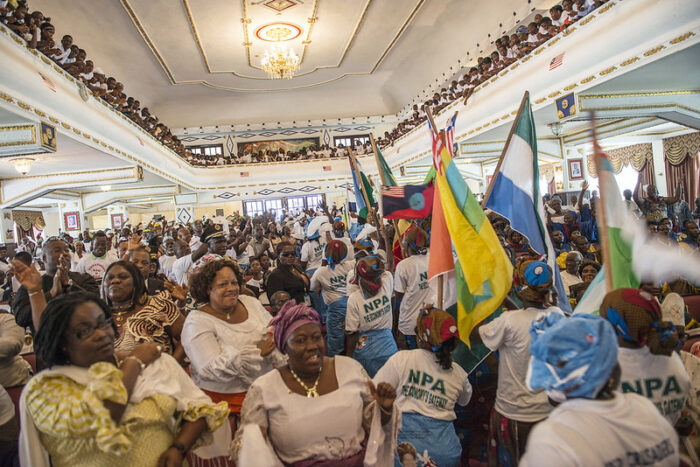
In 2014, Sweden became the first country in the world to declare a feminist foreign policy and to establish a new standard that several countries have since followed. Nine countries in Europe, Latin America and Canada currently pursue a feminist foreign policy, and several are on the way to doing so, including in Africa. Gender equality is a fundamental prerequisite for achieving all foreign policy goals. Sustainable peace and security, and the fulfilment of the Sustainable Development Goals cannot be achieved if we exclude half of the world’s population. Since introducing our feminist foreign policy many more leaders now agree on the importance of applying a systematic gender perspective to foreign policy. I am therefore very disappointed that one of the first decisions of the new right-wing government in Sweden, with the support of a xenophobic and nationalistic party, was to no longer pursue a feminist foreign policy. It is my sincere hope that more countries will follow the Swedish Social Democratic-led government’s example of implementing a feminist foreign policy. As progressives, we should lead the movement to make this happen.
Photo credits: United Nations
Find all related Progressive Post
Progressive Post

Find all related events
Events
No upcoming events at the moment.
Brussels, Belgium (Expert meeting)
Online (expert meeting)
Online (Expert meeting)
Nicosia, Cyprus
Load more...
Find all related publications
Publications
Find all related Audiovisual
Audiovisual

30/05/2026
24/04/2026
24/04/2026
09/03/2026
Find all related news
News


Find all related in the media
In the media