Activity Report: Energy Efficiency: Key to Social and Economic Security

The main messages from the forum were based on how energy efficiency is key to […]

16/02/2015

The main messages from the forum were based on how energy efficiency is key to solving many social and economic problems and what measures can be taken to use efficiency to its full potential.

  • There are some big gains to be made in Latvia, especially in the housing sector, however there is a huge problem of trust in efficiency measures, often due to negative publicity. More local awareness schemes and better incentives and opportunities for consumers and the private sector could help improve this. Trust can be generated also through using well-known household brands and use of quality marks to launch new products.
  • Cooperative schemes and association schemes are seen as positive, although there is also a need to attract private investors too in order for the schemes to be successful, this is done through state guarantees.
  • Apartment owners are wary of carrying out renovation and decisions often have to be taken by the whole building which slows things down. Therefore issues of the surrounding framework need to be addresses such as ownership structures, building codes, property law and planning requirements.
  • Sharing ideas and experiences at European level as well as establishing incentives can push forward energy efficiency measures and this together then with social measures.
  • More efficiency measures that are taken, the more and better technology will be deployed and bring down prices and save energy.
  • Addressing energy efficiency can clearly help fuel poverty.
  • In Latvia the 2012 EU energy efficiency directive needs to be implemented.

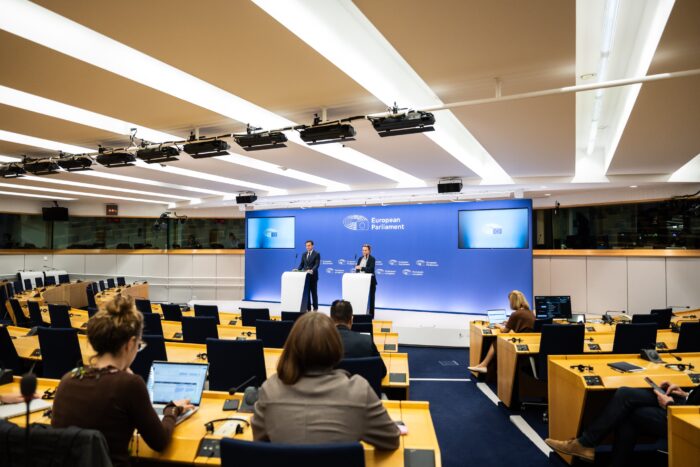
The forum gathered a mixture of Latvian experts, from NGOs, businesses and politicians alongside experts from the region and from European level. The discussions were based on looking at the current situation of energy efficiency in Europe and why energy can help social and economic problems, measures and tools for improving efficiency and future steps to be taken. 

In conclusion, it was noted that it requires a long-term policy and strategy from the State in this area. This would give confidence also to private financial institutions that this is an industry where it is safe to invest resources. Whereas, larger apartment buildings’ renovation in Latvia would attract investments from manufacturers of building materials, which would create new jobs and reduce the costs for energy efficiency activities in Latvia.


The Conference was streamed online to one of the biggest Latvian news portal Tvnet.lv and was viewed by 489 people. Video of the conference can be found at the foundation’s BSF home page

Based on this and previous conferences on energy efficiency, BSF created proposals for the Latvian Parliament to change legislation and policies in order to ensure better energy efficiency measures.

Also an e- book was created collecting practices and examples of energy policy on this issue in Finland, Estonia, and Latvia (available also in English) 

Twitter accounts:

@FEPS_Europe

@BSF_Latvija

Full summary of the discussions 

Link to the video streaming of the meeting 

The Latvian version of the discussion summaries and programme and other related documents and photos on our partner’s website, the Freedom and Solidarity Foundation.

Erica Hope’s Presentation from the European Climate Foundation 

Check out also www.ekubirojs.lv for more details of the presentation of the research presentation of Marta Bergmane and Mara Laizane about Resident’s understanding and perception of the impact of renovation of multifamily dwellings.

Find all related publications
Publications
28/11/2025

Smarter spending today, safer societies tomorrow

Digitally-enabled capabilities for European defence
28/11/2025

More money, more dependence?

Financing European Union defence for autonomy and cooperation
28/11/2025

ReArm Europe

The impact and role of EU arms export controls
18/11/2025

Public investment in the proposed 2028-2034 EU budget

Needs, gaps and options
Find all related news
News
04/12/2025

It is high time that the goal is set on “Quality”

FEPS commentary on the Quality Jobs Roadmap
27/11/2025

Is a bad COP outcome better than no outcome at all?

FEPS Commentary on COP30
27/11/2025

FEPS President Maria João Rodrigues at the T20 South Africa Summit in Johannesburg

Organised by the South African Institute of International Affairs (SAIIA), the Institute for Global Dialogue […]
21/10/2025

Maria João Rodrigues at PES Congress 2025

🇳🇱 🌹 FEPS attended the Party of European Socialists (PES) Congress in Amsterdam, which included […]
Find all related in the media
In the media

« La souveraineté numérique européenne est un défi d’ordre civilisationnel »

by Le Monde 15/11/2025
"European digital sovereignty is a challenge for civilisation as a whole". In an opinion piece in the newspaper Le Monde, FEPS President Maria João Rodrigues shares her concerns about European digital dependence on American and Asian giants

When Algorithms Undermine Democracy: Europe’s Wake-Up Call

by Social Europe 11/11/2025
Maja Fjaestad and Simon Vinge, co-editors of FEPS book "Algorithmic rule", wrote this op-ed on the power of algorithms and how they threaten the foundations of democratic oversight

Los mapas de las fronteras internas que alimentan el voto ultra en Europa

by El Confidencial 13/10/2025
"The internal border maps that fuel the far-right vote in Europe" - FEPS Secretary-General László Andor discusses the impact of cohesion policies on social inequalities and the rise of the far-right across Europe in this El Confidencial article.

Migranti: Amato a FEPS — “Socialisti e populisti fomentano ossessione”

by Avanti! 29/09/2025
“Migrants: Amato to FEPS — ‘Socialists and populists fuel obsession’” News article in Avanti! where Hedwig Giusto, FEPS Head of International Affairs, critiques how both populist and some socialist political forces are stoking fear around migration. Giusto calls for balanced migration policies that respect human rights, reinforce solidarity among member states, and reject securitarian obsessions.