Bulgaria: Early Parliamentary Elections 2014: Civil Observation

Within the project “Early Parliamentary Elections 2014: Civil Observation”, the Institute for Social Integration /ISI/ […]

10/03/2015

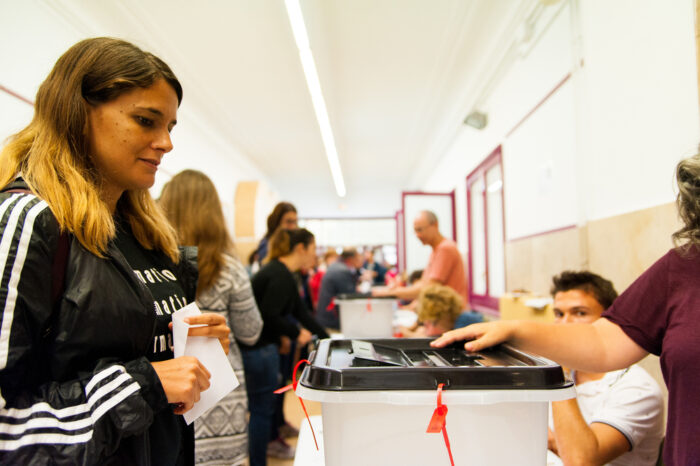
Within the project “Early Parliamentary Elections 2014: Civil Observation”, the Institute for Social Integration /ISI/ carried out monitoring of the election campaign and its media coverage, as well as direct observation on the Election Day – through the registered civil observers in 25 constituencies of the country /out of 31 in total/. During the monitoring process, ISI partnered with a wide range of civil society organizations through the platform of the Public Council at the Central Election Commission and the Civil Board for Free and Fair Elections, constituted to the caretaker prime minister. They were provided the opportunity to receive updated information from the responsible institutions of the electoral process and the exchange of information between the organizations, registered as observers.

The monitoring of the European Parliament Elections 2014 showed that even after the entry into force of the new Electoral Code, the imperfections of the electoral process and the election campaign deepened. The new Electoral Code was adopted on 5 March 2014 and there were only two months available for its implementation. This made necessary to maintain monitoring on the establishment and introduction of the instruments for implementation of the regulations. An opportunity to do so was by tracking the activities of the Central Election Commission and by participating in its consultancy bodies.

The monitoring was done in three stages: analysis of the electoral legislation, civil monitoring of the Election Day and monitoring of the platforms and programs of main political parties during the election campaign. Teams were appointed for each stage.

The new element in the monitoring of the election campaign was the idea, developed by ISI, for an interactive Internet-platform for analysis of the election messages of the major political forces. It presents graphically the main keywords in the statements of the candidates and allows for both quantitative and qualitative comparison of the positions of the parties on any important topic. With this endeavor, ISI aimed at helping the voters make their choice based on information. Next, it allows for comparison and analysis of the statements of the main politicians and candidates messages, and the previously declared milestones in their election platforms and programs. It also allows for the comparison of the pre-stated intentions with the actions of the new rulers.

At the same time we were able to trace media behavior during the election process and its mediating role in passing the messages to the voters.

 Based on the achievements of the monitoring in 2011, 2013 and 2014, ISI aimed at close monitoring of the election campaign and election process, including the Election Day. For the third consecutive year, ISI was a registered observer at the Central Election Commission. Probable violations in the electoral process were given the necessary publicity and were reported to the responsible authorities and institutions. For this purpose, the already existing network of civil observers was used, as well as the newly trained civil observers in almost all constituencies of the country. We carried out training sessions of teams of observers’ coordinators. In their turn, they organized and carried out training workshops for their teams. To achieve better efficiency of the training process we used a video with a simulation game of the Election Day, which was performed during the monitoring of the elections in 2013. We also prepared presentation materials. On the Election Day the National Coordinator of ISI, together with a team of partnering organization, were taking in the alerts for violations from the regional coordinators in their respective areas of observation, summarized them and sent them to the responsible institutions and the media.

The results of the monitoring were presented at a final meeting and proposals for future actions were discussed.

Network
Institute for Social Integration
Find all related publications
Publications
29/01/2026

Progressive Yearbook 2026

In an eerie manner, 2025 resembled the ‘time of monsters’, which, according to the great […]
15/01/2026

Financing enlargement via the 2028-2034 MFF

This brief intends to explain how the European Commission’s proposal for the 2028-2034 Multiannual Financial […]
19/12/2025

Moving beyond neoliberalism in EU trade policy

European Union trade policy finds itself at a crossroads. After three decades of neoliberal dominance in the […]
15/12/2025

The great unravelling

“The great unravelling” examines the challenges that the new era of globalisation poses for progressive […]
Find all related news
News
29/01/2026

Maria João Rodrigues departs from FEPS Presidency, transitions to Nicolas Schmit

After completing eight years in the role, Maria Joâo Rodrigues has departed the role of […]
29/01/2026

Marianna Mazzucato awarded FEPS ‘Progressive Person of the Year’

FEPS Progressive Person of the Year 2025-2026
21/01/2026

Call for tender – HR consulting services

Applications to be submitted before 18 February
06/01/2026

Venezuela is not about drugs: Trump’s Regional Expansionism and Europe’s Test

FEPS Commentary on US military intervention in Venezuela
Find all related in the media
In the media

España los forma, Europa los contrata: así es el mapa de la nueva fuga de cerebros

by El Confidencial 10/02/2026
Spain trains them, Europe hires them: the map of the new brain drain: László Andor, FEPS Secretary-General, discusses the 'brain drain' as a result of the EU’s single market and highlights the need for a fairer mobility and retention strategy across the EU.

Von der Leyen’s management style ‘not good for Europe,’ says ex-commissioner

by POLITICO 02/02/2026
In this article published by POLITICO, FEPS New President Nicolas Schmit raises concerns about the Commission’s long-term vision and strategic planning, while noting its limited response to U.S. sanctions against Thierry Breton.

‘Regreso al futuro. El gran reseteo’ by Lina Gálvez

by Tinta Libre 02/02/2026
“Back to the Future: The Great Reset” Opinion article by FEPS Vice-President, Lina Gálvez reflecting on the current global crisis marked by rising authoritarianism, digital power and extreme inequality, and tracing its roots through a historical analysis of capitalism — from the post-1945 social and geopolitical settlement led by social democratic forces, through neoliberal financialisation, to what she describes as a new phase of fascist capitalism.

Luxembourg’s former EU Commissioner appointed to head Brussels think tank

by Luxembourg Times 30/01/2026
The Luxembourg Times covered the nomination of former European Commissioner Nicolas Schmit as President of FEPS.