
The next phase of globalisation: democracy, capitalism and inequality in the industrialised world

The central question at the heart of this years – already 5th Annual FEPS, Policy […]
Speakers

03 - 04/07/2017
00:00:00 - 00:00:00
Oxford, United Kingdom Oxford, United Kingdom
The next phase of globalisation: democracy, capitalism and inequality in the industrialised world
56234
367-the-next-phase-of-globalisation-democracy-capitalism-and-inequality-in-the-industrialised-world
0

In order to give you access to our events, FEPS processes your personal data together with any other organiser of this event mentioned in the description of the event and in accordance with 'FEPS’ data protection policy.

The central question at the heart of this years – already 5th Annual FEPS, Policy Network and Renner Institut Oxford symposium will be what challenges does the new era of globalisation pose for centre-left parties across Europe and the United States? The seminar will examine the ‘next phase of globalisation’ bringing together leading thinkers and experts from across the world to debate the structural causes and political consequences of the new wave of globalisation. The output from the conference will be a set of papers alongside a major book publication (IB Tauris, 2018). 

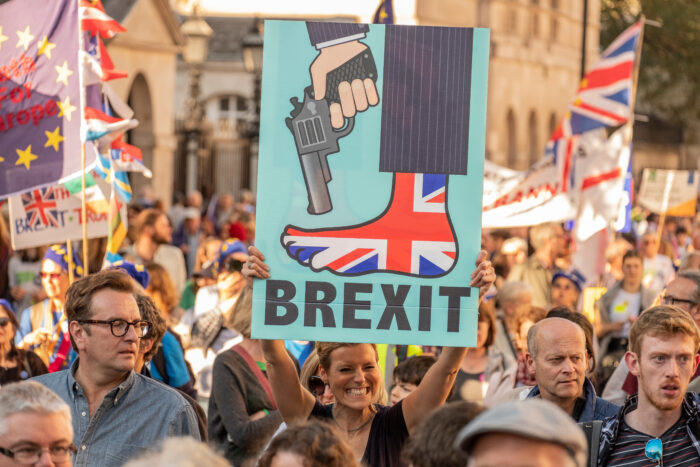
The debate about globalisation over the last thirty years has had a major impact on our understanding of political developments in advanced economy states. The consequences of globalisation have been argued about vigorously among scholars in economics and the social sciences, as well as within political elites, NGOs, and civil society. But there is still relatively little agreement about the causes, effects and long-term impact of globalisation. In recent years, globalisation appears to have entered a new phase of disruption and disorder; the impact of economic globalisation and technological change in driving dissatisfaction with established political systems is increasingly apparent. These structural changes have been felt acutely in the advanced industrialised countries, given the rise of new forms of political populism that seek to exploit the economic and political polarisation and resentment created by globalisation. The shift in politics was symptomized by the decision of UK voters to leave the European Union (EU) in June 2016, the November 2016 election of Donald Trump to the presidency of the United States, as well as the rise of populist movements on left and right throughout much of Europe.

The Harvard economist Dani Rodrik has insisted that the three goals of liberal democratic industrialised economies – global economic integration, national sovereignty, and political democracy – are becoming increasingly incompatible. The reaction against globalisation is leading to demands for national barriers and protections that safeguard jobs and living standards within the nation-state. This has thrown the post-war project of European political integration into turmoil. Since the financial crisis and great recession post-2008, globalisation no longer appears to be delivering the goods in a climate of deflation and ‘secular stagnation’ where growth rates are declining; wages and living standards are falling; the blue collar working class is in open revolt against the political establishment; and economic anxiety and insecurity are rising fast across most developed economies, breeding popular discontent with government bureaucracy and representative democracy. The eight years since 2008 have witnessed the slowest and most anaemic recovery in the history of western capitalism. To many voters, the economy appears to be broken and politics is failing.

Parties of the left and centre-left have struggled to forge a convincing response to this new phase of globalisation in the aftermath of the 2008 economic crisis. In the 1990s, social democratic parties embraced globalisation almost without qualification, arguing that government intervention to increase the supply of human capital and skills would enable everyone to benefit from global economic integration. That initial optimism has been confounded; it is increasingly apparent that globalisation is not working for those on lower to middle-incomes, leading to a crisis of confidence in mainstream social democracy.

Check the programme

Network
Karl Renner Institut
Find all related publications
Publications
03/03/2026

Progressive pathways for a resilient (re)construction of Ukraine: Towards a new social contract

This policy study places labour at the centre of reconstruction planning for Ukraine as the […]
03/03/2026

European sovereignty and the social dimension

Reasserting Europe’s social-democratic model in turbulent times
29/01/2026

Progressive Yearbook 2026

In an eerie manner, 2025 resembled the ‘time of monsters’, which, according to the great […]
15/01/2026

Financing enlargement via the 2028-2034 MFF

This brief intends to explain how the European Commission’s proposal for the 2028-2034 Multiannual Financial […]
Find all related Audiovisual
Audiovisual
26/02/2026

“Those who have A LOT, must PAY MORE” Nicolas Schmit | FEPS Talks Podcast

🎧 Listen to the latest episode of FEPS Talks with FEPS President Nicolas Schmit! 🇪🇺 […]
26/02/2026

“Those who have A LOT, must PAY MORE” Nicolas Schmit | FEPS Talks Podcast

🎧 Listen to the latest episode of FEPS Talks with FEPS President Nicolas Schmit! 🇪🇺 […]
04/02/2026

‘Developing a clean industry gender agenda in times of deregulation and policy backlash’ Flickr album

Photo album of the ‘Developing a clean industry gender agenda in times of deregulation and […]
02/02/2026

‘An EU social agenda for a geopolitical age’ Flickr album

Photo album of the ‘An EU social agenda for a geopolitical age‘ event in FEPS […]
Find all related news
News
03/03/2026

Closing ceremony of the Progressive Ukraine programme

The graduation ceremony completed the programme which was part of the Open Progressive University (OPU).
29/01/2026

Maria João Rodrigues departs from FEPS Presidency, transitions to Nicolas Schmit

After completing eight years in the role, Maria Joâo Rodrigues has departed the role of […]
29/01/2026

Marianna Mazzucato awarded FEPS ‘Progressive Person of the Year’

FEPS Progressive Person of the Year 2025-2026
21/01/2026

Call for tender – HR consulting services

Applications to be submitted before 18 February
Find all related in the media
In the media

Africa and Europe Must Rethink Clean Energy Partnership After COP30 Setback

by News Ghana 27/02/2026
Read this article from News Ghana on the highlights of FEPS' event "Governing the global just transition", where diverse stakeholders discussed the EU's role in supporting a just transition from fossil fuels to clean energy in Africa

EUfória podcast Andor Lászlóval: Mire képes az EU saját erejéből és mennyire van kiszolgáltatva a világnak?

by EUrologus 26/02/2026
Listen to the EUfória podcast with László Andor, Secretary General of FEPS, on what the EU can achieve on its own, how to tackle its competitiveness challenge and how the Hungarian government’s stance shapes the EU’s image.

Can the EU ever become a superpower?

by Euronews 20/02/2026
In this episode of the podcast Brussels, My Love, FEPS President Nicolas Schmit discusses the informal meeting of the Antwerp European Industrial Summit and the Munich Security Council.

España los forma, Europa los contrata: así es el mapa de la nueva fuga de cerebros

by El Confidencial 10/02/2026
Spain trains them, Europe hires them: the map of the new brain drain: László Andor, FEPS Secretary-General, discusses the 'brain drain' as a result of the EU’s single market and highlights the need for a fairer mobility and retention strategy across the EU.