How desirable is the Just Transition at the COP21?

Post by Charlotte Billingham. FEPS Executive Advisor. This week’s blog from the COP21 will focus […]

07/12/2015

Post by Charlotte Billingham. FEPS Executive Advisor.

This week’s blog from the COP21 will focus on Just Transition and where the negotiations are at.

The COP21 needs to provide a fundamental change of pathway and essentially change many of our behaviours, whether it be lifestyle, the way business is done, the way we produce, or consume and the way we govern.

The Just Transition is a concept established by the Trade Unions originally and taken on board by many others in the Progressive movement. It encompasses various elements of a sustainable transition to decarbonisation. For the Trade Unions it importantly calls to put workers in first place and incorporates the social and employment rights dimension of the transition, it is interpreted more broadly to suggest consideration of the social dimension in all aspects of the path towards decarbonisation.

It offers a space to address inequalities and the economic and social side of the need for climate action and sustainable development. The objective is to represent a fair distribution of the costs and benefits across the economy and it rethinks our industrial policy and puts employment-employee and civil society policies and relations at the forefront.

Of course Europe needs a new kind of growth more than ever. There needs to be a transition towards a greener economy and it needs to be inclusive towards groups of societies, having them also participate in the dialogues of how this change should come about in order for it to work best for everyone.

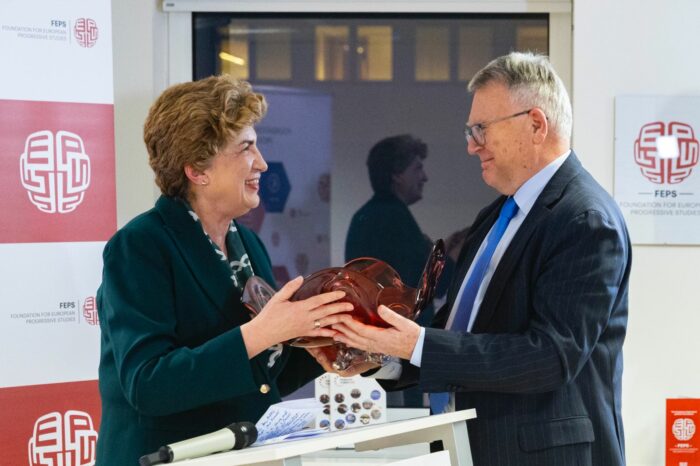
The workshop FEPS (Foundation for European Progressive studies) organised on Wednesday as part of our Progressives for climate initiative together with the Fondation Jean Jaurès was highly attended, and received a lot of attention. It is also one of the important discussions as part of the COP21 negotiations. Yet it appears at time of writing, half-way through the negotiations that for many it does not seem to be all that desirable to include in the text.

As Anabella Rosemberg from the International Trade Union Confederation (ITUC) put it this week at our workshop; “A minority controls the resources and is consuming above the levels of sufficiency of our planet. We need to change the decision-making structures so they are more representative. Political structures need to also change to incorporate this if we are to have a true transition.”

The transition must have worthy objectives and must be exemplary in its processes. Justice and investment are examples of key factors in this.

The threat of the effects of rising temperatures and emissions represent many things which are functioning badly. Sanjeev Kumar from Change Partnerhip NGO, has been asking fundamental political questions on the winners and losers of climate change. He feels that a Just Transition provides the structure needed to change the political power base of fossil fuels in order to be able to decarbonise.

The draft text is now online and it does not feature there, whereas it does feature in the ‘bridging text’. Therefore it could stay in the preamble however not be specified in the operational part of the text.

The current wording is as follows:

“Taking into account the imperatives of equitable access to sustainable development, and a just transition of the workforce and the creation of decent work and quality jobs in accordance with nationally defined development priorities”.

This remains to be discussed this week and will depend ultimately on the French Presidency how much it will be allowed to be debated or not. We can be optimistic for the moment however it is not sure. A lot is still to play for this week even though it is vital in the final agreement.

Indeed Trade Union and other representatives have been busy holding meetings with key negotiators and ministers to try to make them understand the importance of this phrase and convince them to include it. They will of course make another push this week.

As Jan Willem Goudriaan from European Public Services Union expressed in a side-event on Friday 4th December, The paragraph on Just Transition is important because “it opens a window of change for another economic model which is important for the COP21 text”.

More importantly people need to be given the tools to be able to change. Research shows that more and more people consider climate change to be the biggest threat currently to our societies, consequently they need assisting in bringing this about. Just Transition is an important part of the next part of the climate fight to ensure that it has long-standing aims and objectives, that is why FEPS will be working on this after the COP21. It is a crucial part of the agreement in order to bring about the fundamental and desired change people are striving for.

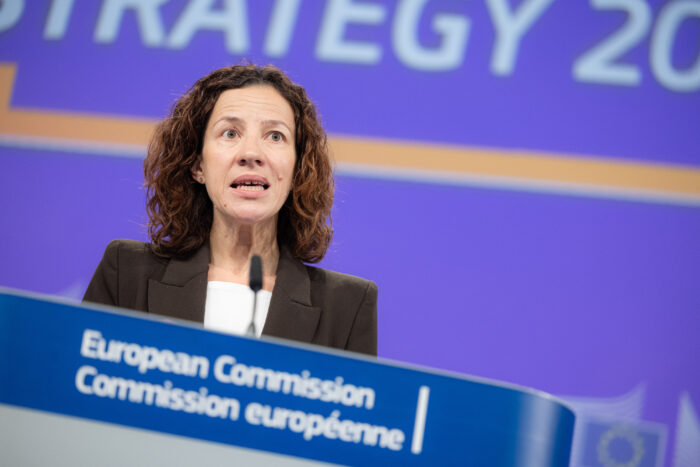
Photo @COP21

This is the second of a series of posts that Charlotte Billingham will write from Paris during the COP 21. 

Read the first post: COP 21: ‘Put yourself in their shoes’ – Finding Solutions to Climate Change and Refugees


Network
Fondation Jean-Jaurès
Find all related publications
Publications
09/12/2025

Tackling the housing crisis in Europe

Progressive ideas for affordable and sustainable housing policies
28/11/2025

Smarter spending today, safer societies tomorrow

Digitally-enabled capabilities for European defence
28/11/2025

More money, more dependence?

Financing European Union defence for autonomy and cooperation
28/11/2025

ReArm Europe

The impact and role of EU arms export controls
Find all related news
News
12/12/2025

FEPS elects Nicolas Schmit as new President

After eight years in the role, outgoing President Maria João Rodrigues requested to be replaced, considering her mission accomplished. 
08/12/2025

Friends of the Western Balkans’ joint statement

Belgrade, 21 November 2025 We, the Friends of the Western Balkans (FoWB) – representatives of […]
04/12/2025

It is high time that the goal is set on “Quality”

FEPS commentary on the Quality Jobs Roadmap
27/11/2025

Is a bad COP outcome better than no outcome at all?

FEPS Commentary on COP30
Find all related in the media
In the media

Liberal democracy’s social, societal fabric under threat – Live from the EPC Annual Conference 2025

by EPC 08/12/2025
In a podcast by the European Policy Centre (EPC), FEPS Secretary General, László Andor, discusses how liberal democracy in Europe is being challenged not only at the institutional level but also through the erosion of social rights and what Europe must do to defend its social foundations.

« La souveraineté numérique européenne est un défi d’ordre civilisationnel »

by Le Monde 15/11/2025
"European digital sovereignty is a challenge for civilisation as a whole". In an opinion piece in the newspaper Le Monde, FEPS President Maria João Rodrigues shares her concerns about European digital dependence on American and Asian giants

When Algorithms Undermine Democracy: Europe’s Wake-Up Call

by Social Europe 11/11/2025
Maja Fjaestad and Simon Vinge, co-editors of FEPS book "Algorithmic rule", wrote this op-ed on the power of algorithms and how they threaten the foundations of democratic oversight

Los mapas de las fronteras internas que alimentan el voto ultra en Europa

by El Confidencial 13/10/2025
"The internal border maps that fuel the far-right vote in Europe" - FEPS Secretary-General László Andor discusses the impact of cohesion policies on social inequalities and the rise of the far-right across Europe in this El Confidencial article.