
12/01/2024
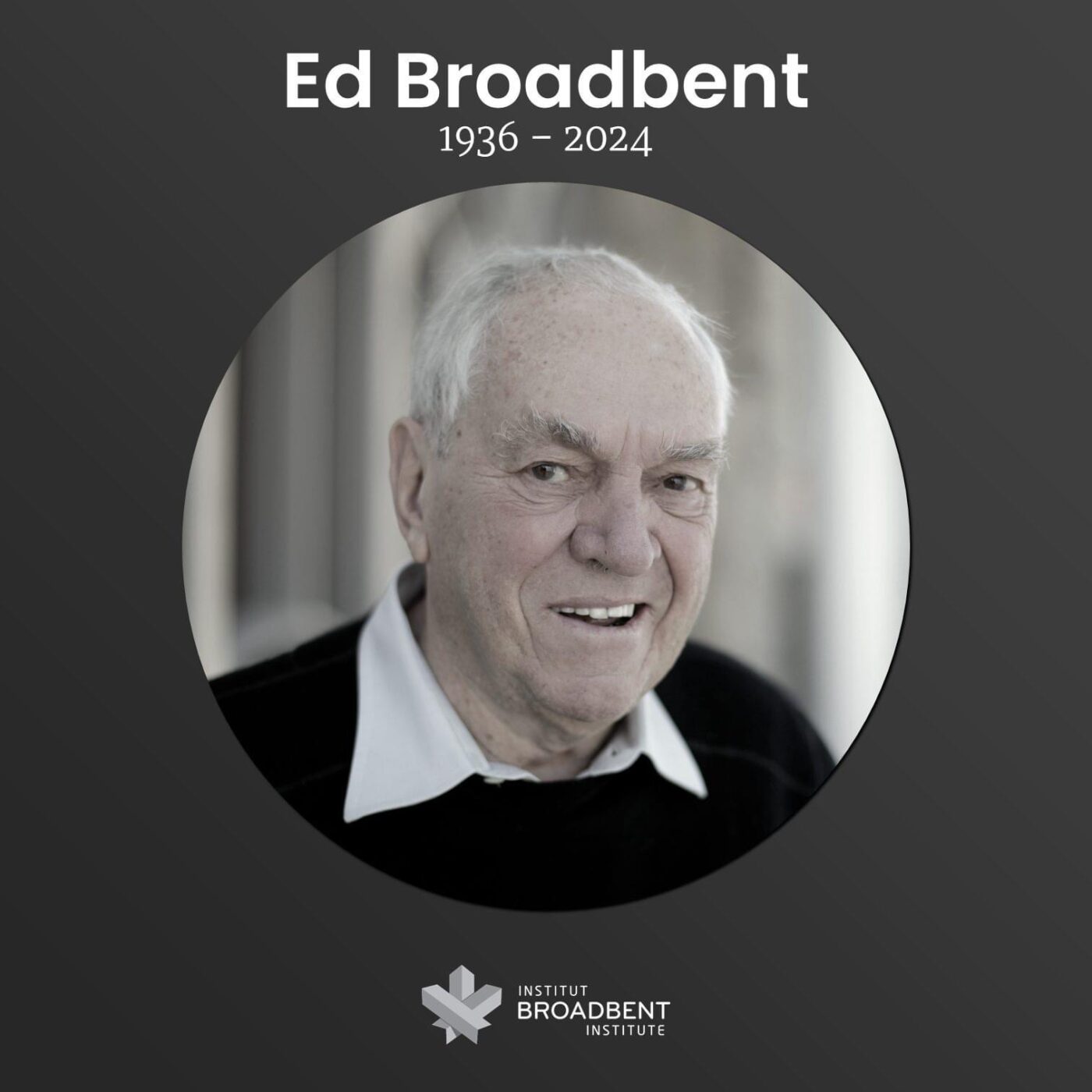
On 28th January 2024, the world will bid the final farewell to Ed (John Edward) Broadbent, former leader of the Canadian New Democratic Party and Chair of Broadbent Institute, who passed away at the age of 87 on the 11th of this month. He was undoubtedly the last among the Social Democratic giants of this generation and while paying respects during the state funeral this Sunday, many will look back at the incredible legacy he left behind alongside the inspiration that he was himself and endowed us with.
As the FEPS Community, we had the privilege of making acquaintance with Ed in the later years of his life, after he founded the Broadbent Institute in 2011. Later, together with the Institute’s Director Rick Smith, Broadbent Institute decided to join our Network. Their application was driven by a deep sense of commitment to internationalism and aspiration, which Ed cherished, namely, to contribute and help connect the debates about the future of progressivism.
The very same ambition underpinned his invitation to Toronto in 2017, where together with several other FEPS Member Foundations’ representatives and a group of 40 highest-ranking social democrats from all over the globe we debated the prospect of multilateralism and the new global deal a decade after the financial crash. Meeting him in person then and on other occasions was always memorable. He was impressive but humble; incredibly knowledgeable, but always curious to learn more; and always open to consider other views, but unshaken in principles. He lived by the ideals he promoted: political integrity, respect, and responsibility.
These guidelines he upheld from his early years and defined his life choices. Coming from the background of a working-class family, he grew up with a confidence that social democracy was the epitome of an aspiration for a better and fairer future for all. As a movement, it would engage in a permanent strive for the transformation of society, fighting injustice and divisions. He was convinced, which was also part of his PhD dissertation at the University of Toronto, that the state should empower its citizens. It should take some of the goods off the capitalist markets and turn them into public ones as an expression of belief in indispensable socio-economic rights. With that agenda, he won his first elections in 1968 joining the Canadian House of Commons as MP. 7 years later, he became the leader of the Canadian New Democratic Party – which already in 1979 saw a growth from 17 to 26 seats, and quickly after to 32. In 1987, the party was leading the polls for the first time in its history, and Ed Broadbent was recognized as an architect of that success.
This impressive electoral growth of the NDP forged Ed Broadbent’s legend, whose personal popularity was unprecedented. His set of beliefs and his policy proposals – especially in the areas of housing and healthcare – resonated as a vision paved to ensure a decent life for all. But what was additionally remarkable about Ed was his sense of duty. As depicted in his latest book “Seeking social democracy – Seven Decades in the Fight For Equality“ (2023), he strongly opposed politics exercised for selfish reasons. Instead, he argued that the quest for political influence and hence ultimately power is about conducting an open conversation, about recognizing and respecting opponents’ different views, and about getting the legitimacy needed to deliver on the promises made. In that endeavor, he warned, one mustn’t be either complacent or condescending.
Ed Broadbent’s political legacy in Canada is an extremely rich one, paved by clear political choices and achievements that especially for vulnerable groups (women, Indigenous people, youth) had made a difference, which was becoming a part of social progress instead of being left behind. It is important that, though very active and most consequential for national politics, he has contributed enormously to the developments of the global social democratic agenda. For ten years (between 1979 – 1989), he served as Vice-President of Socialist International. As a part of its leadership, he worked closely with Willy Brandt – and by diving into archives, one will see many pictures capturing them and the other giants of that generation whilst they served together through a turbulent decade. When asked about those years, Ed Broadbent always talked about the incredible sense of comradeship, solidarity, and togetherness, but also, about how colorful they all had been, serving the movement and cherishing the privilege of being able to do so.
And he never stopped. After retiring from active, front-bench politics – he established the Broadbent Institute with a mission to conduct research, promote progressive ideas through effective communication and media presence, and offer training. The Institute’s programme of activities quickly grew to be robust, with the largest event being the “Progress Summit” held annually and gathering more than 2000 politicians, activists, thinkers, civil society stakeholders, trade unionists, and many interested citizens. They abided by the standards he believed in as a groundbreaking politician, as a renowned scholar (affiliated during his career with institutions including Oxford), and as an activist. He always made sure that the agenda was thought-provoking, cross-cutting, and imposing the necessity to think about the biggest challenges of our times – inequalities, climate change, promotion, and preservation of peace. The expectation towards the politicians, including party leaders, was not to hold lengthy speeches, but to come up with one cutting-edge idea. The rules were that everyone’s views were to be weighed equally – which also meant that the impressive keynote of the NDP Leader Jagmeet Singh would be at the heart, but often not be the grand finale. In 2019 it was placed in fact as a prelude before giving the stage to a 16 years old activist who just had mobilised her fellow pupils to take the street and demand public sexual education for all. Ed Broadbent believed strongly that one is always required to look beyond the current horizon and always trust in the hope for a better future.
Having passed away, Ed Broadbent left us with an incredible legacy and many memories of grand political achievements, acts of political integrity, and lessons on how to implement the ideals of respect and equality in political life. But while he will be remembered for all of these and hopefully many will have a chance to read his instructive, inspirational texts – those of us who had the privilege to meet him will remember his openness, the genuine friendship he extended generously while hosting us in Canada and his cheerful approach to life. He was an optimist, he took life with the necessary degree of friendly sarcasm and a sense of humor. Life – he used to say in different contexts – is not to be endured, life is to be enjoyed. We will miss sharing it further with him.
In most grateful memory
Ania Skrzypek, FEPS Director for Research and Training
Network

Find all related publications
Publications
Find all related Progressive Post
Progressive Post


Find all related news
News

Find all related in the media
In the media
La Regina, il problema dei divari territoriali è una questione europea
by Regione Basilicata 22/09/2026
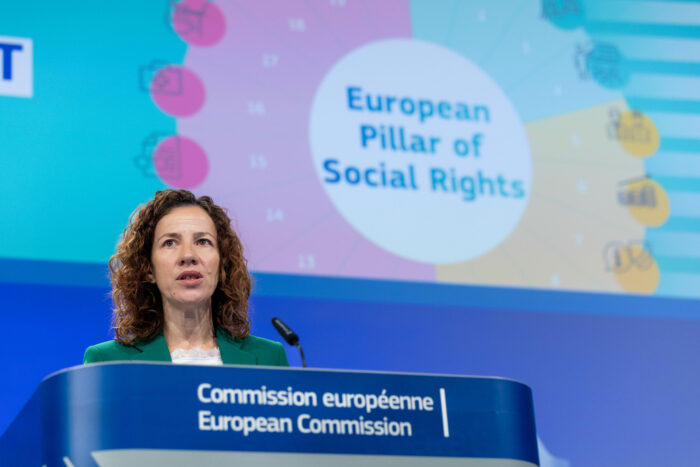
“Von der Leyen’s Canadian gambit”
Opinion article by László Andor, FEPS Secretary General, published in Racin.mk (MK), analysing the EU’s growing rapprochement with Canada, the shift from geopolitics towards geoeconomics, and the need for Europe to reduce its dependence on the US while strengthening multilateralism. Andor also examines the Commission’s economic and social priorities, highlighting the need for stronger attention to living costs, labour and social policy.
Biztonságpolitika? Az a NATO dolga – EU-s biztosok értékelték Ursula von der Leyen beszédét
by Telex 21/09/2026