Next Left: Building a Welfare Society

Within its Next Left Research Programme, FEPS together with Rafael Campalans will host a two […]
Speakers

13 - 16/03/2014
00:00:00 - 00:00:00
Barcelona Barcelona, Spain
Next Left: Building a Welfare Society
55998
131-next-left-building-a-welfare-society
0

In order to give you access to our events, FEPS processes your personal data together with any other organiser of this event mentioned in the description of the event and in accordance with 'FEPS’ data protection policy.

Within its Next Left Research Programme, FEPS together with Rafael Campalans will host a two day event, which will be devoted to a theme “Next Left: Building a Welfare Society”.
Following on the earlier common Next Left activities, which featured both the so called national round tables (2010, 2011) and also the academic symposium at the Pompeu Fabra University (2013), this event constitutes a continuation of the ideological debates. It is designed to touch upon the sensitive issue of hard political choices that need to met in order to transform the contemporary welfare states in a way that they serve the needs and realisation of the dreams of the contemporary societies. In that sense different aspects of the discussions led on both the national and the European levels will be deliberated upon, with an aim to try to broaden the horizons of ideological imagination and offer a promising path forward, reaching beyond the limiting talks on scarcity of resources or anxieties around the language of reform. It is therefore most exciting that among the experts, who already accepted the invitations are: Professor Tylor-Gooby, Professor Be a Cantillon; Associate Professor Raquel Gallego Calderon, Lecturer Albert Serra Martin and others.
The two days programme includes an open public debate (on Friday, 14th March) and a closed meeting of the FEPS Next Left Focus Group. The schedule of the first part can be found here, and it will also, among others feature a debate between Dr. Alfred Gusenbauer, Chair of the FEPS Next Left Research Programme and Pere Navarro, First Secretary of the PSC.
The second one will serve as a new opening, marking the beginning of the new cycle – which will feature four sessions in total and within the core of which research papers will be elaborated. Though the principle of the 4 rounds of peer review is to be upheld (following the good tradition of the past years), nevertheless the methodology of work is expected to slightly alter. It will focus on enabling to accelerate in terms of research, while also ensuring more adequate ways of balancing between the more academic deliberations and more politicised proposals’ formulation.
For more information, please do not hesitate to contact Dr. Ania Skrzypek, FEPS Senior Research Fellow at ania.skrzypek@feps-europe.eu or Ms Ischi Graus, FEPS Events Coordinator at ischi.graus@feps-europe.eu 
Find all related publications
Publications
31/07/2026

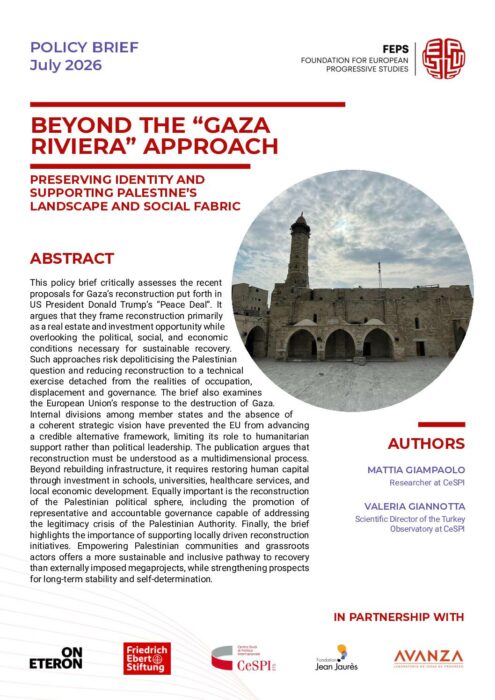
Beyond the “Gaza Riviera” Approach

Preserving identity and supporting Palestine’s landscape and social fabric
22/07/2026

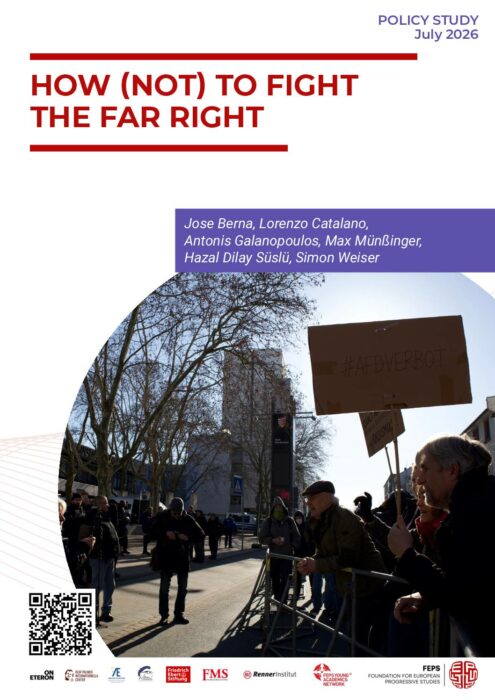
How (not) to fight the far right

FEPS YAN papers 9th cycle
20/07/2026

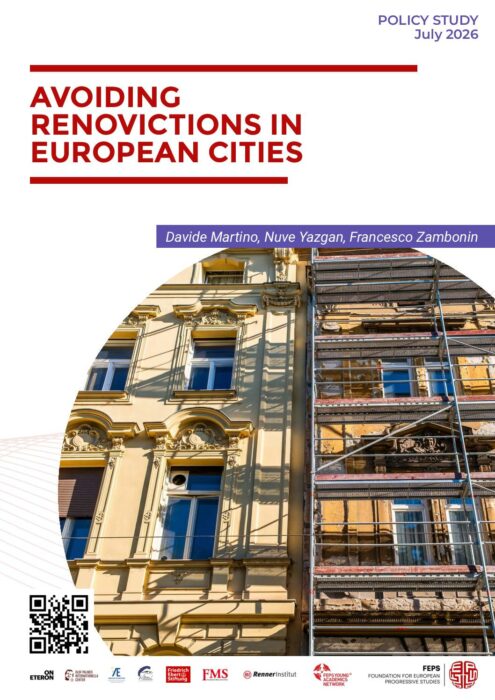
Avoiding renovictions in European cities

FEPS YAN papers 9th cycle
20/07/2026

Housing the people

FEPS YAN papers 9th cycle
Find all related Progressive Post
Progressive Post

16/07/2026

Good luck! And don’t f**k it up…

Hungary beyond the elections: a fragile chance for LGBTQI+
02/07/2026

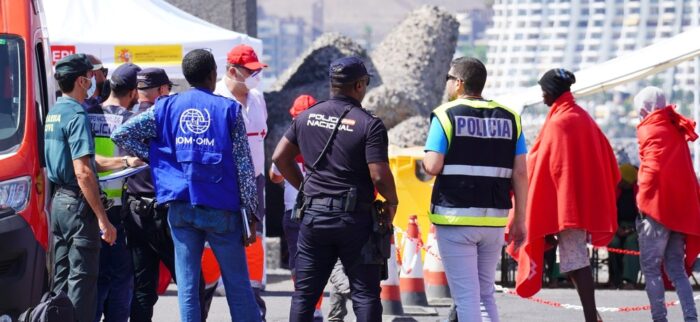
A pact: what else?

The entry into force of the EU’s Pact on Migration and Asylum on 12 June […]
02/07/2026

The EU Return Regulation: what lies behind the chants

The new EU ‘deportation bill’ was adopted by the European Parliament amid roaring applause, laughter […]
Find all related Audiovisual
Audiovisual
20/07/2026

‘DON’T let AI take over your capability to THINK and be CREATIVE’ with Katarina Barley

AI continues to remain a priority topic on the political agenda. As the EU leverages […]
20/07/2026

‘DON’T let AI take over your capability to THINK and be CREATIVE’ with Katarina Barley

AI continues to remain a priority topic on the political agenda. As the EU leverages […]
27/06/2026

The POLITICAL dimension of the US FIFA World Cup with Cas Mudde

📺🔊 Available on YouTube, Spotify & Apple Podcast This FIFA World Cup may be the […]
27/06/2026

The POLITICAL dimension of the US FIFA World Cup with Cas Mudde

📺🔊 Available on YouTube, Spotify & Apple Podcast This FIFA World Cup may be the […]
Find all related news
News
23/07/2026

FEPS Reacts: European Commission communication on the Action Plan on the European Pillar of Social Rights

By Laszlo Andor, FEPS Secretary-General & François Balate, Policy Analyst on Social The communication on the […]
08/07/2026

Letter to Manfred Weber, Chair of the EPP Group, by FEPS President Nicolas Schmit 

Dear Mr Weber, You are European, but also German. One should be entitled to expect […]
23/06/2026

FEPS Reacts: 10 years after Brexit

Written by FEPS Secretary-General László Andor 🔸 Brexit has been a case study in national self-harm. The […]
05/06/2026

Call for a progressive EU enlargement

Friends of the Western Balkans' Joint Statement
Find all related in the media
In the media

Carta a Manfred Weber

by elDiario.es 17/07/2026
"Letter to Manfred Weber". FEPS President Nicolas Schmit wrote to Manfred Letter, leader of the EPP, on the outcome of the Return Relugation, available in Spanish on elDiario.es.

Open letter to Manfred Weber

by Social Europe 13/07/2026
FEPS President Nicolas Schmit's open letter to EPP leader Manfred Weber on the Return Regulation was featured in Social Europe

Elon Musk não existiria na Europa, porque nunca teria recebido tanto dinheiro de um orçamento público como recebeu nos EUA

by Expresso 24/06/2026
FEPS President and former Commissioner Nicolas Schmit explains how social democrats can regain the trust of EU citizens

Diez años del Brexit: la metamorfosis del euroescepticismo

by La Razón 24/06/2026
"Ten years of Brexit: the metamorphosis of Euroscepticism". This article from La Razón mentions FEPS policy brief "Countering the far right in the European Parliament", which examines the growing normalisation of far-right parties within the EP and analyses how their strategy has shifted from rejecting the EU to reshaping it from within.