Just Transition: How to manage the social and economic aspects towards more sustainability

Without effective leadership, accountability and management, the transition to sustainability is likely to face considerable […]
Speakers

09 - 11/07/2015
00:00:00 - 00:00:00
Riga Riga
Just Transition: How to manage the social and economic aspects towards more sustainability
56074
207-just-transition-how-to-manage-the-social-and-economic-aspects-towards-more-sustainability
0

In order to give you access to our events, FEPS processes your personal data together with any other organiser of this event mentioned in the description of the event and in accordance with 'FEPS’ data protection policy.

Without effective leadership, accountability and management, the transition to sustainability is likely to face considerable resistance from communities and regions that are fearful of disruption change as well as the perception of a loss of livelihoods in a low-carbon future. These emotions have to be managed if we are to tackle climate change within in the next 30 years if humanity is to remain below the 2 degrees threshold.

Building a new sustainable socio-fabric is vital but equally important is ensuring workers, communities and future generations have access to it. This requires much greater attention to how the change is managed rather than current policy-makers fixation on development of new technologies. Miguel Arias Cañete, Commissioner for Climate Action and Energy, alluded to this when introducing the deep transformation the new Energy Union framework would bring and that it “[W]ill not be easy and require trust, respect and cooperation”.

Identifying a transferable governance architecture which encapsulates joint accountability, ownership and management of change will help breed an environment of trust, cooperation and inclusive participation which is essential to the success of the transformation. The key is to integrate industrial policy with energy transition and social harmony.

This round-table aims to gather policy-makers, politicians, trade union representatives, education, workers from industry, business representatives etc.

Key questions to address in the discussions:

How to encourage joint accountability, ownership and management of change?

How can we create an environment of trust, cooperation and inclusive participation to work towards common goals?

Social dialogue will be a key part of the change, who, how and what should this involve?

In what ways will a changing energy policy affect industrial policy?

What institutional or governance architecture will be needed to secure these changes effectively?

What is the role of local, regional, national, European governments and Trade Unions in a Just Transition?

You can find out more information related to this topic on FEPS project ‘Managing the Just Transition’

Find all related publications
Publications
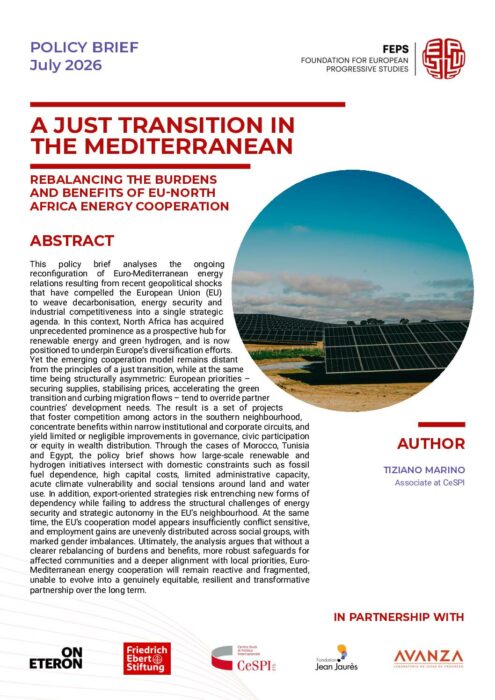
14/08/2026

A just transition in the Mediterranean

Rebalancing the burdens and benefits of EU-North Africa energy cooperation
31/07/2026

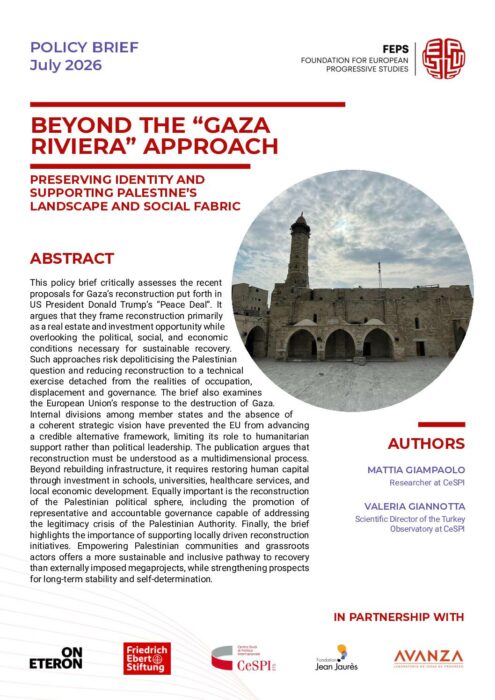
Beyond the “Gaza Riviera” Approach

Preserving identity and supporting Palestine’s landscape and social fabric
22/07/2026

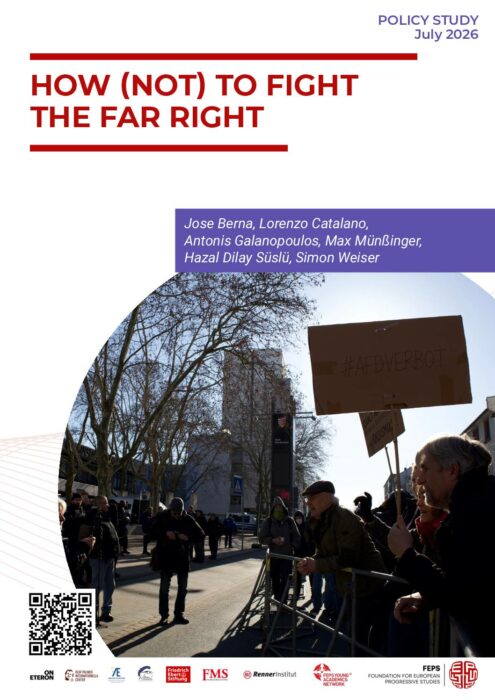
How (not) to fight the far right

FEPS YAN papers 9th cycle
20/07/2026

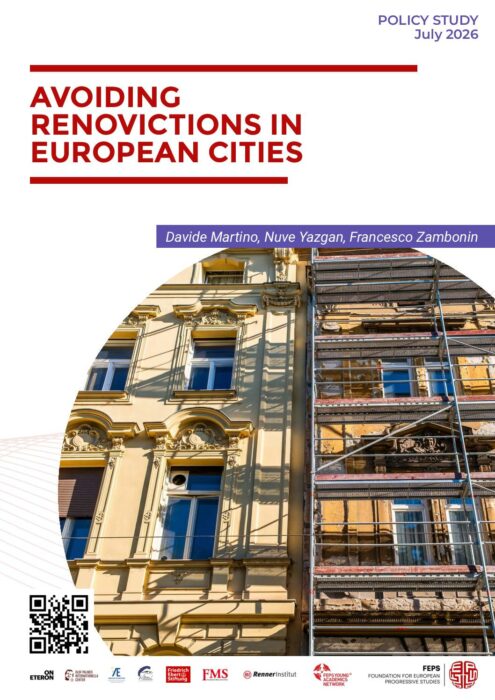
Avoiding renovictions in European cities

FEPS YAN papers 9th cycle
Find all related Progressive Post
Progressive Post
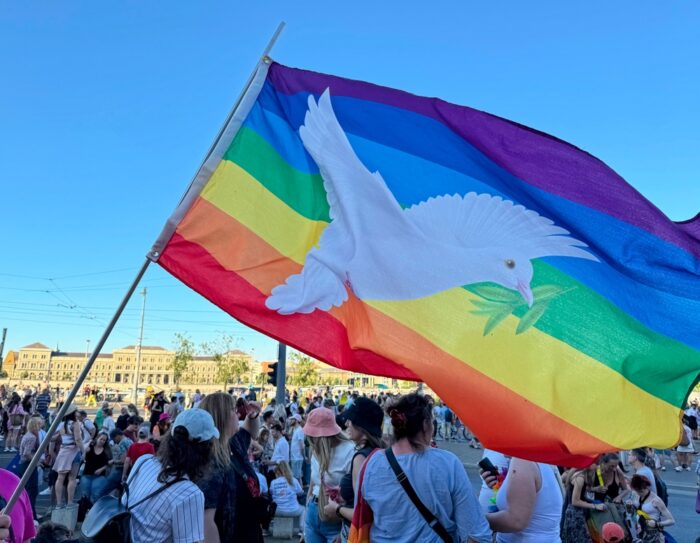
16/07/2026

Good luck! And don’t f**k it up…

Hungary beyond the elections: a fragile chance for LGBTQI+
02/07/2026

A pact: what else?

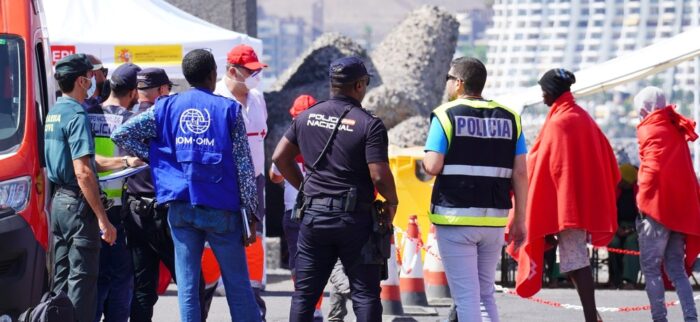
The entry into force of the EU’s Pact on Migration and Asylum on 12 June […]
02/07/2026

The EU Return Regulation: what lies behind the chants

The new EU ‘deportation bill’ was adopted by the European Parliament amid roaring applause, laughter […]
Find all related Audiovisual
Audiovisual
20/07/2026

‘DON’T let AI take over your capability to THINK and be CREATIVE’ with Katarina Barley

AI continues to remain a priority topic on the political agenda. As the EU leverages […]
20/07/2026

‘DON’T let AI take over your capability to THINK and be CREATIVE’ with Katarina Barley

AI continues to remain a priority topic on the political agenda. As the EU leverages […]
27/06/2026

The POLITICAL dimension of the US FIFA World Cup with Cas Mudde

📺🔊 Available on YouTube, Spotify & Apple Podcast This FIFA World Cup may be the […]
27/06/2026

The POLITICAL dimension of the US FIFA World Cup with Cas Mudde

📺🔊 Available on YouTube, Spotify & Apple Podcast This FIFA World Cup may be the […]
Find all related news
News
23/07/2026

FEPS Reacts: European Commission communication on the Action Plan on the European Pillar of Social Rights

By Laszlo Andor, FEPS Secretary-General & François Balate, Policy Analyst on Social The communication on the […]
08/07/2026

Letter to Manfred Weber, Chair of the EPP Group, by FEPS President Nicolas Schmit 

Dear Mr Weber, You are European, but also German. One should be entitled to expect […]
23/06/2026

FEPS Reacts: 10 years after Brexit

Written by FEPS Secretary-General László Andor 🔸 Brexit has been a case study in national self-harm. The […]
05/06/2026

Call for a progressive EU enlargement

Friends of the Western Balkans' Joint Statement
Find all related in the media
In the media

Carta a Manfred Weber

by elDiario.es 17/07/2026
"Letter to Manfred Weber". FEPS President Nicolas Schmit wrote to Manfred Letter, leader of the EPP, on the outcome of the Return Relugation, available in Spanish on elDiario.es.

Open letter to Manfred Weber

by Social Europe 13/07/2026
FEPS President Nicolas Schmit's open letter to EPP leader Manfred Weber on the Return Regulation was featured in Social Europe

Elon Musk não existiria na Europa, porque nunca teria recebido tanto dinheiro de um orçamento público como recebeu nos EUA

by Expresso 24/06/2026
FEPS President and former Commissioner Nicolas Schmit explains how social democrats can regain the trust of EU citizens

Diez años del Brexit: la metamorfosis del euroescepticismo

by La Razón 24/06/2026
"Ten years of Brexit: the metamorphosis of Euroscepticism". This article from La Razón mentions FEPS policy brief "Countering the far right in the European Parliament", which examines the growing normalisation of far-right parties within the EP and analyses how their strategy has shifted from rejecting the EU to reshaping it from within.