
FEPS Next Left / Next Social Europe Focus and Working Group

The FEPS Next Left Focus and Working Group will gather in hospitable premises of the […]
Speakers

13 - 14/12/2015
00:00:00 - 00:00:00
Vienna, Austria Vienna, Austria
FEPS Next Left / Next Social Europe Focus and Working Group
56113
246-feps-next-left-next-social-europe-focus-and-working-group
0

In order to give you access to our events, FEPS processes your personal data together with any other organiser of this event mentioned in the description of the event and in accordance with 'FEPS’ data protection policy.

The FEPS Next Left Focus and Working Group will gather in hospitable premises of the Renner Institut in order to inaugurate a new round of deliberation, which is to strongly feed in the brand new initiative “The Next Social Europe” that FEPS with the support of partners will be launching for 2016.

The meeting chaired by Dr. Alfred Gusenbauer, former Chancellor of Austria will offer an opportunity to discuss over 30 research proposals submitted in the form of abstracts and subjected herewith to a peer review. These allocated into 7 building blocks of the new programme will create the avenues of the long term debate, on the back of which more of ad-hoc contributions to the European Debate on social rights and social mainstreaming are to be expected. To that end, the merger between the ideological and the election-focus streams of the debate will enable critical assessment, crucial to strike a balance between idealism and pragmatism on one hand, and organisational strengthening and principles of political representation on the other.

Network
Karl Renner Institut
Find all related publications
Publications
23/10/2026

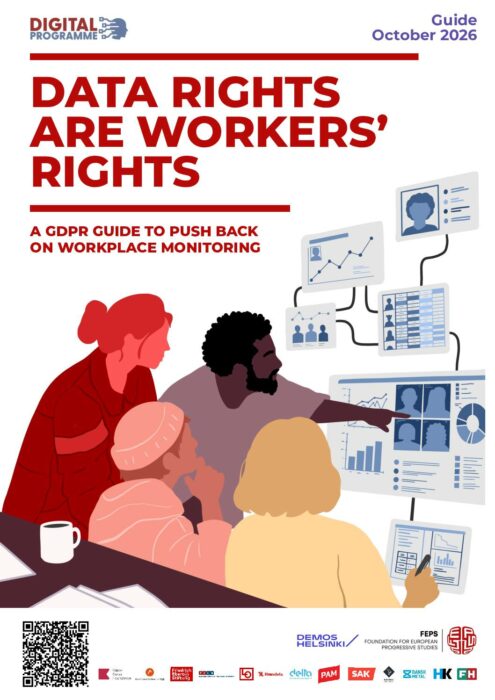
Data rights are workers’ rights

A GDPR guide to push back on workplace monitoring
23/10/2026

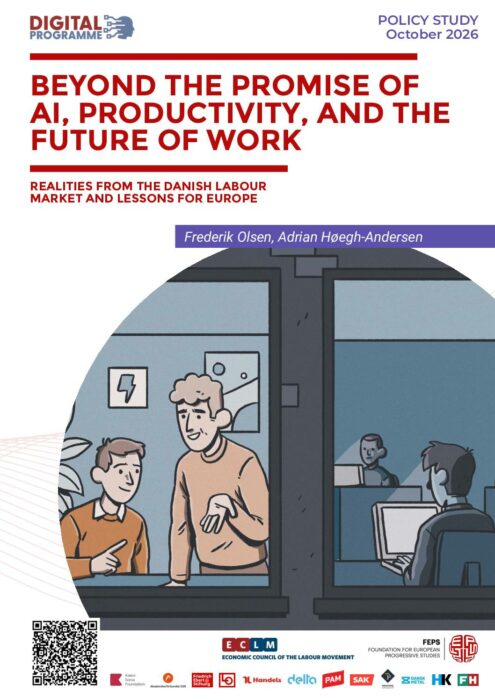
Beyond the promise of AI, productivity, and the future of work

Realities from the Danish Labour Market and lessons for Europe
23/10/2026

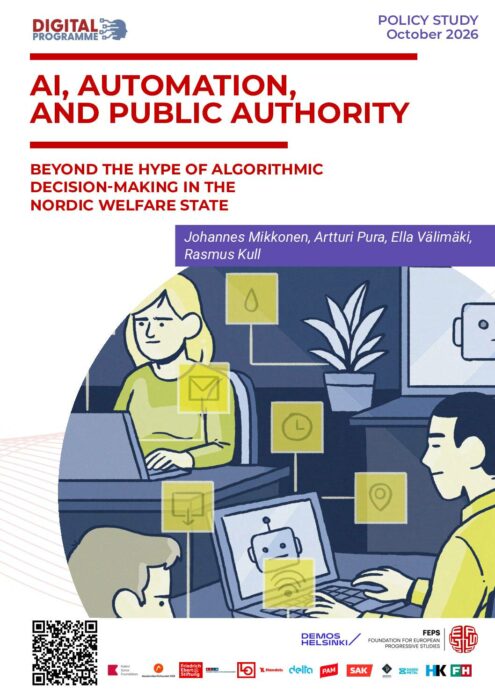
AI, automation, and public authority

Beyond the hype of algorithmic decision-making in the Nordic Welfare State
21/10/2026

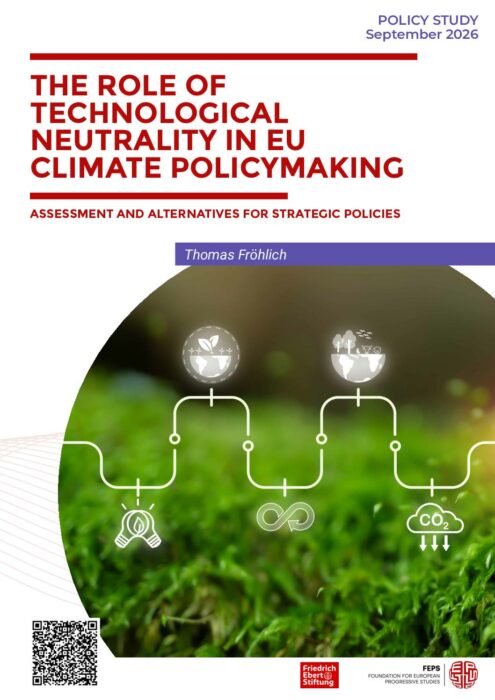
The role of technological neutrality in EU climate policymaking

Assessment and alternatives for strategic policies
Find all related Progressive Post
Progressive Post

22/10/2026

Lessons from Maricarmen

The case of Maricarmen Abascal, an 87-year-old woman from Madrid who passed away just days […]
22/10/2026

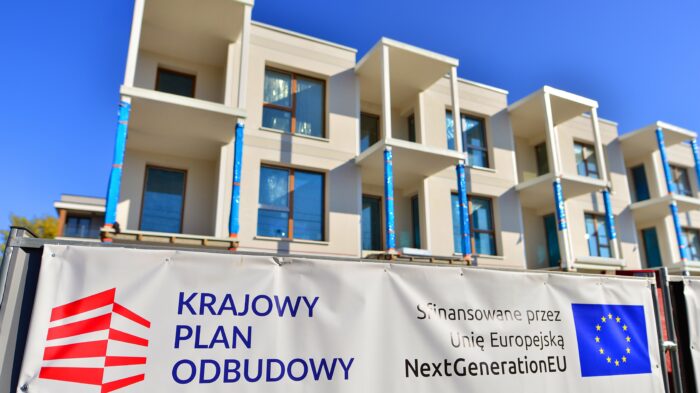
Housing: the basis of dignity and opportunities for all

Housing is no longer just a local or national policy issue. Across Europe, housing costs […]
22/10/2026

Housing policies and territorial governance

Housing policies and their effects are deeply connected to territorial governance. Talking about housing today […]
Find all related Audiovisual
Audiovisual
21/09/2026

“Security policy? That’s NATO’s job – former EU Commissioners assess Ursula von der Leyen’s speech”

Biztonságpolitika? Az a NATO dolga – EU-s biztosok értékelték Ursula von der Leyen beszédét Article […]
28/08/2026

Translating Chinese lessons for scaling EU industrial innovation with Cornel Ban

Europe is good at creating new technologies and innovative ideas, but too often European companies […]
28/08/2026

Translating Chinese lessons for scaling EU industrial innovation with Cornel Ban

Europe is good at creating new technologies and innovative ideas, but too often European companies […]
20/07/2026

‘DON’T let AI take over your capability to THINK and be CREATIVE’ with Katarina Barley

AI continues to remain a priority topic on the political agenda. As the EU leverages […]
Find all related news
News
16/09/2026

FEPS Reacts: State of the European Union 2026

The 2026 State of the Union felt more like ‘von der Leyen I’ than ‘von […]
23/07/2026

FEPS Reacts: European Commission communication on the Action Plan on the European Pillar of Social Rights

By Laszlo Andor, FEPS Secretary-General & François Balate, Policy Analyst on Social The communication on the […]
08/07/2026

Letter to Manfred Weber, Chair of the EPP Group, by FEPS President Nicolas Schmit 

Dear Mr Weber, You are European, but also German. One should be entitled to expect […]
23/06/2026

FEPS Reacts: 10 years after Brexit

Written by FEPS Secretary-General László Andor 🔸 Brexit has been a case study in national self-harm. The […]
Find all related in the media
In the media

Франција е Франција – но Франција е и Европа

by Racin.mk 21/10/2026
“France is France – but France is also Europe.” In an opinion piece for Racin.mk, László Andor, Secretary General of FEPS, argues that France’s youth protests, set against a latent budget crisis and growing precarity (schools, housing), risk benefiting Marine Le Pen, and that France, despite bending the EU’s fiscal rules, has also propped up European growth.

La Regina, il problema dei divari territoriali è una questione europea

by Regione Basilicata 22/09/2026
“La Regina: territorial disparities are a European issue” News article published by ANSA (IT), featuring Raffaele La Regina, participant in the FEPS Young Academics Network, discussing territorial and social inequalities across Europe, the need to reconcile competitiveness and cohesion, and the role of European cohesion policy, industrial policy and investment in ensuring that no region is left behind.

Канадскиот гамбит на Фон дер Лајен

by Racin.mk 21/09/2026
“Von der Leyen’s Canadian gambit” Opinion article by László Andor, FEPS Secretary General, published in Racin.mk (MK), analysing the EU’s growing rapprochement with Canada, the shift from geopolitics towards geoeconomics, and the need for Europe to reduce its dependence on the US while strengthening multilateralism. Andor also examines the Commission’s economic and social priorities, highlighting the need for stronger attention to living costs, labour and social policy.

Biztonságpolitika? Az a NATO dolga – EU-s biztosok értékelték Ursula von der Leyen beszédét

by Telex 21/09/2026
“Security policy? That’s NATO’s job – former EU Commissioners assess Ursula von der Leyen’s speech”. Article published in Telex (HU), featuring László Andor, FEPS Secretary General, analysing Ursula von der Leyen’s State of the Union address and discussing Europe’s economic competitiveness, investment gap, strategic vulnerabilities, AI, migration and the EU’s changing geopolitical position.