The Future of the Digital Single Market: Millennials, Technology, Employment & Social Security

This conference is connected to FEPS’ flagship youth engagement project: the Millennial Dialogue and with […]
Speakers

14 - 15/11/2016
00:00:00 - 00:00:00
Feps Office, Rue Montoyer 40. 1000 Brussels Feps Office, Rue Montoyer 40. 1000 Brussels
The Future of the Digital Single Market: Millennials, Technology, Employment & Social Security
56187
320-the-future-of-the-digital-single-market-millennials-technology-employment-social-security
0

In order to give you access to our events, FEPS processes your personal data together with any other organiser of this event mentioned in the description of the event and in accordance with 'FEPS’ data protection policy.

This conference is connected to FEPS’ flagship youth engagement project: the Millennial Dialogue and with two other initiatives from FEPS: the Digital Footprint project consisting of national surveys made in different European countries  (NL, UK, SE, AT & DE) and a new book entitled “The digital economy and the single market – Employment Prospects and Working Conditions in Europe”.

Despite its inherent merits, the EU’s Digital Single Market initiative might not properly address some highly relevant employment and social consequences. This debate will give the opportunity to discuss the consequences in regards with working conditions, employment, social protection, regulatory environment, digital skills and how the Millennial generation perceives today’s digitisation forces.

Programme

Registration

Venue

FEPS Office. Rue Montoyer 40. 1000 Brussels

Debate only in English, followed by a drink 


Speakers 

Axelle Lemaire, French Minister for Digital Affairs

Graça Fonseca, Deputy Secretary of State for Administrative Modernisation

Ursula Huws, Professor of Labour and Globalisation at the University of Hertfordshire

Allan Mayo, Digital Greenwich and Honorary Professor from Birmingham University

Stefan Gran, Head of EU Liaison Office, German Trade Union Confederation DGB (tbc)

Alberto Zillio, Director Public Affairs Europe, AT&T

Bertrand Deprez, Vice-president EU Governement Affairs, Schneider Electric

Jean-Philippe Monod de Froidville, Senior Director Government & Corporate Affairs, Expedia


Debate moderated by Christophe Leclercq Euractiv’s Founder

Find all related publications
Publications
09/11/2026

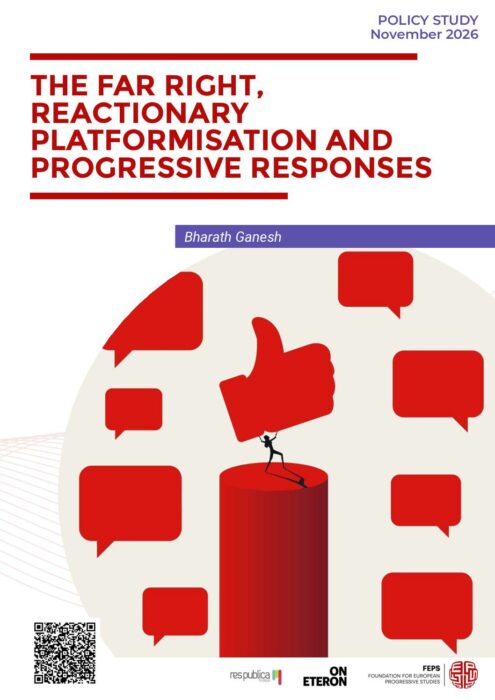
The far right, reactionary platformisation and progressive responses

The far right is thriving on social media, and this is no accident. This policy […]
04/11/2026

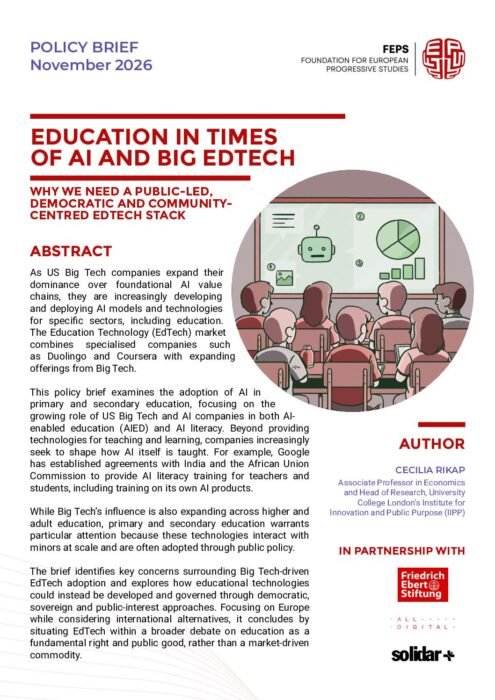
Education in times of AI and Big EdTech

Why we need a public-led, democratic and community-centred EdTech stack
04/11/2026

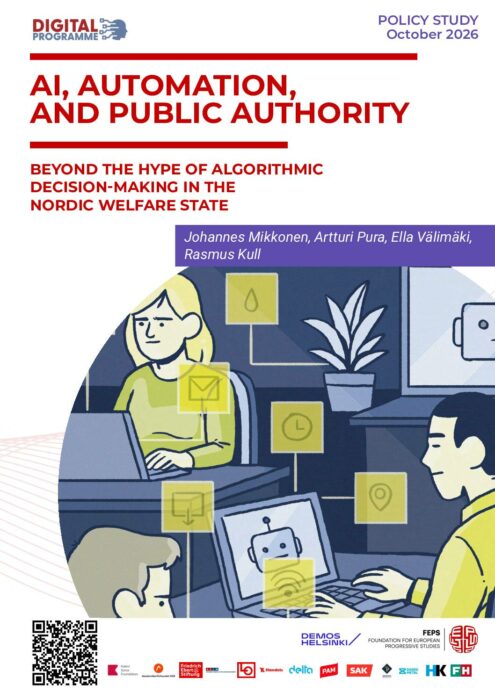
AI, automation, and public authority

Beyond the hype of algorithmic decision-making in the Nordic Welfare State
23/10/2026

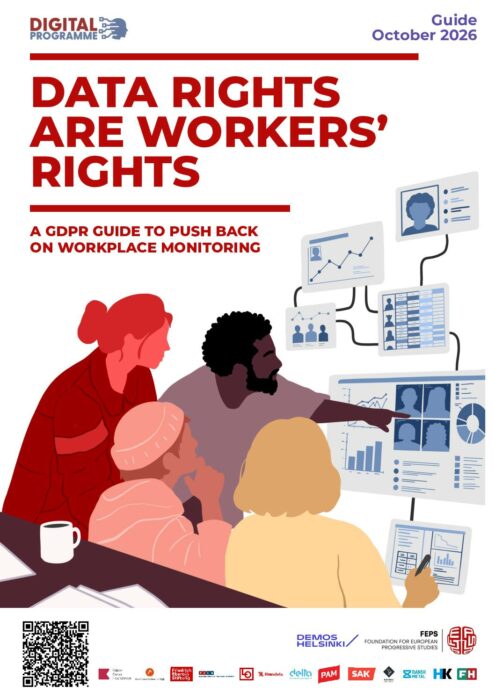
Data rights are workers’ rights

A GDPR guide to push back on workplace monitoring
Find all related Progressive Post
Progressive Post
10/11/2026

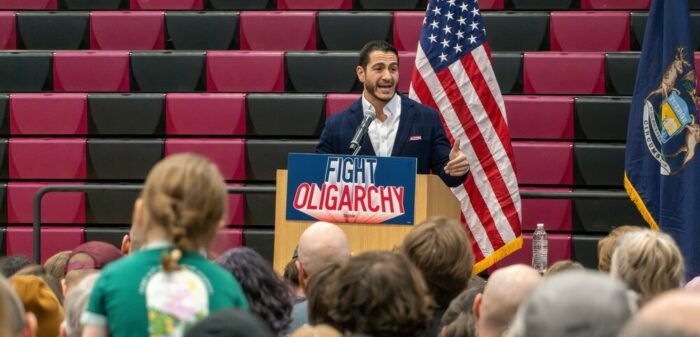
A blue wave that might crush soon

Americans have elected a new Congress: going into 2027, both chambers will be under Democratic […]
05/11/2026

If you want peace, prepare for equality

I have always been struck by how little attention we pay to patriarchal culture when […]
05/11/2026

The Women, Peace and Security agenda amid shifting geopolitics

While the current conflictual and geopolitical environment makes the Women, Peace and Security agenda ever […]
Find all related Audiovisual
Audiovisual
06/11/2026

🇪🇺 How Europe survives? with Catherine De Vries and Alexandros Kentikelenis

Half of 🇪🇺 Europe is in upheaval today. Professors Catherine De Vries and Alexandros Kentikelenis […]
06/11/2026

🇪🇺 How Europe survives? with Catherine De Vries and Alexandros Kentikelenis

Half of 🇪🇺 Europe is in upheaval today. Professors Catherine De Vries and Alexandros Kentikelenis […]
05/11/2026

‘Education in times of AI and Big EdTech’ Flickr album

Photo album of the Education in times of AI and Big EdTech event at the […]
21/09/2026

“Security policy? That’s NATO’s job – former EU Commissioners assess Ursula von der Leyen’s speech”

Biztonságpolitika? Az a NATO dolga – EU-s biztosok értékelték Ursula von der Leyen beszédét Article […]
Find all related news
News
30/10/2026

FEPS Reacts: The new EU Framework for Climate Resilience

Necessary foundations but little action
23/10/2026

Notice of vacancy – Policy Analyst on Gender Equality

Apply before 23 November 2026
16/09/2026

FEPS Reacts: State of the European Union 2026

The 2026 State of the Union felt more like ‘von der Leyen I’ than ‘von […]
23/07/2026

FEPS Reacts: European Commission communication on the Action Plan on the European Pillar of Social Rights

By Laszlo Andor, FEPS Secretary-General & François Balate, Policy Analyst on Social The communication on the […]
Find all related in the media
In the media

Frågan om jämställdhet splittrar unga svenskar

by dagens arena 29/10/2026
"The issue of gender equality divides young Swedes" - FEPS Policy Analyst on Democracy Matteo Dressler discusses the findings of the EqualiZe policy study in the Swedish context.

Brazil’s Lula survives Bolsonaro scare, safeguarding EU democratic ally on climate and trade

by EUobserver 26/10/2026
Read EUobserver's analysis of what comes next after Brazil's elections, which includes comments from Thainá Leite, Project Coordinator at FEPS

Франција е Франција – но Франција е и Европа

by Racin.mk 21/10/2026
“France is France – but France is also Europe.” In an opinion piece for Racin.mk, László Andor, Secretary General of FEPS, argues that France’s youth protests, set against a latent budget crisis and growing precarity (schools, housing), risk benefiting Marine Le Pen, and that France, despite bending the EU’s fiscal rules, has also propped up European growth.

La Regina, il problema dei divari territoriali è una questione europea

by Regione Basilicata 22/09/2026
“La Regina: territorial disparities are a European issue” News article published by ANSA (IT), featuring Raffaele La Regina, participant in the FEPS Young Academics Network, discussing territorial and social inequalities across Europe, the need to reconcile competitiveness and cohesion, and the role of European cohesion policy, industrial policy and investment in ensuring that no region is left behind.