The Future of National Development Banks. Implications for African Finances

Join us for a discussion with Stephany Griffith-Jones and José Antonio Ocampo, the editors of […]
Speakers

06/11/2018
00:00 - 00:00
Rue Montoyer, 40. 1000 Brussels
The Future of National Development Banks. Implications for African Finances
56367
497-the-future-of-national-development-banks-implications-for-african-finance
0

In order to give you access to our events, FEPS processes your personal data together with any other organiser of this event mentioned in the description of the event and in accordance with 'FEPS’ data protection policy.

Join us for a discussion with Stephany Griffith-Jones and José Antonio Ocampo, the editors of the book “The Future of National Development Banks” (Oxford University Press).

Since the 2007/8 North Atlantic financial crisis, interest and support for national development banks has broadly increased in developing, emerging and developed countries. The Future of National Development Banks provides an in-depth study of several examples of these institutions based in Brazil, Chile, China, Colombia, Germany, Mexico, and Peru. It explores horizontal issues such as their role in innovation and structural change, sustainable infrastructure financing, financial inclusion, and regulatory rules. It provides both research and policy-oriented perspectives on how these banks can make a significant contribution to a countries’ development, and analyses their roles within broader economic policy, their governance, and the main instruments they use to perform their function.

The Future of National Development Banks has important policy implications for African and other economies that have these institutions and can improve them, and African and other countries that do not have them yet and can learn from best practice. In fact, there has been renewed interest in national development banks in the African continent, with several countries, such as Nigeria recently creating new development banks. Furthermore, the European investment Bank has emphasized the value of channelling its funds to African economies via national development banks.

6 November 2018 11:00 – 13:00 

Rue Montoyer, 40 – 1000 Brussels

Check the Programme of this event

Find the regularly updated programme of the S&D Group Africa Week 2018

Register to other event in the framework of S&D Group Africa Week 2018

Preface of the book

The Future of National Development Banks- 30% discount

Register to this event:  

Find all related publications
Publications
28/08/2026

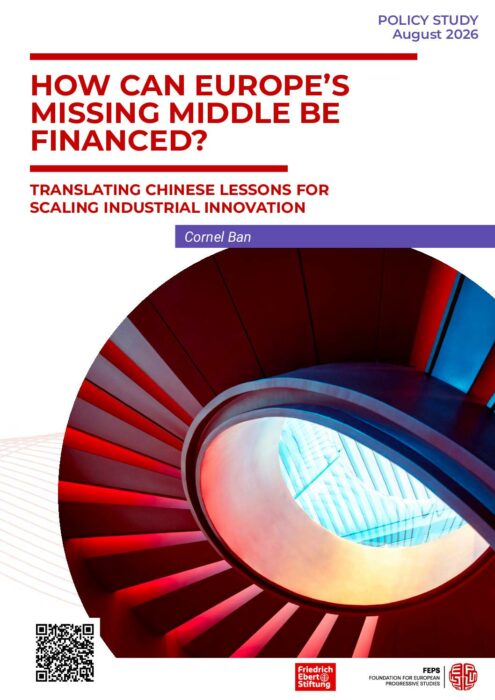
How can Europe’s missing middle be financed

Translating Chinese lessons for scaling industrial innovation
14/08/2026

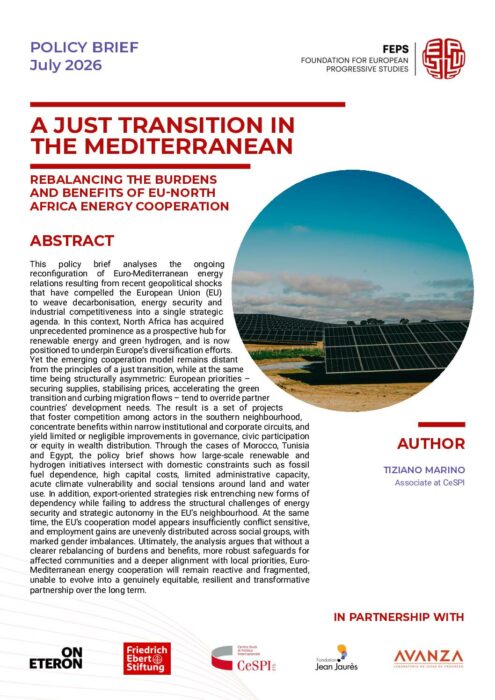
A just transition in the Mediterranean

Rebalancing the burdens and benefits of EU-North Africa energy cooperation
31/07/2026

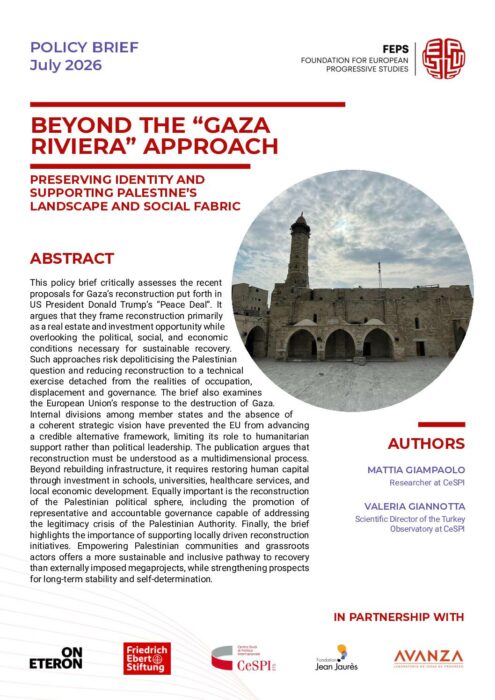
Beyond the “Gaza Riviera” Approach

Preserving identity and supporting Palestine’s landscape and social fabric
22/07/2026

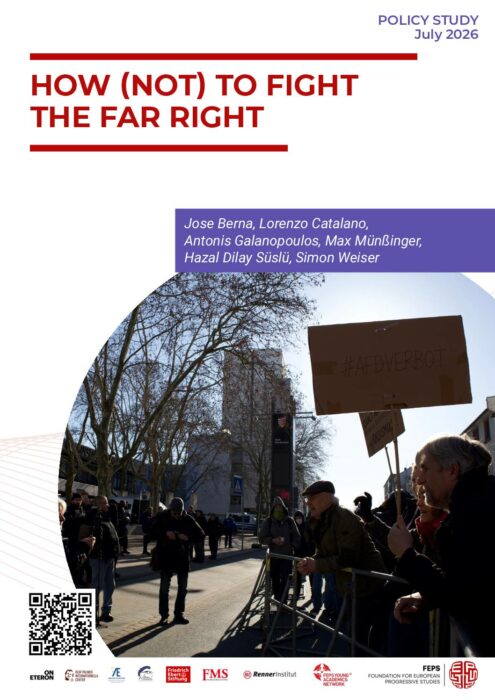
How (not) to fight the far right

FEPS YAN papers 9th cycle
Find all related Progressive Post
Progressive Post
18/09/2026

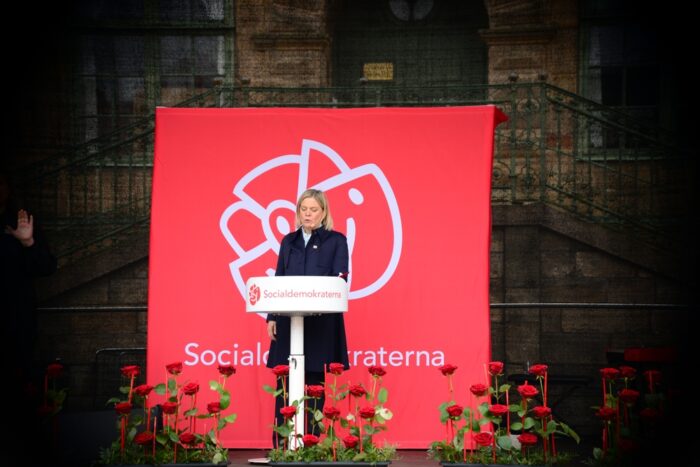
Sweden’s 2026 election: Social Democrats lost the battle but won the war?

In last week’s parliamentary elections in Sweden, the Swedish Social Democratic Party undoubtedly became the […]
18/09/2026

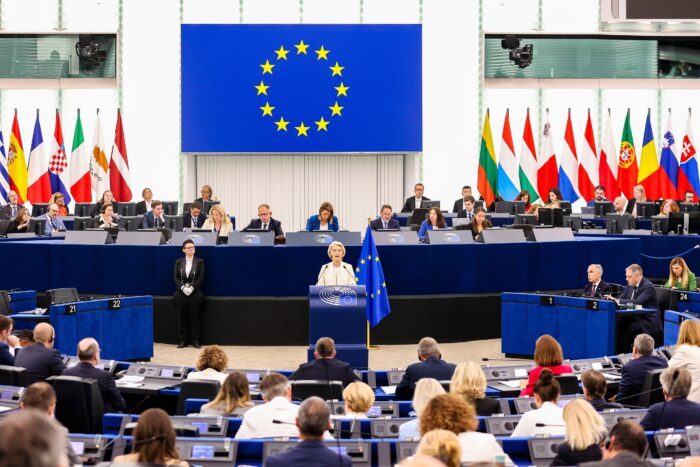
A State of the Union bereft of coherence and clarity

The State of the Union is a very special exercise for the president of the […]
11/09/2026

Will you stand with civil society?

Attacks on civil society are no longer just a problem for those countries and organisations […]
Find all related Audiovisual
Audiovisual
28/08/2026

Translating Chinese lessons for scaling EU industrial innovation with Cornel Ban

Europe is good at creating new technologies and innovative ideas, but too often European companies […]
28/08/2026

Translating Chinese lessons for scaling EU industrial innovation with Cornel Ban

Europe is good at creating new technologies and innovative ideas, but too often European companies […]
20/07/2026

‘DON’T let AI take over your capability to THINK and be CREATIVE’ with Katarina Barley

AI continues to remain a priority topic on the political agenda. As the EU leverages […]
20/07/2026

‘DON’T let AI take over your capability to THINK and be CREATIVE’ with Katarina Barley

AI continues to remain a priority topic on the political agenda. As the EU leverages […]
Find all related news
News
16/09/2026

FEPS Reacts: State of the European Union 2026

The 2026 State of the Union felt more like ‘von der Leyen I’ than ‘von […]
23/07/2026

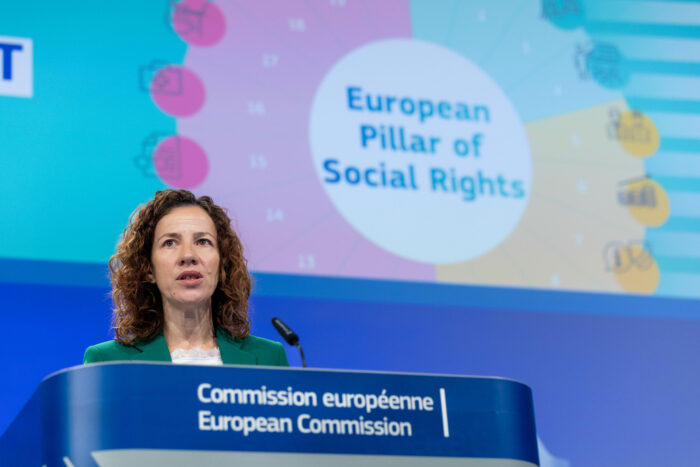
FEPS Reacts: European Commission communication on the Action Plan on the European Pillar of Social Rights

By Laszlo Andor, FEPS Secretary-General & François Balate, Policy Analyst on Social The communication on the […]
08/07/2026

Letter to Manfred Weber, Chair of the EPP Group, by FEPS President Nicolas Schmit 

Dear Mr Weber, You are European, but also German. One should be entitled to expect […]
23/06/2026

FEPS Reacts: 10 years after Brexit

Written by FEPS Secretary-General László Andor 🔸 Brexit has been a case study in national self-harm. The […]
Find all related in the media
In the media

EU’s new cross‑border work rules favour recruitment, not workers, say critics

by EUObserver 16/09/2026
FEPS Policy Analyst on Social François Balate discusses the latest EU Labour Mobility Package under Commissioner Roxana Mînzatu zatu for the EUObserver.

Andor László: A szabadkereskedelem vége és a gazdasági hadviselés korszaka

by Portfolio 11/09/2026
"The end of free trade and the era of economic warfare" Read this article by FEPS Secretary General László Andor on the far-reaching repercussions from the terrorist attack on the twin towers of the World Trade Centre in New York, notably for the international economy.

Burnham’s Break with Thatcherism Matters for All Europe

by Social Europe 30/07/2026
Article by FEPS Secretary General, László Andor, examining Andy Burnham’s break with Thatcherism and what it could mean for progressive politics across Europe, linking neoliberalism to inequality, deindustrialisation and weakened public services, and arguing for a more transformative progressive agenda centred on industrial policy, public investment and a renewed social democratic vision for Europe