
Next Left: Building new communities” – Delegation to Harvard Law School

The seminar organized by FEPS with the support of Renner Institut and in cooperation with […]

13/04/2012

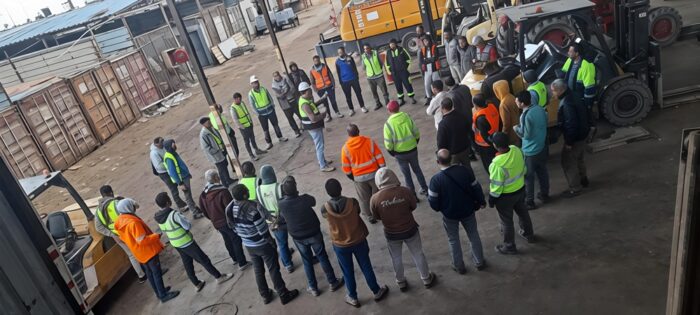
The seminar organized by FEPS with the support of Renner Institut and in cooperation with the Institute for Global Law and Policy took place at Harvard Law School on 12th – 13th April 2012. The European delegation to the event was composed of 10 representatives (R.Bazillier, P.Diamond, K.Duffek, P.Guerreri, G.Horn, R.Liddle, A.Skrzypek, E.Stetter, D.Tsarouhas) and was led by Alfred Gusenbauer, Chair of the Next Left Research Programme and Professor at largo at HLS.

The programme “Next Left: Building new communities” is composed of the 4 building blocks:

  • Next Left Values in Party and Electoral Politics
  • The Next Progressive Deal
  • Recognising the Next World of Labour
  • Recognising the Next Left in Global Policies and Movements.

It builds on the expertise already developed within the Next Left Research Programme during subsequent conferences and seminars held at Brown and Harvard Universities in 2010 – 2011, and it is foreseen that the threads of this debate will be continued during the academic conference organized in Oxford together with Policy Network in July 2012.

The Harvard’s session gathered outstanding academics from Europe, US and Latin America.

It is expected that the deliberations will be published at the latter stage in one of the upcoming issues of “Queries”.

Network
Karl Renner Institut
Find all related publications
Publications
28/08/2026

How can Europe’s missing middle be financed

Translating Chinese lessons for scaling industrial innovation
14/08/2026

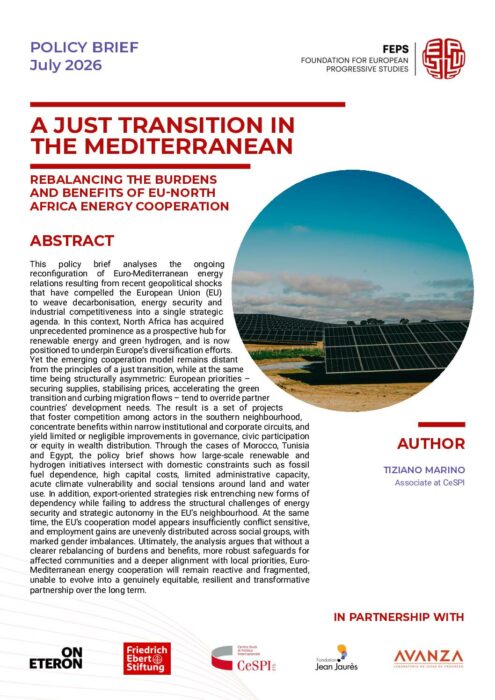
A just transition in the Mediterranean

Rebalancing the burdens and benefits of EU-North Africa energy cooperation
31/07/2026

Beyond the “Gaza Riviera” Approach

Preserving identity and supporting Palestine’s landscape and social fabric
22/07/2026

How (not) to fight the far right

FEPS YAN papers 9th cycle
Find all related Progressive Post
Progressive Post
18/09/2026

Sweden’s 2026 election: Social Democrats lost the battle but won the war?

In last week’s parliamentary elections in Sweden, the Swedish Social Democratic Party undoubtedly became the […]
18/09/2026

A State of the Union bereft of coherence and clarity

The State of the Union is a very special exercise for the president of the […]
11/09/2026

Will you stand with civil society?

Attacks on civil society are no longer just a problem for those countries and organisations […]
Find all related news
News
16/09/2026

FEPS Reacts: State of the European Union 2026

The 2026 State of the Union felt more like ‘von der Leyen I’ than ‘von […]
23/07/2026

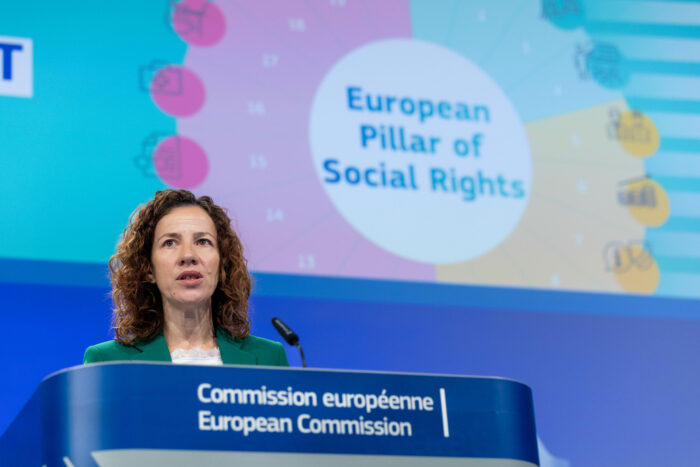
FEPS Reacts: European Commission communication on the Action Plan on the European Pillar of Social Rights

By Laszlo Andor, FEPS Secretary-General & François Balate, Policy Analyst on Social The communication on the […]
08/07/2026

Letter to Manfred Weber, Chair of the EPP Group, by FEPS President Nicolas Schmit 

Dear Mr Weber, You are European, but also German. One should be entitled to expect […]
23/06/2026

FEPS Reacts: 10 years after Brexit

Written by FEPS Secretary-General László Andor 🔸 Brexit has been a case study in national self-harm. The […]
Find all related in the media
In the media

EU’s new cross‑border work rules favour recruitment, not workers, say critics

by EUObserver 16/09/2026
FEPS Policy Analyst on Social François Balate discusses the latest EU Labour Mobility Package under Commissioner Roxana Mînzatu zatu for the EUObserver.

Andor László: A szabadkereskedelem vége és a gazdasági hadviselés korszaka

by Portfolio 11/09/2026
"The end of free trade and the era of economic warfare" Read this article by FEPS Secretary General László Andor on the far-reaching repercussions from the terrorist attack on the twin towers of the World Trade Centre in New York, notably for the international economy.

Burnham’s Break with Thatcherism Matters for All Europe

by Social Europe 30/07/2026
Article by FEPS Secretary General, László Andor, examining Andy Burnham’s break with Thatcherism and what it could mean for progressive politics across Europe, linking neoliberalism to inequality, deindustrialisation and weakened public services, and arguing for a more transformative progressive agenda centred on industrial policy, public investment and a renewed social democratic vision for Europe