Conference: How important being member of the EU is to the UK

Responding to the Euro Crisis: An Agenda for Trade, Jobs and Growth At Labour Party […]

16/10/2012

Responding to the Euro Crisis: An Agenda for Trade, Jobs and Growth

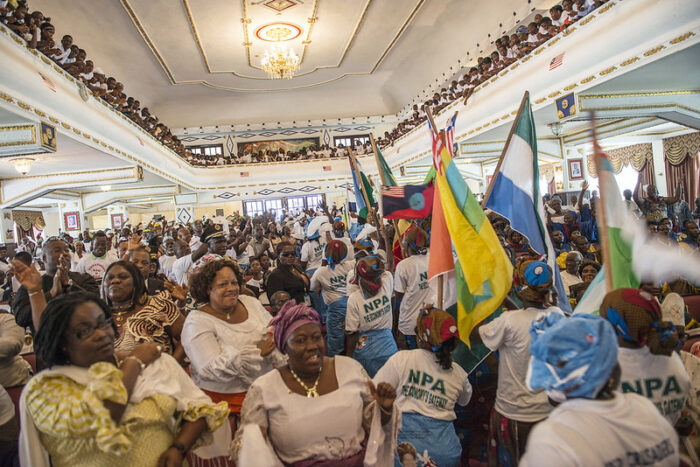
At Labour Party Annual Conference the EPLP and FEPS brought together leading thinkers from the UK and Europe to discuss with a large gathering of conference participants how European social democrats articulate a response to the Euro crisis based on trade, jobs and growth.

Larry Elliott- Guardian Economics Editor – Set the mood of the current debate in the UK and reminded us if the dangerous effects the eurozone crisis is having on our neighbours and Britain.

Phillip Souta – Director of Business for New Europe – gave the example of business as to why it would be unquestionable for the UK to leave the EU. He suggested the Labour Party should be “bold and clear” on Europe. Philip Souta lso underlined the importance of being ‘at the table’ so Britain can have influence on important matters to the UK such as the EU budget.

Arlene McCarthy MEP – EPLP Economic Spokesperson  – Promoted the need for more growth, jobs and investment and illustrated that right-wing austerity policies across Europe are damaging these. Arlene brought the debate into a clear Labour, perspective on our values which are also the same values on which the EU was founded, those of solidarity, fairness, equality, responsibility. Amongst other things, it was also mentioned the need for a reform of the structural funds to enhance regional development in a better manner.

Ernst Stetter – General Secretary, Foundation for European Progressive Studies (FEPS)   – emphasised that we need more confidence in our economic policies. Large private savings and low investments indicate that liquidity and capital are present, but confidence is lacking to spend or invest. With a growth rate of nearly zero forecast by the OECD for Europe, the need for rethinking our strategy on austerity measures is evident. Business cannot expand if there is no growth. He appealed for a more  common progressive European programme and for this requested more visibility and capacity to be given to the Party of European Socialists to enable this.

David Martin MEP – EPLP Trade Spokesperson –  Also reiterated the need for Europe to promote more growth in the region. He made it clear that trade negotiations are better if we act as a block, especially now where emerging developing countries are changing the power balance. Yet also more importantly large companies produce the different parts to make a final product over different continents. In this respect it is very important that the UK with the EU has authority to ensure the checks and balances of these products are satisfactory for our consumers.

Many questions were put to the panel from the audience, amongst other things, concerning youth employment, intellectual property rights and the European Investment Bank as a possible vehicle for driving private and public investment.

Find all related publications
Publications
09/11/2026

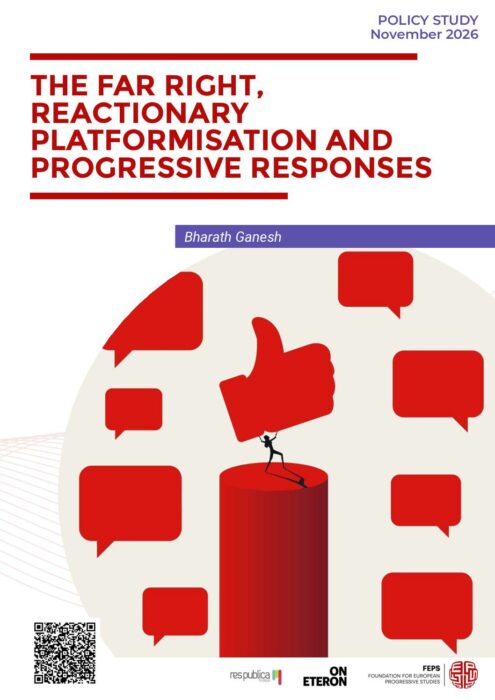
The far right, reactionary platformisation and progressive responses

The far right is thriving on social media, and this is no accident. This policy […]
04/11/2026

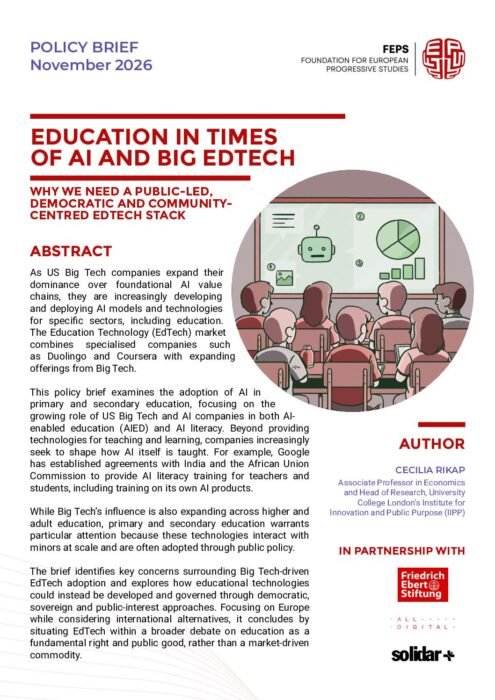
Education in times of AI and Big EdTech

Why we need a public-led, democratic and community-centred EdTech stack
04/11/2026

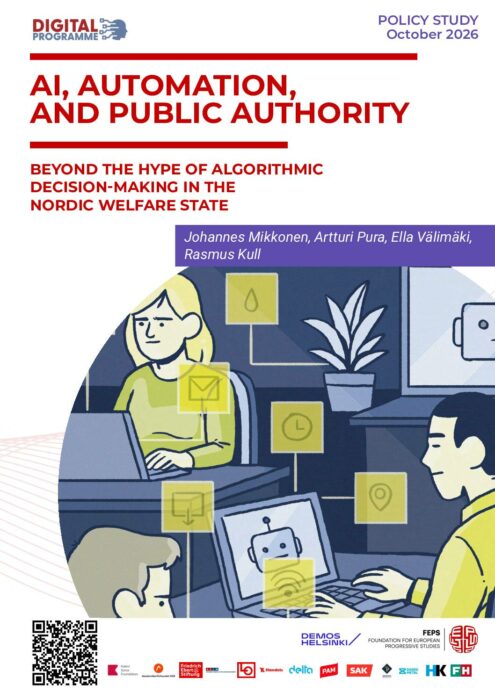
AI, automation, and public authority

Beyond the hype of algorithmic decision-making in the Nordic Welfare State
23/10/2026

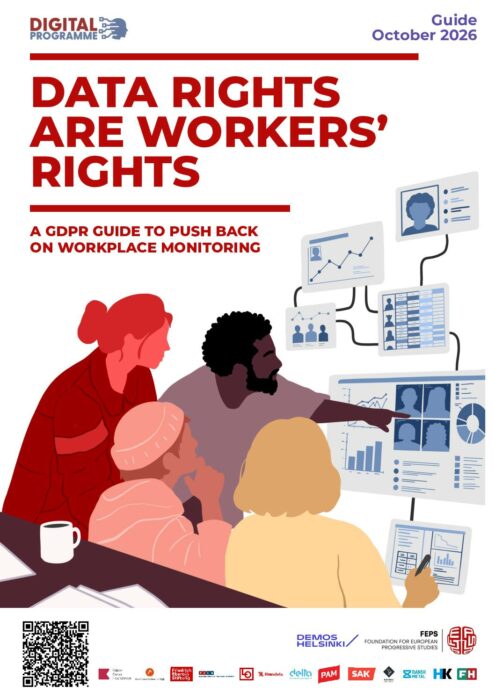
Data rights are workers’ rights

A GDPR guide to push back on workplace monitoring
Find all related Progressive Post
Progressive Post
10/11/2026

A blue wave that might crush soon

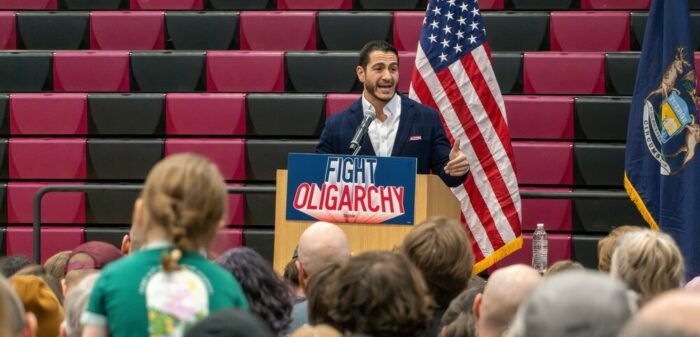
Americans have elected a new Congress: going into 2027, both chambers will be under Democratic […]
05/11/2026

If you want peace, prepare for equality

I have always been struck by how little attention we pay to patriarchal culture when […]
05/11/2026

The Women, Peace and Security agenda amid shifting geopolitics

While the current conflictual and geopolitical environment makes the Women, Peace and Security agenda ever […]
Find all related news
News
30/10/2026

FEPS Reacts: The new EU Framework for Climate Resilience

Necessary foundations but little action
23/10/2026

Notice of vacancy – Policy Analyst on Gender Equality

Apply before 23 November 2026
16/09/2026

FEPS Reacts: State of the European Union 2026

The 2026 State of the Union felt more like ‘von der Leyen I’ than ‘von […]
23/07/2026

FEPS Reacts: European Commission communication on the Action Plan on the European Pillar of Social Rights

By Laszlo Andor, FEPS Secretary-General & François Balate, Policy Analyst on Social The communication on the […]
Find all related in the media
In the media

Frågan om jämställdhet splittrar unga svenskar

by dagens arena 29/10/2026
"The issue of gender equality divides young Swedes" - FEPS Policy Analyst on Democracy Matteo Dressler discusses the findings of the EqualiZe policy study in the Swedish context.

Brazil’s Lula survives Bolsonaro scare, safeguarding EU democratic ally on climate and trade

by EUobserver 26/10/2026
Read EUobserver's analysis of what comes next after Brazil's elections, which includes comments from Thainá Leite, Project Coordinator at FEPS

Франција е Франција – но Франција е и Европа

by Racin.mk 21/10/2026
“France is France – but France is also Europe.” In an opinion piece for Racin.mk, László Andor, Secretary General of FEPS, argues that France’s youth protests, set against a latent budget crisis and growing precarity (schools, housing), risk benefiting Marine Le Pen, and that France, despite bending the EU’s fiscal rules, has also propped up European growth.

La Regina, il problema dei divari territoriali è una questione europea

by Regione Basilicata 22/09/2026
“La Regina: territorial disparities are a European issue” News article published by ANSA (IT), featuring Raffaele La Regina, participant in the FEPS Young Academics Network, discussing territorial and social inequalities across Europe, the need to reconcile competitiveness and cohesion, and the role of European cohesion policy, industrial policy and investment in ensuring that no region is left behind.