The Future of EU Climate Change Technology and Sustainable Energy Diplomacy

On 19 October the Dickson Poon School of Law of King’s College London hosted the […]

08/11/2016

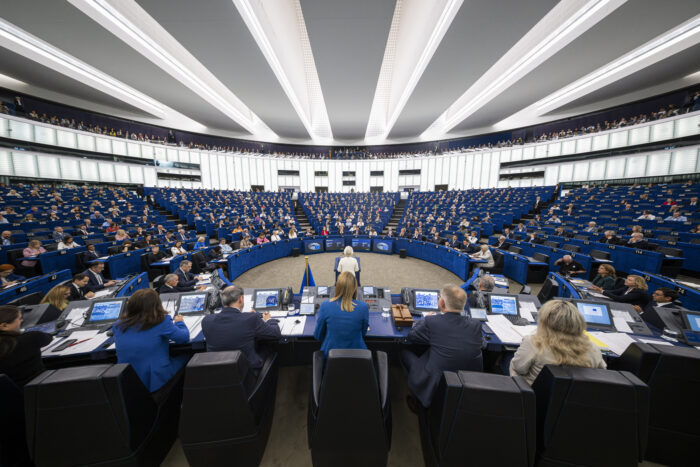
On 19 October the Dickson Poon School of Law of King’s College London hosted the launch of a publication on ‘The Future of EU Climate Change Technology and Sustainable Energy Diplomacy’. The publication is the result of a collaboration between the Transnational Law Institute, the Foundation for European Progressive Studies (FEPS) and Fondation Jean-Jaurès, and was produced with the financial support of the European Parliament. The project was convened by Charlotte Billingham, Executive Advisor, FEPS, Vassilis Ntousas, Policy Advisor – International Relations, FEPS and Stephen Minas, Senior Research Fellow at TLI.

To mark the launch, a panel discussion was held on the direction on EU climate and energy diplomacy. Participating in the panel were Barry Gardiner MP, Shadow Secretary of State for International Trade and Shadow Minister for International Climate Change, Nick Mabey, Chief Executive and a founder director of E3G, Francesca Manchi, Political Officer, European Commission Representation in the UK, Stephen Minas and Dr Yuliya Yurchenko, Lecturer at the Department of International Business and Economics, University of Greenwich. The panel was chaired by Charlotte Billingham.

Read the activity report

Read the publication

Network
Fondation Jean-Jaurès
Find all related publications
Publications
11/05/2026

Place-based industrial policy

Places, people and power in European industrial policy
17/04/2026

The open future and its enemies

How we can protect free society from AI dictatorship
17/04/2026

EqualiZe

Gender differences in political opinion and voting among Generation Z
27/03/2026

Laboratories of counter-hegemony

Orbán, Trump and the transatlantic far-right ecosystem
Find all related Progressive Post
Progressive Post
03/06/2026

Enlargement is Europe’s peace project: it is time to revive it

Twenty years after Montenegro regained independence, the upcoming EU-Western Balkan summit in Tivat should remind […]
28/05/2026

A pact in times of war(s)

A year and a half ago, with the nomination of the first-ever European Commissioner fully […]
28/05/2026

An integrated Mediterranean energy system to weather disruption

The current energy crisis is not only reshaping global oil and gas markets, but it […]
Find all related news
News
05/06/2026

Call for a progressive EU enlargement

Friends of the Western Balkans' Joint Statement
04/06/2026

Call for tender – Researcher(s) to author a policy study

Call for Applications – June 4, 2026 to July 1, 2026
13/04/2026

Hungary’s civic revolution

FEPS' commentary on the outcomes of the Hungarian election
05/03/2026

The new EU Gender Equality Strategy 2026-2030

Commentary by the Feminist Foreign Policy Progressive Voices Collective (FFPPVC)
Find all related in the media
In the media

Τα Νέα του ΑΝΤ1 – Επεισόδιο 30/05/2026

by ANT1 30/05/2026
ANT1 News TV news report on the event "A progressive strategy for peace and cooperation in the Mediterranean - Call to Europe Cyprus" - 46:00 - 47:20

University of Nicosia hosts FEPS forum on a progressive strategy for the Mediterranean

by Philenews 29/05/2026
Read the article published in Philenews, which focuses on the conference "A progressive strategy for peace and cooperation in the Mediterranean" organised by FEPS and its partners.

Dep. Minister and former EU Commissioner discuss social protection

by Cyprus News Agency 29/05/2026
Read the article published by the Cyprus News Agency (CNA), which mentions Anna Diamantopoulou's participation in the latest edition of Call to Europe "A progressive strategy for peace and cooperation in the Mediterranean" , organised in Cyprus by FEPS and its partners.

Driftet Generation Z politisch auseinander?

by Der Standard 26/05/2026
"Is Generation Z drifting apart politically?" In this article published in Der Standard, Tobias Spöri and Gefjon Off use data from FEPS' policy study "EqualiZe" to show that Europe’s youth political gender gap varies by country and requires framing equality as a shared societal benefit.