FEPS at the 4th Pan-Polish Congress of Political Sciences

4th Pan-Polish Congress of Political Sciences was this year hosted by Maria Sklodowska-Curie University of […]

26/09/2018

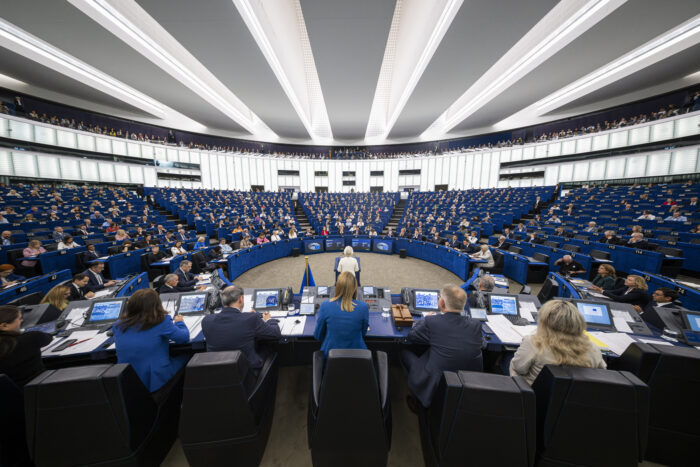
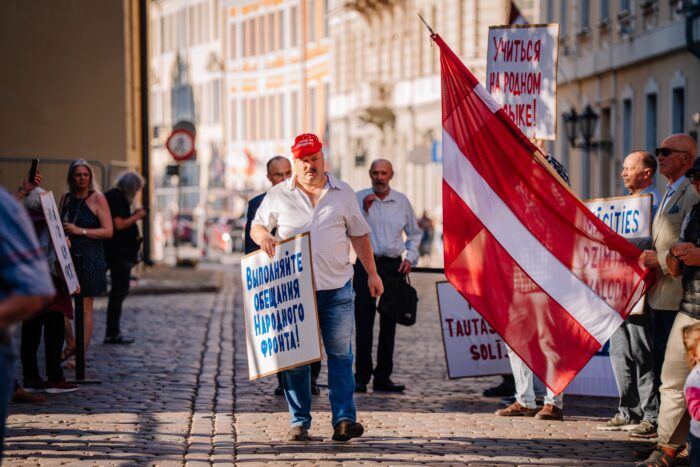
4th Pan-Polish Congress of Political Sciences was this year hosted by Maria Sklodowska-Curie University of Lublin (established in 19444). This annual three day conference is packed with both plenary sessions and with workshops, which are organised around presentations of the ongoing and finalised research that is being conducted by 1000 participating scholars from across the country. It is a great opportunity for discussing the state of social science in that specific field, as also to network through joint thematic interest – which encounters frequently result in scholar publications afterwards. This year much of the focus was given to the criticism of the reform that the Polish Government of Law and Justice plans to conduct, which was also one of the reasons for many delegates to join in the protest and leave the plenary during the speech of the responsible Minister.

As every year since the first Congress in Poznan, FEPS was represented by Dr Ania Skrzypek, FEPS Senior Research Fellow, who presented a paper “The possible impact of the ongoing transformations of the national political parties’ systems onto the EU partisan and institutional level” at the panel “Political Parties in the times of a change”. Dr Skrzypek also took part in the meeting of the Network of Critical Thought of the Progressive Academics, where ways for political sciences to remain independent and constructive in safeguarding democracy where the main topics.

Find all related publications
Publications
28/08/2026

How can Europe’s missing middle be financed

Translating Chinese lessons for scaling industrial innovation
14/08/2026

A just transition in the Mediterranean

Rebalancing the burdens and benefits of EU-North Africa energy cooperation
31/07/2026

Beyond the “Gaza Riviera” Approach

Preserving identity and supporting Palestine’s landscape and social fabric
22/07/2026

How (not) to fight the far right

FEPS YAN papers 9th cycle
Find all related Progressive Post
Progressive Post
11/09/2026

Will you stand with civil society?

Attacks on civil society are no longer just a problem for those countries and organisations […]
04/09/2026

The axis and the alternative

90 years ago, in July 1936, the Bayreuth opera festival featured Richard Wagner’s Siegfried, as […]
16/07/2026

Good luck! And don’t f**k it up…

Hungary beyond the elections: a fragile chance for LGBTQI+
Find all related news
News
16/09/2026

FEPS Reacts: State of the European Union 2026

The 2026 State of the Union felt more like ‘von der Leyen I’ than ‘von […]
23/07/2026

FEPS Reacts: European Commission communication on the Action Plan on the European Pillar of Social Rights

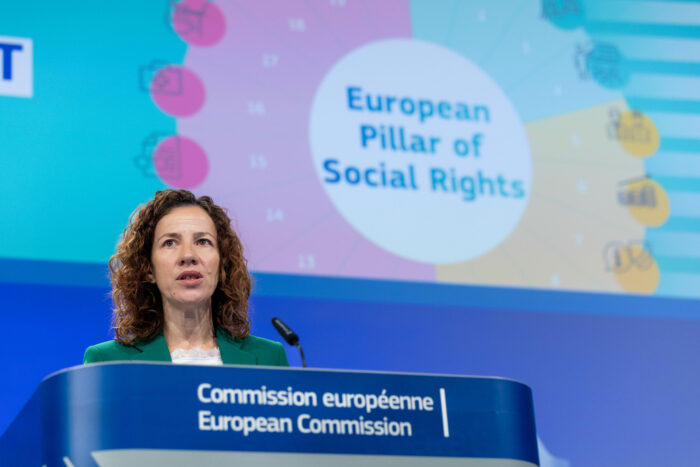
By Laszlo Andor, FEPS Secretary-General & François Balate, Policy Analyst on Social The communication on the […]
08/07/2026

Letter to Manfred Weber, Chair of the EPP Group, by FEPS President Nicolas Schmit 

Dear Mr Weber, You are European, but also German. One should be entitled to expect […]
23/06/2026

FEPS Reacts: 10 years after Brexit

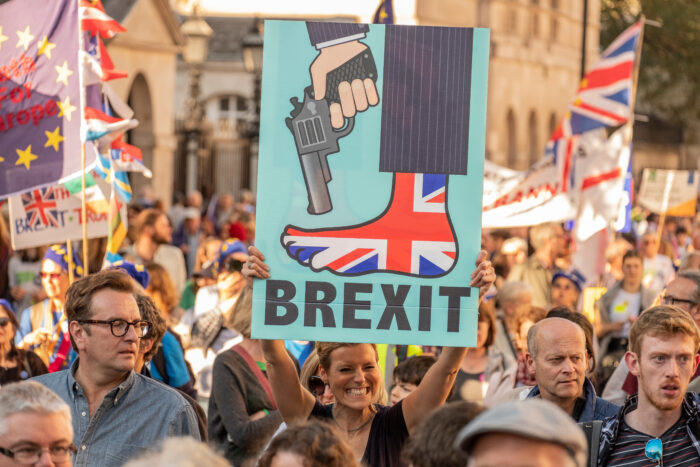
Written by FEPS Secretary-General László Andor 🔸 Brexit has been a case study in national self-harm. The […]
Find all related in the media
In the media

EU’s new cross‑border work rules favour recruitment, not workers, say critics

by EUObserver 16/09/2026
FEPS Policy Analyst on Social François Balate discusses the latest EU Labour Mobility Package under Commissioner Roxana Mînzatu zatu for the EUObserver.

Andor László: A szabadkereskedelem vége és a gazdasági hadviselés korszaka

by Portfolio 11/09/2026
"The end of free trade and the era of economic warfare" Read this article by FEPS Secretary General László Andor on the far-reaching repercussions from the terrorist attack on the twin towers of the World Trade Centre in New York, notably for the international economy.

Burnham’s Break with Thatcherism Matters for All Europe

by Social Europe 30/07/2026
Article by FEPS Secretary General, László Andor, examining Andy Burnham’s break with Thatcherism and what it could mean for progressive politics across Europe, linking neoliberalism to inequality, deindustrialisation and weakened public services, and arguing for a more transformative progressive agenda centred on industrial policy, public investment and a renewed social democratic vision for Europe