FEPS Newsletter 14 April 2023 – Climate Justice, Progressive Economics Network, Next Left & Progressive Post

FEPS Newsletter: Climate Justice, Progressive Economics Network, Next Left & Progressive Post Share Tweet Share […]

14/04/2023
FEPS Newsletter: Climate Justice, Progressive Economics Network, Next Left & Progressive Post
Policy breakfast, IMF Spring Meetings, Next Left Lecture II…
 ‌ ‌ ‌ ‌ ‌ ‌ ‌ ‌ ‌ ‌ ‌ ‌ ‌ ‌ ‌ ‌ ‌ ‌ ‌ ‌ ‌ ‌ ‌ ‌ ‌ ‌ ‌ ‌ ‌ ‌ ‌ ‌ ‌ ‌ ‌ ‌ ‌ ‌ ‌ ‌ ‌ ‌ ‌ ‌ ‌ ‌ ‌ ‌ ‌ ‌ ‌ ‌ ‌ ‌ ‌ ‌ ‌ ‌ ‌ ‌ ‌ ‌ ‌ ‌ ‌ ‌ ‌ ‌ ‌ ‌ ‌ ‌ ‌ ‌ ‌ ‌ ‌ ‌ ‌ ‌ ‌ ‌ ‌ ‌ ‌ ‌ ‌ ‌ ‌ ‌ ‌ ‌ ‌ ‌ ‌ ‌ ‌ ‌ ‌ ‌ ‌ ‌ ‌ ‌ ‌ ‌ ‌ ‌ ‌ ‌ ‌ ‌ ‌ ‌ ‌ ‌ ‌ ‌ ‌ ‌ ‌ ‌ ‌ ‌ ‌ ‌
Upcoming Events
We care for climate justice because it stands for an agenda that links the struggle for a prosperous and safe future for all with the fight against inequalities and exclusion! If you do too, join us for our next policy breakfast on the topic, discussing the findings of the latest policy brief with the authors themselves.

This week we were in the 🇪🇺 EP to talk about the 🇬🇧, and in the 🇺🇸 on the occasion of the IMF Spring Meetings. We bring you some insights from the other sides of the Atlantic.

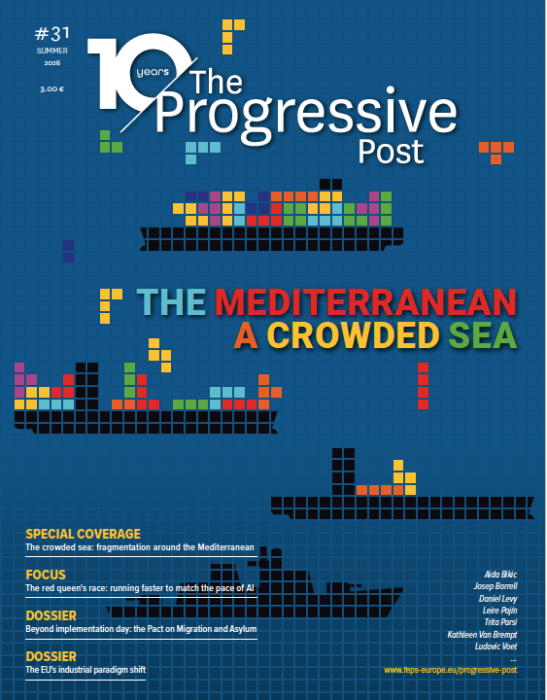
Finally, for a good weekend read, we recommend the latest dossier and the analysis of elections in 🇧🇬 and 🇫🇮 by the Progressive Post.
UPCOMING EVENT
19 April – Online

The climate crisis is international by nature, and an inclusive account of climate justice that does right by emerging economies is imperative.
This policy breakfast is dedicated to the discussion of the findings of theClimate justice principles‘ policy brief, which highlights the ethical principles required to fully understand the consequences of the climatic crisis we are living in. The co-author, Professor Carl Knight, will present the outcomes of his policy brief. Join us, with the Friedrich-Ebert-Stiftung, to discuss the intersection point between ‘Climate justice principles‘ and other policy fields.
25 April – FEPS HQ – Expert meeting – Hybrid

How might growing levels of confrontation and mistrust on the international stage affect human security and drivers of conflict in the long term?

What factors or actors could help reinvigorate arms control and non-proliferation regimes?

We will discuss these questions during the 4th expert roundtable of the Foresight project ‘The long-term implications of the war in Ukraine‘, which will focus on issues of the prospects for arms control, disarmament, non-proliferation, technological innovation, conflict prevention, and human security.

12 April – Washington DC, USA

In light of the sharp rise of political polarisation, geopolitical instability and economic insecurity, there is a need for Progressives on both sides of the Atlantic to deepen their economic leadership.

On the occasion of the IMF Spring Meetings, FEPS, Das Progressive Zentrum (DPZ) and Friedrich-Ebert-Stiftung (FES) brought together some of the leading economic advisors, analysts, policy-makers and scholars from across Europe, the US and Canada to start a discussion around the importance of a joint progressive transatlantic vision for economic and industrial policy, which could serve as guidance at a time of geopolitical uncertainty.
13 April – FEPS HQ & EP

Nostalgia is a poor basis for a viable political project. Labour has always won elections when it has been seen as a ‘party of the future’”.

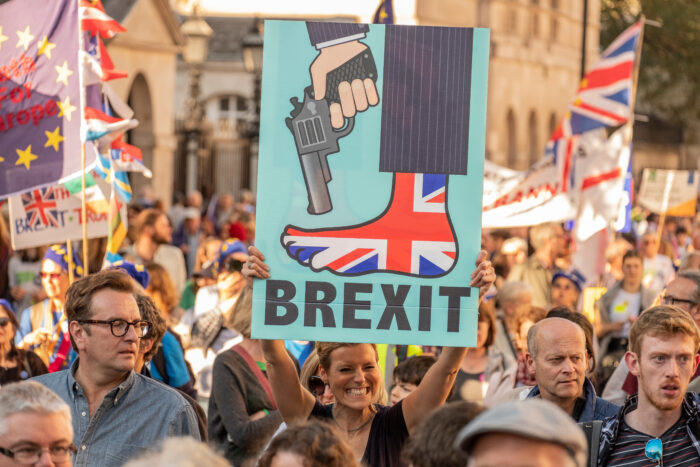
Roger Liddle, former chair of Policy Network and member of the House of Lords in the Labour Party (LP), opened the Next Left Lecture II in the EP, as part of the Next Left Research Programme, co-organised by FEPS and the Karl-Renner Institut, under the leadership of Andreas Schieder, MEP S&D. Liddle described LP’s evolution in the last decades and addressed Brexit, its reasons and consequences.

What’s the best way to fight unemployment? How do we get decent work and transform our economy into a more sustainable society?
We want to hear your voice to collect citizens’ opinions on long-term unemployment and the potential for an EU-wide permanent program for direct, guaranteed public service employment. Take the survey here!
DOSSIER

For over 30 years now, every 8 April, International Roma Days come and go. But the poverty and inequality Roma communities suffer in Europe and beyond have barely changed. That is shown by the findings of a recent Roma survey of the EU Agency for Fundamental Rights. And it is although Roma are subject to the EU’s only specifically ethnic policy.
EUROPEAN PROGRESSIVE OBSERVATORY

The super-Sunday of 2 April saw general elections in Finland and Bulgaria. Both elections show a shift to the right and, what is very worrisome, the rise of the radical right in parallel. The subsequent polarisation and fragmentation indicate that Social Democrats will need to reconsider very strongly how to shape their strategies further on.
Especially since the dynamics and the change of the political world are so profound, it is not enough to think about what used to make Social Democrats succeed. A complex reflection is needed promptly, as otherwise the Blue may return in many, and in much darker shades. Read more.
Photo credits: Shutterstock/ Alexandru Nika
Twitter
Facebook
Linkedin
Instagram
Youtube
Website


Copyright © 2023 FEPS Europe, All rights reserved.
You are receiving this email because you participated in one of FEPS’ events and/or have registered for FEPS’ newsletter.
If you wish not to receive FEPS’ communications anymore, please click here: unsubscribe now


Email Marketing by ActiveCampaign
Find all related Progressive Post
Progressive Post
16/07/2026

Good luck! And don’t f**k it up…

Hungary beyond the elections: a fragile chance for LGBTQI+
02/07/2026

A pact: what else?

The entry into force of the EU’s Pact on Migration and Asylum on 12 June […]
02/07/2026

The EU Return Regulation: what lies behind the chants

The new EU ‘deportation bill’ was adopted by the European Parliament amid roaring applause, laughter […]
Find all related Magazine
Magazine
  • cover book

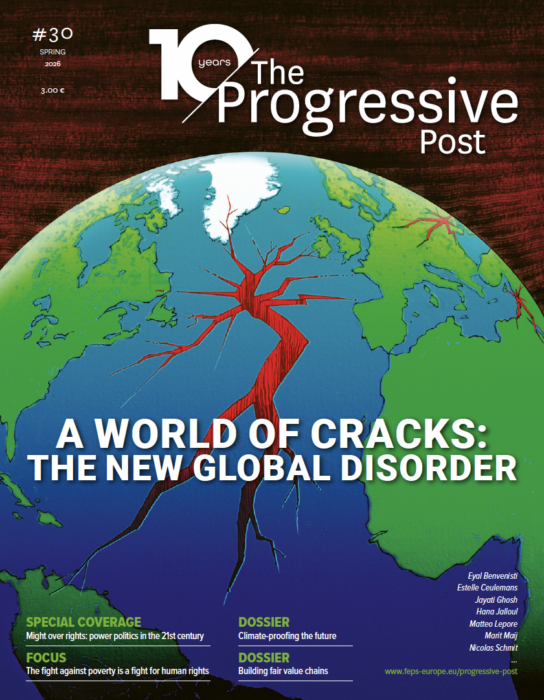
    Issue #30 Progressive Post

Issue #30

A world of cracks: the new global disorder
  • cover book

    Issue #29 Progressive Post

Issue #29

Does peace still have a chance?
Find all related publications
Publications
22/07/2026

How (not) to fight the far right

FEPS YAN papers 9th cycle
20/07/2026

Avoiding renovictions in European cities

FEPS YAN papers 9th cycle
20/07/2026

Housing the people

FEPS YAN papers 9th cycle
20/07/2026

Participatory budgeting in Europe

Building trust and widening participation
Find all related news
News
23/07/2026

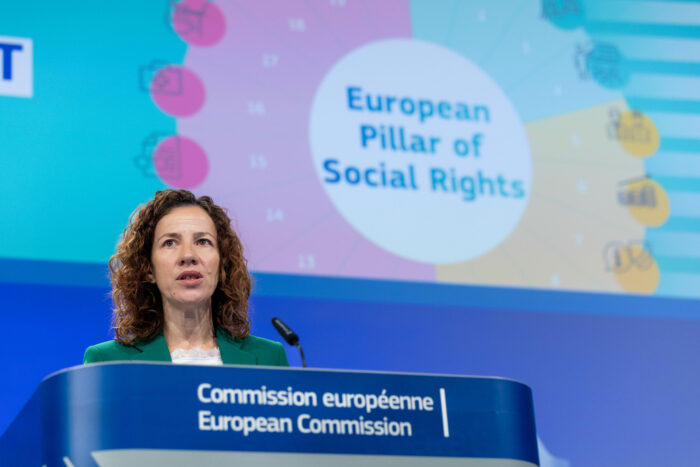
FEPS Reacts: European Commission communication on the Action Plan on the European Pillar of Social Rights

By Laszlo Andor, FEPS Secretary-General & François Balate, Policy Analyst on Social The communication on the […]
08/07/2026

Letter to Manfred Weber, Chair of the EPP Group, by FEPS President Nicolas Schmit 

Dear Mr Weber, You are European, but also German. One should be entitled to expect […]
23/06/2026

FEPS Reacts: 10 years after Brexit

Written by FEPS Secretary-General László Andor 🔸 Brexit has been a case study in national self-harm. The […]
05/06/2026

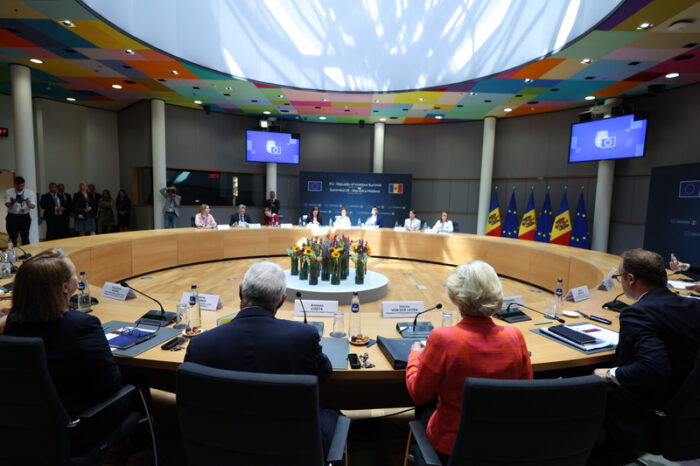
Call for a progressive EU enlargement

Friends of the Western Balkans' Joint Statement
Find all related in the media
In the media

Carta a Manfred Weber

by elDiario.es 17/07/2026
"Letter to Manfred Weber". FEPS President Nicolas Schmit wrote to Manfred Letter, leader of the EPP, on the outcome of the Return Relugation, available in Spanish on elDiario.es.

Open letter to Manfred Weber

by Social Europe 13/07/2026
FEPS President Nicolas Schmit's open letter to EPP leader Manfred Weber on the Return Regulation was featured in Social Europe

Elon Musk não existiria na Europa, porque nunca teria recebido tanto dinheiro de um orçamento público como recebeu nos EUA

by Expresso 24/06/2026
FEPS President and former Commissioner Nicolas Schmit explains how social democrats can regain the trust of EU citizens

Diez años del Brexit: la metamorfosis del euroescepticismo

by La Razón 24/06/2026
"Ten years of Brexit: the metamorphosis of Euroscepticism". This article from La Razón mentions FEPS policy brief "Countering the far right in the European Parliament", which examines the growing normalisation of far-right parties within the EP and analyses how their strategy has shifted from rejecting the EU to reshaping it from within.