FEPS Newsletter 19 Jan 2024 – Getting ready for some busy days at FEPS HQ!

📅 FEPS Newsletter: Getting ready for some busy days at FEPS HQ! Share Tweet Share […]

19/01/2024
📅 FEPS Newsletter: Getting ready for some busy days at FEPS HQ!
Progressive Yearbook, youth, gender, UK-EU, and much more on the agenda
 ‌ ‌ ‌ ‌ ‌ ‌ ‌ ‌ ‌ ‌ ‌ ‌ ‌ ‌ ‌ ‌ ‌ ‌ ‌ ‌ ‌ ‌ ‌ ‌ ‌ ‌ ‌ ‌ ‌ ‌ ‌ ‌ ‌ ‌ ‌ ‌ ‌ ‌ ‌ ‌ ‌ ‌ ‌ ‌ ‌ ‌ ‌ ‌ ‌ ‌ ‌ ‌ ‌ ‌ ‌ ‌ ‌ ‌ ‌ ‌ ‌ ‌ ‌ ‌ ‌ ‌ ‌ ‌ ‌ ‌ ‌ ‌ ‌ ‌ ‌ ‌ ‌ ‌ ‌ ‌ ‌ ‌ ‌ ‌ ‌ ‌ ‌ ‌ ‌ ‌ ‌ ‌ ‌ ‌ ‌ ‌ ‌ ‌ ‌ ‌ ‌ ‌ ‌ ‌ ‌ ‌ ‌ ‌ ‌ ‌ ‌ ‌ ‌ ‌ ‌ ‌ ‌ ‌ ‌ ‌ ‌ ‌ ‌ ‌ ‌ ‌
Upcoming Events
We’re getting ready for a busy week at FEPS headquarters!

In the midst of the FEPS Bureau and Scientific Council meetings, we will launch the 5th edition of the Progressive Yearbook and announce FEPS Progressive Person of the Year.

Our survey results with fresh data on how young people facing disadvantage view democracy in Europe will be launched next Tuesday. Spaces are limited, but there is still time to join us.

We are also traveling to London, Vienna, Copenhagen, and Helsinki for joint events with FEPS national member foundations on exciting projects. Stay tuned!
BOOK LAUNCH
24 January – FEPS HQ

On January 24, join us at the launch of the fifth edition of one of our most unique publications, the Progressive Yearbook. We will also reveal and interview FEPS Progressive Person of the Year.

With the mission of looking back to look ahead, it focuses on transversal European issues that have left a mark on 2023 and brings insightful future-looking analyses.

This yearly edition counts on renowned authors’ contributions, including academics, politicians, and civil society representatives.
Democracy in the face of disadvantage
23 January – FEPS HQ

Join us as we unveil the findings of an 18-month research project. We captured the perspectives of over 100 young people from disadvantaged backgrounds across five EU countries —🇭🇺 Hungary, 🇮🇪 Ireland, 🇫🇷 France, 🇵🇱 Poland, and 🇪🇸 Spain. Complemented by insights from over 50 experts in politics, youth work, and academia, the survey analyses young people’s attitudes toward democracy.

What needs to be done to integrate young people and protect democracy? We’ll explore this question alongside Fundacion Felipe González, Fondation Jean-Jaurès (FJJ), Friedrich-Ebert-Stiftung (FES) and Szociális Demokráciáért Intézet.

UPCOMING EVENT
FEPS-Fabian New Year Conference
Plans for power
20 January – London, UK – Hybrid

Continuing the tradition established a decade ago between FEPS and the Fabian Society and as we head into a crucial year, join us online or at London’s Guildhall to hear from leading voices in the Labour Party about their plans for power.

Among the speakers present at the conference, there will be members of the UK Parliament Emily Thornberry; David Lammy; Thangam Debonnaire; Anneliese Dodds; Seema Malhotra as well as Pedro Silva Pereira, VP of the EP; Miguel Costa Matos, MP in Portugal, and many more.

19 January – Vienna, Austria

If women‘s rights are called into question, democracy and the rule of law as a whole are called into question. In the spirit of former National Council President Barbara Prammer, we took the 10th Barbara-Prammer-Symposium as an opportunity to gather women across different sectors.

With the SPÖ Federal Women, the Karl-Renner-Institut, and the SPÖ Parliament Club.
TALKSHOW

FEPS President, Maria João Rodrigues, was on the panel Brussels, My Love on Euronews to discuss the root causes of farmers’ fury in Germany, break down the recently agreed EU fiscal rules reform, and address Charles Michel’s decision to quit his job early to run for MEP.
CALL FOR TENDER

Are you passionate about Polish progressive policies? Do you have experience in research project management?

FEPS and FES Warsaw are looking for a skilled research project manager to help us implement the last phase of our project ‘Social democracy without people’, which analyses the sources of the popularity of authoritarian populism in Poland.

Interested? You have until 31 January 2024 to submit your application!
PROGRESSIVE PAGE
By László Andor


After two years of war in Ukraine, several geopolitical consequences of Vladimir Putin’s fatal decision to commit aggression against a neighbouring country are becoming clear. The expansion of NATO in the Baltic region and the enlargement of the BRICS group are certainly among the most important ones which will remain with us. Another consequence, more discreet, but definitely creative and which could perhaps have even more significant fallout in the long run, has been the creation of the European Political Community (EPC). Read more.
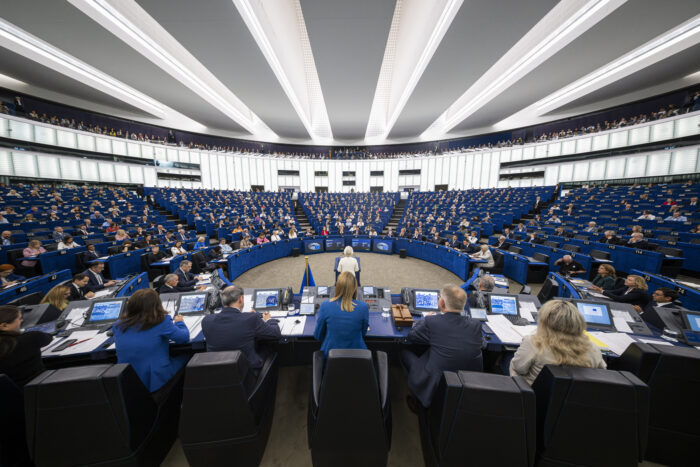
Photo credits: European Union
Twitter
Facebook
Linkedin
Instagram
Youtube
Website
Was this email forwarded to you?


Copyright © 2024 FEPS Europe, All rights reserved.
You are receiving this email because you participated in one of FEPS’ events and/or have registered for FEPS’ newsletter.
If you wish not to receive FEPS’ communications anymore, please click here: unsubscribe now


Email Marketing by ActiveCampaign
Find all related Progressive Post
Progressive Post
16/04/2026

Orbán ousted by a landslide: time for a rethink

With an unprecedented voter turnout of almost 80 per cent, Hungarian Prime Minister Viktor Orbán […]
15/04/2026

Spain alone?

Among European heads of state and government, Spain’s Prime Minister Pedro Sánchez alone went out […]
26/03/2026

Denmark: Frederiksen stays on top in historic election marked by division

When Danish Prime Minister Mette Frederiksen called for a snap election at the end of […]
Find all related Magazine
Magazine
  • cover book

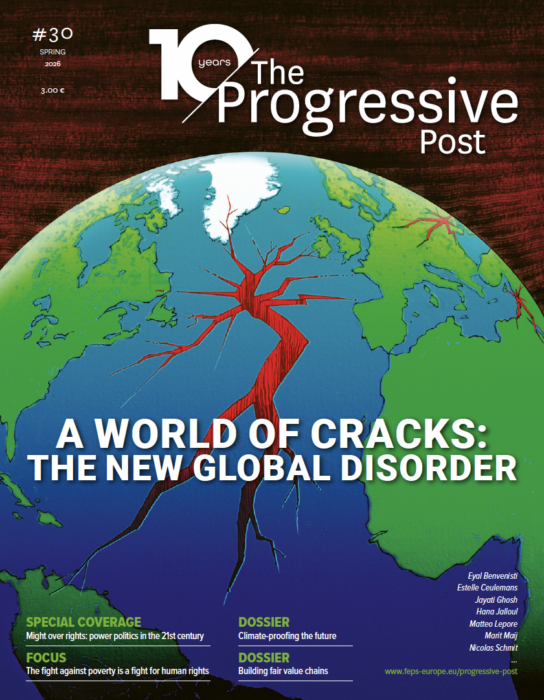
    Issue #30 Progressive Post

Issue #30

In geopolitics, 2026 is challenging our certainties: from the abduction of the Venezuelan president, over […]
  • cover book

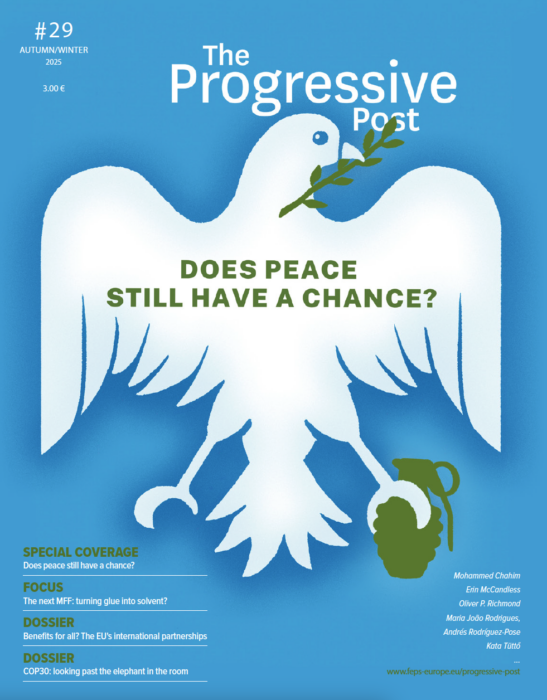
    # Issue 29 Progressive Post

# Issue 29

From the war in Ukraine to the devastation of Gaza since 2023, the words ‘war’ […]
  • cover book

    # Issue 28 Progressive Post

# Issue 28

European Social Democracy at historical crossroads
Find all related publications
Publications
17/04/2026

The open future and its enemies

How we can protect free society from AI dictatorship
17/04/2026

EqualiZe

A new political gender divide is often said to be defining Gen Z in Europe: […]
27/03/2026

Laboratories of counter-hegemony

Orbán, Trump and the transatlantic far-right ecosystem
25/03/2026

The European Green Deal tracker

How well is your member state implementing key policies of the Green Deal? The European […]
Find all related news
News
13/04/2026

Hungary’s civic revolution

FEPS' commentary on the outcomes of the Hungarian election
05/03/2026

FFPPVC commentary on the new EU Gender Equality Strategy 2026-2030

Commentary by the Feminist Foreign Policy Progressive Voices Collective (FFPPVC)
03/03/2026

Wag the dog?

FEPS commentary on the US-Israel attack on Iran
03/03/2026

Closing ceremony of the Progressive Ukraine programme

The graduation ceremony completed the programme which was part of the Open Progressive University (OPU).
Find all related in the media
In the media

What next for Olivér Várhelyi, Orbán’s last man standing in Brussels?

by EURACTIV 14/04/2026
FEPS Secretary General László Andor discusses the potential impact of the HUngarian election result on EU Commissioner, Olivér Várhely

EU relieved to see back of Orbán but Magyar’s Hungary may still present problems

by The Guardian 14/04/2026
FEPS Secretary General László Andor comments on Hungary's future following the outcome of the 2026 general election

Bilancio UE: fondi sociali in bilico, l’Europarlamento chiede più risorse e meno flessibilità

by Il Sole 24 Ore 13/04/2026
"EU budget: social funds at risk, the European Parliament calls for more resources and less flexibility" In this article by Il Sole 24 ore, FEPS Secretary General László Andor highlights the risks that the current MFF proposal - set to be voted on by the European Parliament - could pose to the EU budget and outlines the consequences of reducing social funding.

Világháború, vagy amit akartok

by Mérce 18/03/2026
"World War, or what you will". FEPS Secretary-General László Andor escalating conflict between the USA, Israel, and Iran and the lack of 'brakes' to prevent escalation from Donald Trump and Benjamin Netanyahu.