FEPS Newsletter 5 May 2023 – Climate

🌱 FEPS Newsletter: Climate Share Tweet Share Share Policy breakfast(s), Just Transition, Teleworking, Delphi Economic […]

05/05/2023
🌱 FEPS Newsletter: Climate
Policy breakfast(s), Just Transition, Teleworking, Delphi Economic Forum, State of the Union…
 ‌ ‌ ‌ ‌ ‌ ‌ ‌ ‌ ‌ ‌ ‌ ‌ ‌ ‌ ‌ ‌ ‌ ‌ ‌ ‌ ‌ ‌ ‌ ‌ ‌ ‌ ‌ ‌ ‌ ‌ ‌ ‌ ‌ ‌ ‌ ‌ ‌ ‌ ‌ ‌ ‌ ‌ ‌ ‌ ‌ ‌ ‌ ‌ ‌ ‌ ‌ ‌ ‌ ‌ ‌ ‌ ‌ ‌ ‌ ‌ ‌ ‌ ‌ ‌ ‌ ‌ ‌ ‌ ‌ ‌ ‌ ‌ ‌ ‌ ‌ ‌ ‌ ‌ ‌ ‌ ‌ ‌ ‌ ‌ ‌ ‌ ‌ ‌ ‌ ‌ ‌ ‌ ‌ ‌ ‌ ‌ ‌ ‌ ‌ ‌ ‌ ‌ ‌ ‌ ‌ ‌ ‌ ‌ ‌ ‌ ‌ ‌ ‌ ‌ ‌ ‌ ‌ ‌ ‌ ‌ ‌ ‌ ‌ ‌ ‌ ‌
Upcoming Events
Climate change is a systemic issue, and we won’t untangle it with basic siloed thinking. To achieve a Just Transition, we need a holistic understanding of how to fix planetary emergencies. This is why, through our policy breakfasts, we keep on mainstreaming climate in multiple policy fields. But we all know that even great ideas won’t resonate without the right narrative. Communication is key, especially nowadays when talking about climate neutrality. We researched for you the best ways to create an effective green communication. The positive examples are already there, we just need to say it.

And yes, our Secretary General was invited to some important stages, see what he had to say about European social inclusion and crisis management in the EU.

If you are in Brussels, let’s discuss all of these face to face. Join us Saturday at the European Parliament for the Open Days, we’ll be happy to welcome you at our stand!

POLICY STUDY
by András Bíró-Nagy, Réka Hunyadi, Vanessza Juhász and Áron Szászi

How can you develop effective green communication? We asked focus groups and found out the best narrative to talk about the Just Transition. Through a public policy analysis, this study, with Friedrich-Ebert-Stiftung (FES) and Policy Solutions, aimed to understand the key challenges and formulate policy proposals for four key environmental issues in Hungary: air pollution, plastic pollution, the energy efficiency of buildings, and the country’s energy mix. Read more.
UPCOMING EVENT
11 May – Online

Can we use digital innovation to mitigate climate change? What policies do we need to make the best of digitalisation, protect the environment and lower inequalities?
At this policy breakfast organised with FES, we’ll discuss the findings of theClimate and digital policy’ policy brief. Gerard Rinse Oosterwijk, FEPS Digital policy analyst, will be joined by the author Kerstin Hotte, Researcher at Institute for New Economic Thinking, Anna Berti Suman, Post-Doctoral Fellow at European Commission Joint Research Centre and Mauro Santaniello, Research Fellow at UNU-CRIS.
PAST EVENT
04 May – Online

Climate policies synergised by gender equality objectives are more successful at achieving the transformative impact required to tackle the climate crisis and ensure social justice.
Laeticia Thissen, FEPS Gender policy analyst, discussed climate and gender mainstreaming with Kata Tüttő, Deputy mayor of Budapest, Anke Stock, Senior Gender Expert at Women Engage for a Common Future, and Gill Allwood, Professor at Nottingham Trent University and author of the policy briefClimate and gender policies‘, in collaboration with FES.
PAST EVENT
03 May – FEPS HQ

Developing a “counter” Just Transition narrative composed of positive messages and relevant data has become necessary and urgent. We need concrete examples and powerful stories that tackle complex concepts.
Together with Solidar, we hosted a meeting on ‘narrative building’ in the framework of the European Alliance for a Just Transition. The members of the alliance will develop a common narrative that presents a socially Just Transition to climate neutrality as the way to address crises in the long term.
PROGRESSIVE PAGE
by Philippe Pochet

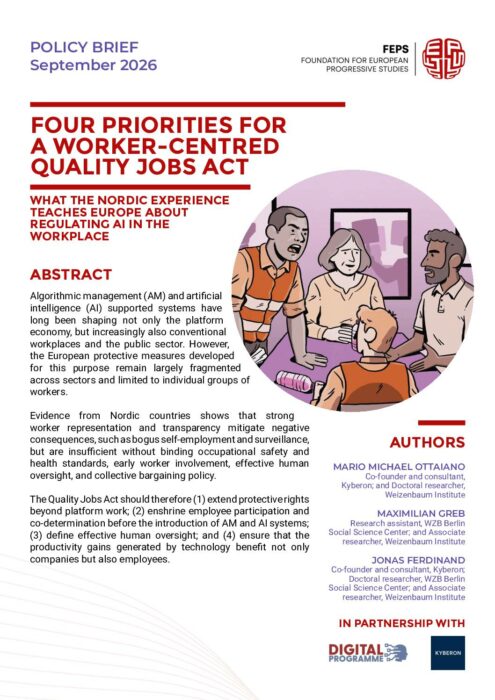
The analysis of the future of work is sandwiched between two megatrends. On the one hand, there is renewed hyper-globalisation in the services sector, reinforced by progress in digitalisation and AI.
On the other hand, there is a relocation of production and services linked to the imperative of the green transformation. Two tendencies that reflect the tension between the ‘ever-faster, ever-further’ and the idea to control time and space. Read more.
Photo credits: Shutterstock/ Alessio Tricani

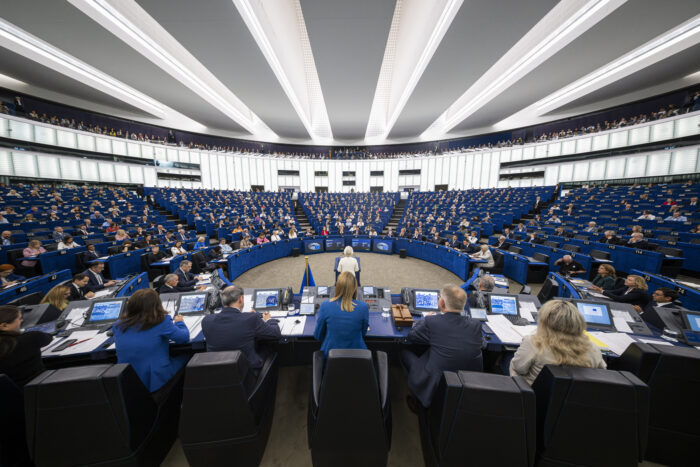
László Andor, FEPS Secretary General, took part in the State of the Union, organised by the European University Institute (EUI). To face the many recurring crises affecting Europe, the EU has developed a number of policy schemes to back up member states in their national responses, and László Andor participated in a discussion about the impact of crisis management in the EU.

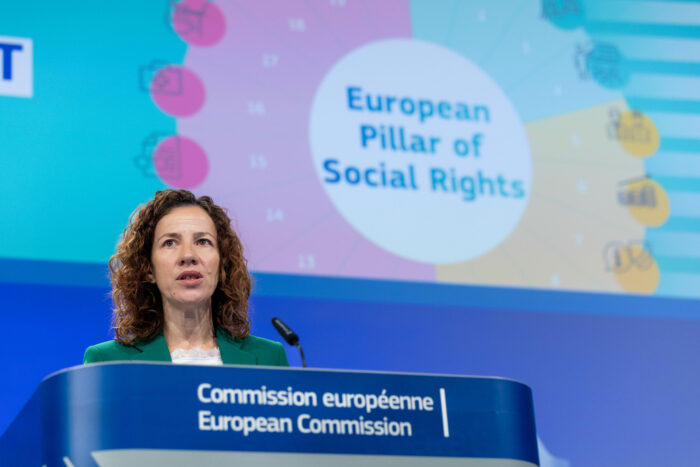
László Andor, FEPS Secretary General, participated in the Delphi Economic Forum to discuss the importance of social inclusion, the ways to foster it and the need to increase the social safety net at the European level.
His participation and the discussion that took place attracted a lot of media attention in Greek media such as in Naftemporiki, Efsyn or News 24/7.
Photo credits: Eteron
Twitter
Facebook
Linkedin
Instagram
Youtube
Website


Copyright © 2023 FEPS Europe, All rights reserved.
You are receiving this email because you participated in one of FEPS’ events and/or have registered for FEPS’ newsletter.
If you wish not to receive FEPS’ communications anymore, please click here: unsubscribe now


Email Marketing by ActiveCampaign
Find all related Progressive Post
Progressive Post
16/07/2026

Good luck! And don’t f**k it up…

Hungary beyond the elections: a fragile chance for LGBTQI+
02/07/2026

A pact: what else?

The entry into force of the EU’s Pact on Migration and Asylum on 12 June […]
02/07/2026

The EU Return Regulation: what lies behind the chants

The new EU ‘deportation bill’ was adopted by the European Parliament amid roaring applause, laughter […]
Find all related Magazine
Magazine
  • cover book

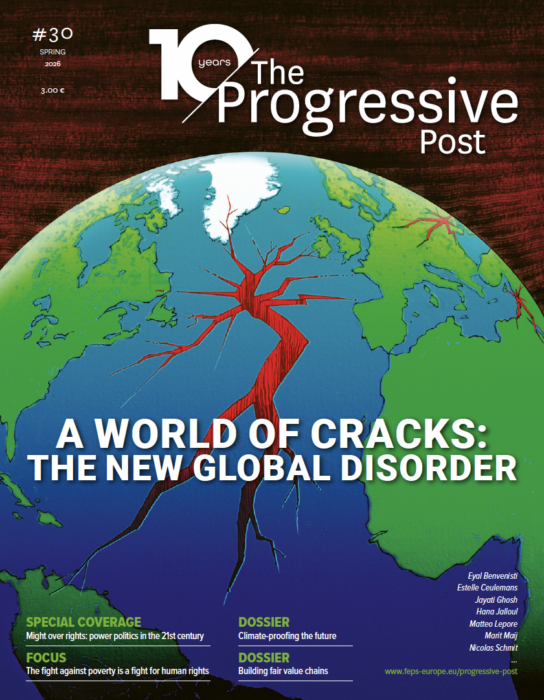
    Issue #30 Progressive Post

Issue #30

A world of cracks: the new global disorder
  • cover book

    Issue #29 Progressive Post

Issue #29

Does peace still have a chance?
Find all related publications
Publications
22/07/2026

How (not) to fight the far right

FEPS YAN papers 9th cycle
20/07/2026

Avoiding renovictions in European cities

FEPS YAN papers 9th cycle
20/07/2026

Housing the people

FEPS YAN papers 9th cycle
20/07/2026

Participatory budgeting in Europe

Building trust and widening participation
Find all related news
News
23/07/2026

FEPS Reacts: European Commission communication on the Action Plan on the European Pillar of Social Rights

By Laszlo Andor, FEPS Secretary-General & François Balate, Policy Analyst on Social The communication on the […]
08/07/2026

Letter to Manfred Weber, Chair of the EPP Group, by FEPS President Nicolas Schmit 

Dear Mr Weber, You are European, but also German. One should be entitled to expect […]
23/06/2026

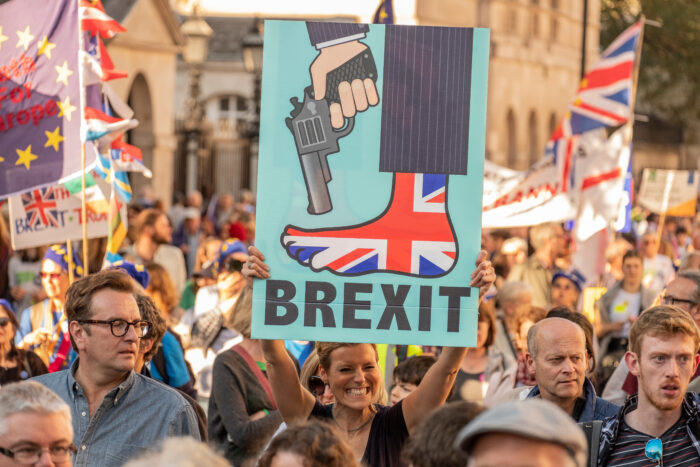
FEPS Reacts: 10 years after Brexit

Written by FEPS Secretary-General László Andor 🔸 Brexit has been a case study in national self-harm. The […]
05/06/2026

Call for a progressive EU enlargement

Friends of the Western Balkans' Joint Statement
Find all related in the media
In the media

Carta a Manfred Weber

by elDiario.es 17/07/2026
"Letter to Manfred Weber". FEPS President Nicolas Schmit wrote to Manfred Letter, leader of the EPP, on the outcome of the Return Relugation, available in Spanish on elDiario.es.

Open letter to Manfred Weber

by Social Europe 13/07/2026
FEPS President Nicolas Schmit's open letter to EPP leader Manfred Weber on the Return Regulation was featured in Social Europe

Elon Musk não existiria na Europa, porque nunca teria recebido tanto dinheiro de um orçamento público como recebeu nos EUA

by Expresso 24/06/2026
FEPS President and former Commissioner Nicolas Schmit explains how social democrats can regain the trust of EU citizens

Diez años del Brexit: la metamorfosis del euroescepticismo

by La Razón 24/06/2026
"Ten years of Brexit: the metamorphosis of Euroscepticism". This article from La Razón mentions FEPS policy brief "Countering the far right in the European Parliament", which examines the growing normalisation of far-right parties within the EP and analyses how their strategy has shifted from rejecting the EU to reshaping it from within.