Book

09/10/2014

Those with a sense of history know that many of the world’s great political projects have emerged from periods of conflict followed by subsequent cooperation and consensus-building. This was certainly the case with the “European project” and its present manifestation, the European Union. Sometimes it is necessary to draw on the wisdom of elder statesmen – whose lives have been punctuated by these struggles and efforts at cooperation – to remind us of the origins of such projects as these and of their fragility.

In his speech ‘Germany in and with and for Europe’, former German Chancellor Helmut Schmidt provided his audience at the 2011 SPD Congress with an honest and reflective assessment of the European project and of Germany’s place within it.

While this speech was given in German and comes from the centre of Europe, FEPS has wished to disseminate this throughout Europe and to the periphery. Therefore, the Foundation took the initiative to give the peoples of Europe a chance to share former Chancellor Schmidt’s reflections in their own languages.

Prefaced by Massimo D’Alema, President of FEPS and Former Prime Minister of Italy and Sigmar Gabriel, Chairman of the Social Democratic Party of Germany, edited by FEPS with the financial support of the European Parliament, this book offers the version of this very important speech in DE-EN-BG-ES-CZ-DA-EL-FR-IT-HU-NL-PL-PT-RO-FI-SV.

Find all related publications
Publications
15/10/2024

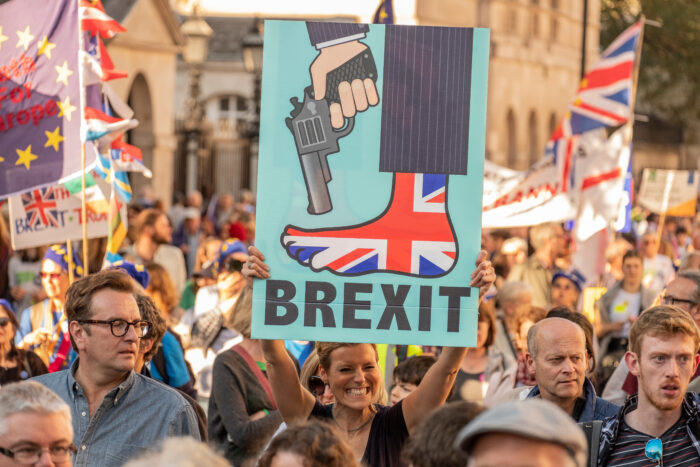
The social and economic impact of Brexit across Northern Ireland

Regional and Sectoral Perspectives
15/10/2024

The Windsor Framework and its implications – for Britain, Northern Ireland and the EU

17/05/2024

External influences in the Western Balkans: Where are we at?

Balkan Focus Series
13/05/2024

Labour migration from the European periphery to the EU’s core

FEPS YAN Series
Find all related Progressive Post
Progressive Post

Find all related events
Events
Upcoming
20 - 22/11/2024
FEPS HQ, Brussels (Expert meeting)

Friends of the Western Balkans – Brussels

How will the new balance of power in Europe impact the accession process?
Past
16 - 17/10/2024
FEPS HQ

Beyond the border 

The implications of Brexit for the island of Ireland
22/09/2024
Liverpool, UK

The Future for the UK and Europe under a Labour Government

Find all related news
News
17/09/2024

New European Commission composition proposal – Reaction by FEPS Secretary General

29/04/2024

FEPS celebrates 20 years of the biggest EU enlargement

02/04/2024

Interview with Maria João Rodrigues on the need for EU treaty changes with Euronews

18/03/2024

FEPS President on Euronews talk-show ‘Brussels, my love?’

NATO extension, Portuguese elections, far-right and gender equality were the topics of the debate
Find all related in the media
In the media

Controversial Hungarian Gets EU Health Portfolio Nomination

by Medscape Medical News 18/09/2024
Read this article on the controversial appointment of Hungarian Olivér Várhelyi by Ursula von der Leyen as Commissioner for Health and Animal Welfare—a candidacy strongly questioned by László Andor, FEPS Secretary General

Podcast interview on the new European Parliament

by Encompass 23/07/2024
Listen to this podcast featuring László Andor, Secretary General of FEPS, and Paul Adamson, Founder of Encompass, as they explore the rise and impact of Viktor Orban and the shifting power dynamics in the European Parliament.

NATO-bővítés sok vitával: érvek, ellenérvek és lobbik a Clinton-elnökség idején

by BBC History 07/07/2024
"The controversial NATO enlargement: pros, cons and lobbying during the Clinton presidency" This article, written by FEPS Secretary General László Andor, looks back to the 1990s when the Eastern enlargement of NATO was requested, discussed, orchestrated, and eventually completed.

Orbánov boj z zunanjim sovražnikom ni bil kos inflaciji

by DELO 28/05/2024
In an article in Delo, László Andor criticises Viktor Orbán government's economic policies, such as not allowing Hungary to join the euro area, which he believes would have helped curb inflation. He also criticises the government for blaming external enemies such as the President of the European Commission, to cover up its own failures.