
“Staying in: winning the argument to keep Britain in the EU”
Monday 18th February 2013, 17:00-19:00, FEPS office
SUMMARY OF THE DEBATE
The debate opened with a presentation of the IPPR-FEPS report by Will Straw and the findings were complemented with more recent facts and figures and latest polls, he also presented findings from the workshops. The results suggest that on issues which the public feels is very important such as tax, budget should be national level but in areas of non-military threats such as defence, agriculture, climate change, the public would like to see more international cooperation.
Whereas Cameron and the Conservative Party are often talking about the single market, Labour and the PES family clearly talk about the EU as a whole. Progressives realise that it’s about much more and there is more than just trade at stake here, it concerns our social standards, working conditions and our values. It seems that the Conservative party wants to roll back social policies.
To win the argument on keeping Britain in the EU, a referendum shouldn’t be feared. It was suggested that the press and media in Britain is certainly a too narrow focus, especially considering its direction, political priorities and ownership, rather a much wider debate would need to take place. Emphasis should be put on demonstrating how the EU can help in terms of jobs and raising living standards. Also showing how the EU affects our daily lives, even in matters such as telephone tariffs or the more recent development of food labelling and food safety standards.
Communication came up as a possible obstacle or something that definitely needs to be improved in many areas. People often feel that communication on European issues in the UK is misleading or non-existent and there was much agreement that the communication from the European Commission would serve better if its language altered to be better focused to its audience.
Nevertheless there is critique concerning whether holding a referendum is a good thing or not. Many arguments in favour were put forward and what this could bring about but also the obstacles it could entail. On the one hand, the opportunity for a debate is being provided and it is time to properly underline the benefits of being a member of the EU. However on the other hand it seems a dangerous, lengthy, untimely and costly approach.
Discussions are needed on some structural areas that should be reformed which would subsequently better serve all the Members of the EU. In this sense Britain could be seen as part of the solution not the problem. The mood currently is that Britain’s situation is hindering integration and causing countries across Europe to consider that Europe might be better off without Britain. Indeed as Jo Leinen pointed out it has been widely stated recently ‘cherry-picking’ would not be accepted so the British would have to consider this when thinking about exiting the EU, on a one-way ticket.
Markedly, Massimo D’Alema believes Labour has done the right thing by standing firm and not proposing to hold a referendum, whereas others felt it inevitable and will be a good thing to push the debate along.
When asked if an alternative question might work better for the referendum, such as “do we want a more social Europe?” Will Straw explained that a simple in/out question would be the only one that could work. Otherwise it would be more likely that the British would reject it.
Emma Reynolds said that “Brits aren’t ideological about Europe like other nations. They are pragmatic.” It goes in line with what Will Straw was demonstrating from the research results, Brits are well below the EU average on seeing EU membership as a benefit.
Yet Emma Reynolds believes that if the EU was more outward looking and for instance seen spending minimum time negotiating new treaties, it may be seen in a more positive light by the public. She additionally quoted Douglas Alexander, British shadow Foreign Secretary who recently asserted “to contemplate shrinking our home market from 500 million consumers to just 60 million doesn’t make sense.”
Massimo D’Alema in his concluding remarks emphasised that progressives believe staying in is crucial for the UK. Yet we want a UK that is fully committed to Europe as only this will consequently provide better circumstances for enhancing European integration.
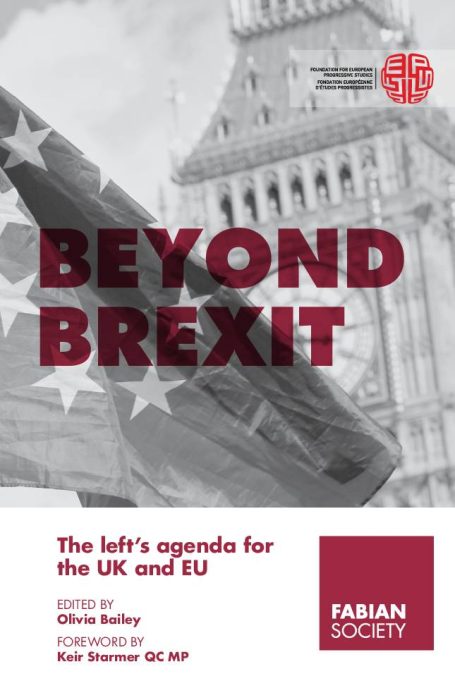
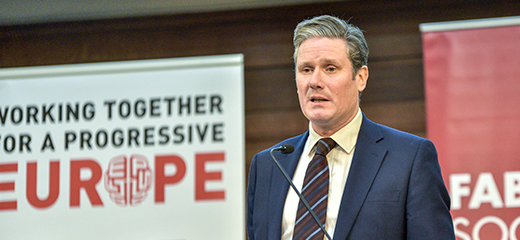
Keir Starmer Fabians Conference Speech: Brexit And Beyond
Keir Starmer MP speech to the FEPS Fabian New Year Conference 2019 “Brexit and Beyond”, […]
XThis website uses cookies. Some cookies are necessary for the proper functioning of the website and cannot be refused if you wish to visit the website.
Other cookies are used for Advertisement and Analytics (Sharing on social networks, video playing, analysis and statistics, personalized advertising ...) You can refuse them if you want to. REJECTACCEPTCookie settings
Manage consent
Privacy Overview
This website uses cookies to improve your experience while you navigate through the website. Out of these cookies, the cookies that are categorized as necessary are stored on your browser as they are essential for the working of basic functionalities of the website. We also use third-party cookies that help us analyze and understand how you use this website. These cookies will be stored in your browser only with your consent. You also have the option to opt-out of these cookies. But opting out of some of these cookies may have an effect on your browsing experience.
Necessary cookies are absolutely essential for the website to function properly. These cookies ensure basic functionalities and security features of the website, anonymously.
Cookie
Duration
Description
cookielawinfo-checkbox-advertisement
1 year
Set by the GDPR Cookie Consent plugin, this cookie is used to record the user consent for the cookies in the "Advertisement" category .
cookielawinfo-checkbox-analytics
11 months
This cookie is set by GDPR Cookie Consent plugin. The cookie is used to store the user consent for the cookies in the category "Analytics".
cookielawinfo-checkbox-functional
11 months
The cookie is set by GDPR cookie consent to record the user consent for the cookies in the category "Functional".
cookielawinfo-checkbox-necessary
11 months
This cookie is set by GDPR Cookie Consent plugin. The cookies is used to store the user consent for the cookies in the category "Necessary".
cookielawinfo-checkbox-others
11 months
This cookie is set by GDPR Cookie Consent plugin. The cookie is used to store the user consent for the cookies in the category "Other.
cookielawinfo-checkbox-performance
11 months
This cookie is set by GDPR Cookie Consent plugin. The cookie is used to store the user consent for the cookies in the category "Performance".
csrftoken
past
This cookie is associated with Django web development platform for python. Used to help protect the website against Cross-Site Request Forgery attacks
JSESSIONID
session
The JSESSIONID cookie is used by New Relic to store a session identifier so that New Relic can monitor session counts for an application.
viewed_cookie_policy
11 months
The cookie is set by the GDPR Cookie Consent plugin and is used to store whether or not user has consented to the use of cookies. It does not store any personal data.
Functional cookies help to perform certain functionalities like sharing the content of the website on social media platforms, collect feedbacks, and other third-party features.
Cookie
Duration
Description
__cf_bm
30 minutes
This cookie, set by Cloudflare, is used to support Cloudflare Bot Management.
S
1 hour
Used by Yahoo to provide ads, content or analytics.
sp_landing
1 day
The sp_landing is set by Spotify to implement audio content from Spotify on the website and also registers information on user interaction related to the audio content.
sp_t
1 year
The sp_t cookie is set by Spotify to implement audio content from Spotify on the website and also registers information on user interaction related to the audio content.
Performance cookies are used to understand and analyze the key performance indexes of the website which helps in delivering a better user experience for the visitors.
Analytical cookies are used to understand how visitors interact with the website. These cookies help provide information on metrics the number of visitors, bounce rate, traffic source, etc.
Cookie
Duration
Description
CONSENT
2 years
YouTube sets this cookie via embedded youtube-videos and registers anonymous statistical data.
iutk
session
This cookie is used by Issuu analytic system to gather information regarding visitor activity on Issuu products.
s_vi
2 years
An Adobe Analytics cookie that uses a unique visitor ID time/date stamp to identify a unique vistor to the website.
Advertisement cookies are used to provide visitors with relevant ads and marketing campaigns. These cookies track visitors across websites and collect information to provide customized ads.
Cookie
Duration
Description
NID
6 months
NID cookie, set by Google, is used for advertising purposes; to limit the number of times the user sees an ad, to mute unwanted ads, and to measure the effectiveness of ads.
VISITOR_INFO1_LIVE
5 months 27 days
A cookie set by YouTube to measure bandwidth that determines whether the user gets the new or old player interface.
YSC
session
YSC cookie is set by Youtube and is used to track the views of embedded videos on Youtube pages.
yt-remote-connected-devices
never
YouTube sets this cookie to store the video preferences of the user using embedded YouTube video.
yt-remote-device-id
never
YouTube sets this cookie to store the video preferences of the user using embedded YouTube video.
yt.innertube::nextId
never
This cookie, set by YouTube, registers a unique ID to store data on what videos from YouTube the user has seen.
yt.innertube::requests
never
This cookie, set by YouTube, registers a unique ID to store data on what videos from YouTube the user has seen.