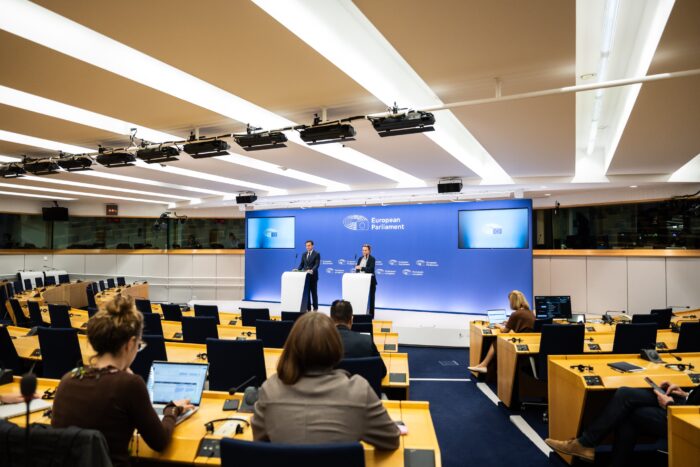
The 2016 Dutch EU Presidency Priorities on Social Employment Policy

The 2016 Dutch EU Presidency Priorities on Social Employment Policy and first impressions on the European Commission’s […]
Speakers

08 - 09/12/2015
00:00:00 - 00:00:00
FEPS Office. Rue Montoyer 40. Brussels FEPS Office. Rue Montoyer 40. Brussels
The 2016 Dutch EU Presidency Priorities on Social Employment Policy
56108
241-the-2016-dutch-eu-presidency-priorities-on-social-employment-policy
0

In order to give you access to our events, FEPS processes your personal data together with any other organiser of this event mentioned in the description of the event and in accordance with 'FEPS’ data protection policy.

The 2016 Dutch EU Presidency Priorities on Social Employment Policy and first impressions on the European Commission’s Labour Mobility package 

Upon invitation only

Check the programme

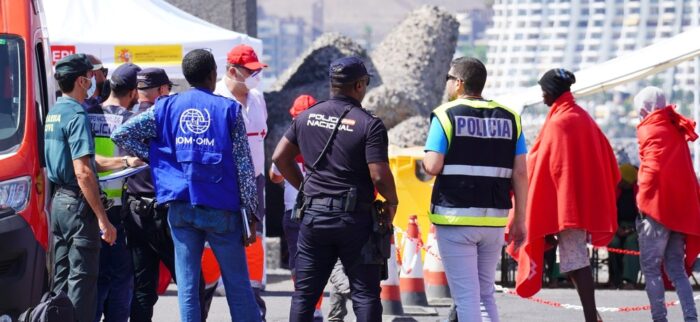
Labour migration is a hot button and sensitive topic in today’s European Union. Free movement of workers and services is at the core of the EU internal market. At the supranational level the Commission emphasizes increased labour mobility as one of the sources of economic growth. At the national level, however, the presumed negative side effects of labour migration are dominating most anti-EU rhetoric. Several Member States have put in place policy initiatives and practices that limit the principle of the free movement of persons and services within the EU. 

The aim of this expert seminar is to analyse labour migration in the EU and the EU policy agenda in this field. We will look at the current state of affairs and apply a forward-looking approach in view of the upcoming Dutch EU Presidency (January 2016). In the area of social and employment policy the Dutch Presidency will focus on promoting decent work. ‘Equal pay for equal work in the same workplace’ is the key principle as far as the Netherlands is concerned. One of the central aims of the country’s Minister for Social Affairs is to change the Posted Workers Directive. To that end, the date coincides also with the momentum of announcing by the European Commission the new mobility package.

At this point, one might ask what chances a relatively small country such as Netherlands has to succeed with such an ambitious agenda on a relatively sensitive topic. In this session we would like to discuss the challenges of labour migration and ideas to change the Posted Workers Directive. During this lunch meeting we will look at how we can ensure competition between Member States without citizens loosing their social rights, how to keep up the principle of quality work for all and how to prevent further spread of social dumping. We will to that end look also at the narrative that dominates the debate and seek progressive ways forward.

This interactive seminar brings together researchers, policy-makers and politicians working on European Union policy and experts on labour migration.

The conclusions and recommendations drawn will serve as inputs for FEPS’s research of “the Next Social Europe” where FEPS intends to look how a progressive narrative and innovative way forward can be brought in this current debate.

Find all related publications
Publications
15/12/2025

The Great Unravelling

“The great unravelling” examines the challenges that the new era of globalisation poses for progressive […]
09/12/2025

Tackling the housing crisis in Europe

Progressive ideas for affordable and sustainable housing policies
28/11/2025

Smarter spending today, safer societies tomorrow

Digitally-enabled capabilities for European defence
28/11/2025

More money, more dependence?

Financing European Union defence for autonomy and cooperation
Find all related Audiovisual
Audiovisual
10/12/2025

‘Tackling the housing crisis in Europe’ Flickr album

Photo album of the ‘Tackling the housing crisis in Europe‘ event at the European Parliament […]
17/11/2025

New own resources in the MFF proposal

Photo album of the ‘New own resources in the MFF proposal‘ event at FEPS HQ, […]
15/11/2025

‘Africa Day 2025’ Flickr album

Photo album of the ‘Africa Day 2025‘ event in Amsterdam, Netherlands. Africa Day has been […]
13/11/2025

‘EU-LAC dialogue on Just Transition and trade’ Flickr album

Photo album of the ‘EU-LAC dialogue on Just Transition and trade’ at Santa Marta, Colombia. […]
Find all related news
News
12/12/2025

FEPS elects Nicolas Schmit as new President

After eight years in the role, outgoing President Maria João Rodrigues requested to be replaced, considering her mission accomplished. 
08/12/2025

Friends of the Western Balkans’ joint statement

Belgrade, 21 November 2025 We, the Friends of the Western Balkans (FoWB) – representatives of […]
04/12/2025

It is high time that the goal is set on “Quality”

FEPS commentary on the Quality Jobs Roadmap
27/11/2025

Is a bad COP outcome better than no outcome at all?

FEPS Commentary on COP30
Find all related in the media
In the media

Liberal democracy’s social, societal fabric under threat – Live from the EPC Annual Conference 2025

by EPC 08/12/2025
In a podcast by the European Policy Centre (EPC), FEPS Secretary General, László Andor, discusses how liberal democracy in Europe is being challenged not only at the institutional level but also through the erosion of social rights and what Europe must do to defend its social foundations.

« La souveraineté numérique européenne est un défi d’ordre civilisationnel »

by Le Monde 15/11/2025
"European digital sovereignty is a challenge for civilisation as a whole". In an opinion piece in the newspaper Le Monde, FEPS President Maria João Rodrigues shares her concerns about European digital dependence on American and Asian giants

When Algorithms Undermine Democracy: Europe’s Wake-Up Call

by Social Europe 11/11/2025
Maja Fjaestad and Simon Vinge, co-editors of FEPS book "Algorithmic rule", wrote this op-ed on the power of algorithms and how they threaten the foundations of democratic oversight

Los mapas de las fronteras internas que alimentan el voto ultra en Europa

by El Confidencial 13/10/2025
"The internal border maps that fuel the far-right vote in Europe" - FEPS Secretary-General László Andor discusses the impact of cohesion policies on social inequalities and the rise of the far-right across Europe in this El Confidencial article.