
Download
Data rights are workers' rights
Other Publication
23/10/2026
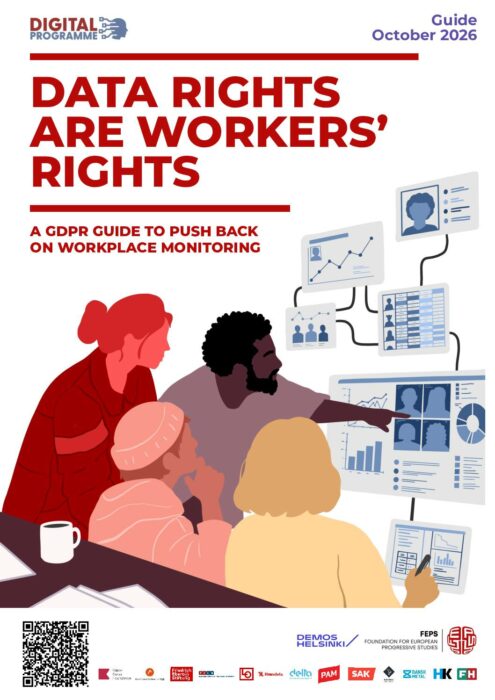
Algorithmic management, a process where computer programs and software take on the role of a human manager to, for example, assign daily tasks or track worker performance, has become increasingly common in the Nordics. According to a recent study, 75% of the 6,000 respondents surveyed from Denmark, Finland, Norway and Sweden reported that at least one algorithmic management tool is used in their workplace.
If not followed closely and steered by union representatives, the deployment of algorithmic management systems can pose serious risks to workers’ autonomy, privacy, health and wellbeing, and how the fruits of technological development are divided between workers and capital.
This guide wants to support shop stewards, other union representatives and workers in negotiating and challenging the use of algorithmic management in their workplace. As algorithmic management runs entirely on data collected from workers, the guide focuses on how to make use of the General Data Protection Regulation (GDPR). The GDPR regulates how workers’ data is collected and processed by the employer and grants crucial legal rights for workers to defend themselves against harmful uses of worker data that algorithmic management systems are dependent on.
The guide is published as part of FEPS-Nordic Digital Programme, a collaborative research and policy initiative led by FEPS in cooperation with Nordic think tanks and trade unions. In 2025-2026, the programme continued to focus on algorithmic management at the workplace, but also examined the impact of AI on decision-making, the public sector and worker productivity, empowering workers and shaping a fairer digital future.
For more information, please do not hesitate to contact Monty Aal, FEPS Digital Policy Analyst (monty.aal@feps-europe.eu) or Vanessa Zwisele, FEPS Project Officer (vanessa.zwisele@feps-europe.eu).
Network











Related events

Find all related publications
Publications

Find all related Progressive Post
Progressive Post



Find all related events
Events
No upcoming events at the moment.




Find all related Audiovisual
Audiovisual
20/07/2026
20/07/2026