
Religion in Politics

Religion in Politics Invitation to the 2012 Research and Policy Day Tuesday 13 November 2012 […]
Speakers

13/11/2012
00:00:00 - 00:00:00
Helsinki, Finland
Religion in Politics
55925
58-religion-in-politics
0

In order to give you access to our events, FEPS processes your personal data together with any other organiser of this event mentioned in the description of the event and in accordance with 'FEPS’ data protection policy.

Religion in Politics

Invitation to the 2012 Research and Policy Day

Tuesday 13 November 2012 at 8:30-17:00

Paasitorni Congress Centre, Paasivuorenkatu 5A, Helsinki


Binding registrations are requested by 31st October with this form.

The event is organized by the Foundation for European Progressive Studies with the support of the Kalevi Sorsa Foundation.

INTRODUCTION

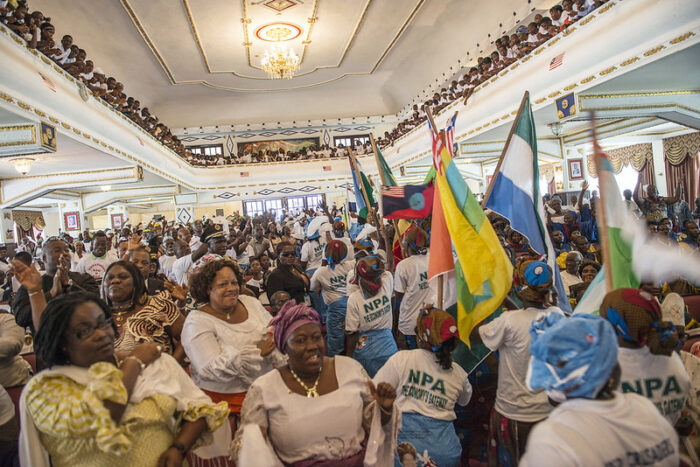
Religion is a sensitive and personal issue, but also a powerful social force, which has gained importance in many countries and also in world politics in recent years. How do religion and politics interact in different contexts and countries today?

We will explore the role of religion and Islamist parties after the Arab Spring, the comeback of religion in Europe and the keys to coexistence, the use of religion in American presidential elections and its impact on foreign policy, and finally, how religion affects Finnish politics.

The event is in English and Finnish, with simultaneous translation.

PROGRAM


8.30–9.00        Registration & coffee


9.00–9.30        Opening

Maarit Feldt-Ranta, Kalevi Sorsa Foundation

David Kitching, Foundation for European Progressive Studies

9.30–11.00      Religious Politics in the aftermath of the Arab Spring

The Arab Spring was a great democratic revolution in which also Muslim movements played an essential part. But a year and a half later, the direction of democratic development is uncertain. Why have Islamist parties been successful at the ballot box and what are the implications for the future? What role is religion likely to play as a consequence?


Introductions by

Sally Toma, Activist of the Egyptian Revolution

Hannu Juusola, professor of Semitic Languages and Culture at the University of Helsinki

11.00–12.30    Religious Pluralism in secular Europe

Europe has been accustomed to secular liberal democracy, but multiculturalism has generated a widespread debate on the role of religion in social and political life. The Muslim population has grown in the West and Christian values been strengthened in the East – how does this effect politics and policy? What is the key to a peaceful co-existence of different religions?


Introductions by

Péter Losonczi, European Director of the International Research Network on Religion and Democracy

Usama Hasan, Senior Researcher at Quilliam Foundation


12.30–13.30    LUNCH


13.30–15.00    The united states, religion and the world order

 The impact of religion, not least the Christian right, has in recent years strengthened in US politics. How does it affect the presidential elections currently polarizing the nation? Or the role of the US in international politics, where religion also serves as a tool for mobilization?


Introductions by

Benjamin Zeller, Researcher of religion in America and a Fulbright Scholar at Åbo Academi University.

Charly Salonius-Pasternak, Global security researcher at the Finnish Institute of International Affairs (UPI).


15.00–15.30    COFFEE


15.30–17.00    Panel Debate: Religion in Finnish Politics

The Finnish consensus has been that religious beliefs belong to the personal sphere and not in politics. Although, the principle has at times been forgotten in the heat of election campaigns, also many moral issues raise religious questions. And Finland can’t avoid the challenges of multiculturalism on this front either, or can it?


17.00               Closing

Network
Kalevi Sorsa Foundation
Find all related publications
Publications
16/11/2026

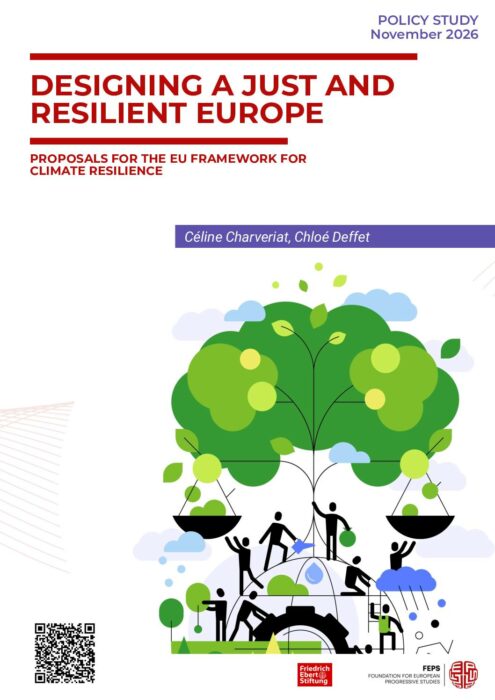
Designing a just and resilient Europe

Proposals for the EU Framework for Climate Resilience
09/11/2026

The far right, reactionary platformisation and progressive responses

The far right is thriving on social media, and this is no accident. This policy […]
04/11/2026

Education in times of AI and Big EdTech

Why we need a public-led, democratic and community-centred EdTech stack
04/11/2026

AI, automation, and public authority

Beyond the hype of algorithmic decision-making in the Nordic Welfare State
Find all related Progressive Post
Progressive Post
10/11/2026

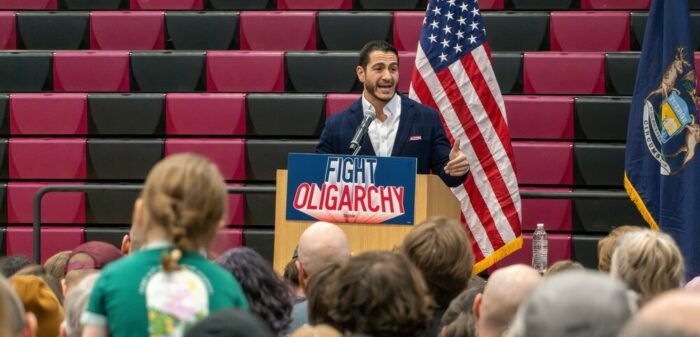
A blue wave that might crush soon

Americans have elected a new Congress: going into 2027, both chambers will be under Democratic […]
05/11/2026

If you want peace, prepare for equality

I have always been struck by how little attention we pay to patriarchal culture when […]
05/11/2026

The Women, Peace and Security agenda amid shifting geopolitics

While the current conflictual and geopolitical environment makes the Women, Peace and Security agenda ever […]
Find all related Audiovisual
Audiovisual
06/11/2026

🇪🇺 How Europe survives? with Catherine De Vries and Alexandros Kentikelenis

Half of 🇪🇺 Europe is in upheaval today. Professors Catherine De Vries and Alexandros Kentikelenis […]
06/11/2026

🇪🇺 How Europe survives? with Catherine De Vries and Alexandros Kentikelenis

Half of 🇪🇺 Europe is in upheaval today. Professors Catherine De Vries and Alexandros Kentikelenis […]
05/11/2026

‘Education in times of AI and Big EdTech’ Flickr album

Photo album of the Education in times of AI and Big EdTech event at the […]
21/09/2026

“Security policy? That’s NATO’s job – former EU Commissioners assess Ursula von der Leyen’s speech”

Biztonságpolitika? Az a NATO dolga – EU-s biztosok értékelték Ursula von der Leyen beszédét Article […]
Find all related news
News
30/10/2026

FEPS Reacts: The new EU Framework for Climate Resilience

Necessary foundations but little action
23/10/2026

Notice of vacancy – Policy Analyst on Gender Equality

Apply before 23 November 2026
16/09/2026

FEPS Reacts: State of the European Union 2026

The 2026 State of the Union felt more like ‘von der Leyen I’ than ‘von […]
23/07/2026

FEPS Reacts: European Commission communication on the Action Plan on the European Pillar of Social Rights

By Laszlo Andor, FEPS Secretary-General & François Balate, Policy Analyst on Social The communication on the […]
Find all related in the media
In the media

Bharat Summit: Accountability key to restoring public trust in democracy

by UNI India 14/11/2026
Read UNI India’s article on the Bharat Summit, where Christian Salm, FEPS Head of Democracy and Participation Programmes, joined a political panel on democratic accountability and political reform.

Perustuslaki halutaan avata, jotta tekoälyä voidaan käyttää vielä enemmän – Ei, sanoo vasemmiston Honkasalo

by Helsingin Sanomat 06/11/2026
“The Constitution could be reopened to allow greater use of AI – No, says Left Alliance MP Honkasalo” News article by Veera Paananen published in Helsingin Sanomat (FI), referring to the FEPS and Demos Helsinki policy study on AI, automation and public authority in Nordic welfare states. The article draws on the study's findings to highlight the risks of delegating decision-making to AI in public services, including the loss of human judgement and accountability, and features Finnish MP Veronika Honkasalo's opposition to expanding AI-driven decision-making in the public sector.

Tekoäly ei ole oikotie säästöihin – julkisella sektorilla vastuuta ei voi ulkoistaa

by Demokraatti 04/11/2026
AI is no shortcut to savings – responsibility cannot be outsourced in the public sector” News article published in Demokraatti (FI), highlighting the FEPS and Demos Helsinki policy study, as part of the FEPS–Nordic Digital Programme. The article draws on the study’s findings that AI and automation do not automatically generate savings or productivity gains in the public sector, emphasising the need for long-term investment, human oversight and accountability in public administration

Frågan om jämställdhet splittrar unga svenskar

by dagens arena 29/10/2026
"The issue of gender equality divides young Swedes" - FEPS Policy Analyst on Democracy Matteo Dressler discusses the findings of the EqualiZe policy study in the Swedish context.